Jersey
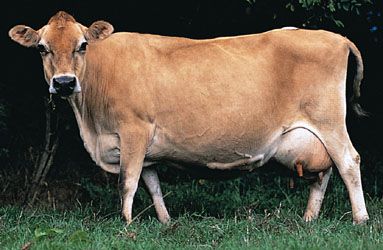
The Jersey is a breed of small, short-horned dairy cattle that originated on Jersey, one of the Channel Islands. It is believed to have descended from French…
What is the origin and history of the Jersey cattle breed?
The Jersey is a breed of small, short-horned dairy cattle that originated on Jersey, one of the Channel Islands. It is believed to have descended from French cattle stock.1
During the late 18th century, local authorities passed measures prohibiting the importation of cattle to the island, except for immediate slaughter. This isolation allowed the indigenous breed to be recognized as pure by the early 19th century.1
The breed gained international popularity due to its ability to produce milk remarkably rich in butterfat. Jersey cattle were introduced to England by 1811, and the first registered animals were exported to the United States in 1850. Today, the breed is distributed worldwide and is highly valued for its efficient milk production and docile nature. Because of their small size and specific fat characteristics, they are generally considered less desirable for beef production compared to other major breeds.123
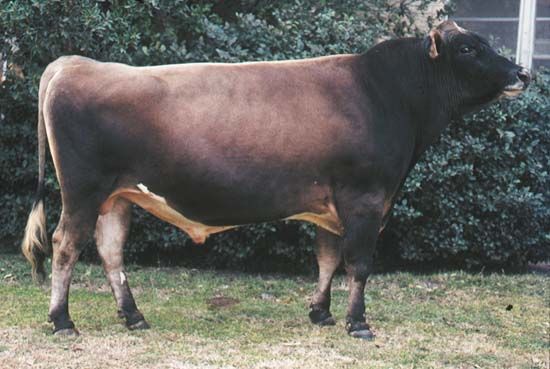
What role do Jersey cattle play in modern dairy farming and industry?
Jersey cattle are a cornerstone of the modern dairy industry, primarily valued for their efficiency and the exceptional quality of their milk. As one of the five major dairy breeds, they are distributed globally and are particularly prized in regions where butter production is a significant economic activity, such as New Zealand and Denmark1.14
Their role in modern dairying is defined by several key characteristics:
- Milk Composition: Jersey milk is renowned for being the richest among the major dairy breeds, containing an average of 5.2 percent butterfat and a high protein content (approximately 3.92 percent). This makes the breed highly sought after for crossbreeding programs aimed at improving the fat and solids content of milk from other herds.13
- Efficiency and Adaptability: Jerseys are known for their docile nature and their ability to convert feed into milk efficiently. Their adaptability allows them to thrive in a wide range of environmental conditions worldwide.43
- Industry Limitations: While they excel in milk production, Jerseys have limited utility in the beef industry. Their small physical stature, lack of significant muscular development, and the yellow color of their body fat make them less desirable for meat production compared to other breeds.3
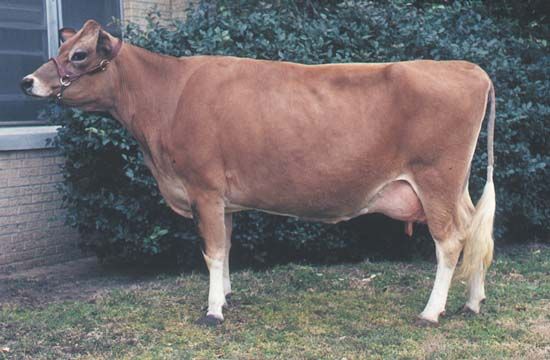
How does the milk production of Jersey cows compare to other dairy breeds?
When comparing milk production across dairy breeds, the Holstein-Friesian is recognized for producing the greatest volume of milk. In contrast, while Jersey cows produce a lower total volume, their milk is distinguished by its superior concentration of fat, protein, and total solids.15
Data from the Council on Dairy Cattle Breeding (CDCB) illustrates this difference in volume. In a 2021 report, average annual milk production for major American dairy breeds was recorded as follows:
- Holstein: 11,793 kg (26,000 pounds) per cow1
- Brown Swiss: 9,187 kg (20,254 pounds) per cow1
- Jersey: 8,423 kg (18,570 pounds) per cow1
Regarding composition, Jersey milk averages 5.2 percent butterfat, which is significantly higher than the 3.7 percent average found in Holstein milk. Furthermore, the protein content of Jersey milk is approximately 3.92 percent, compared to 3.23 percent for Holsteins. Because of these qualities, Jerseys are highly valued for their efficiency in producing milk solids, making them particularly important in regions where butter production is a primary economic focus.345
How has the Jersey breed adapted to different climates and environments?
The Jersey breed is recognized for its remarkable adaptability, allowing it to thrive in a wide range of environmental conditions across the globe. Originally developed on the island of Jersey in the Channel Islands, the breed has successfully transitioned from its insular origins to become established in nearly every cattle-raising country.13
While the breed is noted for its ability to adjust to diverse climates, its success in international markets is largely attributed to its efficient conversion of feed into high-quality milk. This efficiency, combined with a docile temperament, has made the Jersey a preferred choice for producers in varied agricultural settings, ranging from the temperate landscapes of New Zealand to the diverse environments of North and South America.13
Sources
- Jersey — Encyclopædia Britannica
- Guernsey — Encyclopædia Britannica
- Dairy cattle breeds — Encyclopædia Britannica
- Dairying — Encyclopædia Britannica
- Why are Holstein cows so popular? — Encyclopædia Britannica
- dairy product — Encyclopædia Britannica
Published on · 3 min read