Gunflint Microfossils
Gunflint microfossils are an assemblage of microscopic fossils discovered within the Gunflint Iron Formation, a rock layer approximately two billion years…
What is Gunflint microfossils?
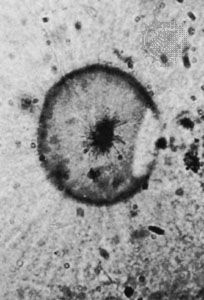
Gunflint microfossils are an assemblage of microscopic fossils discovered within the Gunflint Iron Formation, a rock layer approximately two billion years old located in western Ontario, Canada. First collected near Thunder Bay in the 1950s, these fossils provide significant evidence regarding the early history of life on Earth.1
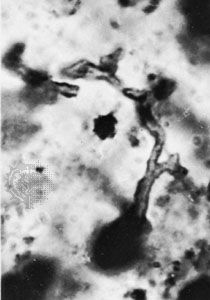
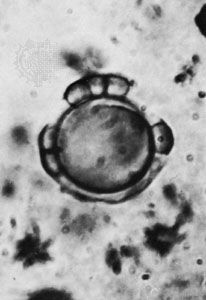
The collection includes roughly 30 distinct types of microorganisms, with 16 species across 14 genera classified to date. These forms include:2
- Filamentous structures: Resembling blue-green algae, such as Gunflintia, Entosphaeroides, and Animikiea.1
- Spheroids: Such as Eosphaera and Huroniospora.1
- Unique shapes: Including the star-shaped Eoastrion and the umbrella-shaped Kakabekia.1
These microfossils are remarkably well-preserved and share strong similarities with modern microorganisms like blue-green algae and microbacteria. They represent some of the earliest known photosynthetic organisms, existing during a pivotal transition when oxygen began to accumulate in Earth’s atmosphere.21
What are stromatolites and how do they relate to microfossils?
Stromatolites are layered, sedimentary structures—often composed of limestone—created by the growth of microbial communities, particularly filamentous blue-green algae. These structures form as microorganisms trap sediment and precipitate minerals in shallow, warm waters, resulting in characteristic thin, alternating layers that may be flat, domal, or columnar.32
The relationship between stromatolites and microfossils is foundational to our understanding of early life. Stromatolites serve as the macroscopic “homes” or biological structures built by these ancient microorganisms. While stromatolites provide evidence of complex, integrated biological communities dating back 3.5 billion years, the microfossils themselves are the preserved remains of the individual organisms—such as bacteria and algae—that constructed them.2
Often, these microfossils are found within the same rock formations as stromatolites, such as the 2-billion-year-old Gunflint iron formation. Together, they offer a dual perspective: stromatolites reveal the scale and environmental impact of early life, while microfossils provide the morphological details of the specific prokaryotes responsible for these structures.2
How did the rise of oxygen change early life on Earth?
The rise of molecular oxygen, primarily produced by photosynthesis in early organisms like blue-green algae, fundamentally transformed Earth’s environment and the trajectory of life. Initially, this oxygen was a toxic waste product for primitive organisms, but it played a critical role in shaping the planet’s geology and biology over billions of years.45
Geological and Chemical Impacts
For over a billion years, the oxygen produced by early life was consumed by the oxidation of dissolved ferrous iron in the oceans, leading to the massive deposition of banded-iron formations. Once these “sinks” were saturated, oxygen began to accumulate in the atmosphere and oceans. This transition is evidenced by the disappearance of iron formations from the sedimentary record around 1.7 to 2 billion years ago and the appearance of red beds and oxidized paleosols, which could not have formed in an oxygen-free environment. Additionally, the accumulation of oxygen in the stratosphere created the ozone layer, providing a vital shield against harmful ultraviolet radiation.4657
Biological Consequences
The increase in oxygen levels enabled the evolution of more complex life:
- Aerobic Metabolism: The availability of oxygen allowed for the development of oxidative metabolism, which is more energetically efficient than earlier pathways.84
- Eukaryotic Evolution: The emergence of eukaryotes—organisms with complex, membrane-bound cells—required oxygen levels of at least 0.02 times the present atmospheric level (PAL), a milestone reached approximately 1.4 to 1.8 billion years ago.457
- Multicellular Life: Further increases in oxygen, reaching roughly 0.1 PAL by 650 million years ago, supported the proliferation of complex, soft-bodied animals and eventually the production of collagen for skeletons.45
What is the difference between prokaryotes and eukaryotes?
All living organisms are composed of either prokaryotic or eukaryotic cells. The fundamental distinction between them lies in their internal organization and complexity.910
Key Differences
- Nucleus: Eukaryotic cells possess a clearly defined nucleus enclosed by a nuclear membrane, which houses the cell’s genetic material. In contrast, prokaryotic cells lack a nucleus; their DNA floats freely within the cytoplasm.91011
- Organelles: Eukaryotes contain membrane-bound organelles, such as mitochondria, the endoplasmic reticulum, and the Golgi apparatus, which compartmentalize biochemical processes. Prokaryotes lack these specialized structures.911
- Genetic Material: Eukaryotes typically have multiple linear chromosomes. Prokaryotes generally contain a single circular chromosome.910
- Cell Division: Eukaryotic cells undergo mitosis, a complex process that ensures the equal distribution of chromosomes to offspring cells. Prokaryotic division is nonmitotic.10
Prokaryotes, which include the domains Bacteria and Archaea, are generally smaller and simpler in design, allowing them to reproduce rapidly. Eukaryotes are more complex and include animals, plants, fungi, and protists.91011
Sources
- Gunflint microfossils — Encyclopædia Britannica
- Precambrian - Microfossils and stromatolites — Encyclopædia Britannica
- stromatolite — Encyclopædia Britannica
- evolution of the atmosphere - Onset of oxygenic photosynthesis — Encyclopædia Britannica
- geologic history of Earth - Formation of the secondary atmosphere — Encyclopædia Britannica
- Precambrian - Oxygenation of the atmosphere — Encyclopædia Britannica
- Climate change - Photosynthesis and atmospheric chemistry — Encyclopædia Britannica
- evolution of the atmosphere - Transition to an aerobic environment — Encyclopædia Britannica
- Bacteria - Bacteria as prokaryotes — Encyclopædia Britannica
- life - Prokaryotes and eukaryotes — Encyclopædia Britannica
- eukaryote — Encyclopædia Britannica
Published on · 4 min read