Hake
Hake are swift, carnivorous marine fishes belonging to the cod family. Because they are predators equipped with large, sharp teeth, their diet consists…
What is the typical diet of hake fish?
Hake are swift, carnivorous marine fishes belonging to the cod family. Because they are predators equipped with large, sharp teeth, their diet consists primarily of other marine organisms, though specific prey species vary by their habitat across the Atlantic, eastern Pacific, and waters near New Zealand.1
How important is hake in commercial fishing and culinary uses?
Hake is a significant component of the global commercial fishing industry. As members of the cod family, hake species—along with related fish like haddock and pollock—account for approximately one-sixth of the world’s total sea harvest.1
Economic and Culinary Importance
- Commercial Value: Hake are harvested extensively across the Atlantic, the eastern Pacific, and near South Africa and New Zealand. Economically important species include the European hake, the silver hake, the South African stockfish, and the white and red hake found in North American waters.4
- Culinary Use: Despite having relatively soft flesh, hake is widely utilized as a food fish. It is a staple in many regional cuisines, valued for its versatility and availability in global markets.4
The industry faces challenges such as high equipment costs, environmental concerns, and the perishability of the catch, yet hake remains a vital resource for international fisheries.1
What are the different species of hake and how do they differ?
Hake species are primarily categorized into two distinct genera, Merluccius and Urophycis, which differ in their physical characteristics and classification.1
Genus Merluccius
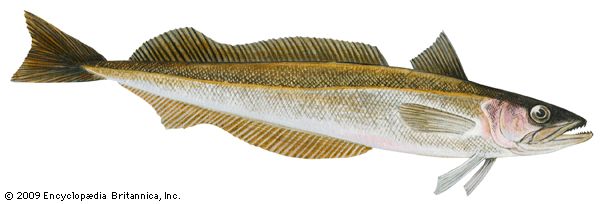
These are the “true” hakes, sometimes classified under the family Merlucciidae due to specific skeletal structures in their ribs and skull. They are characterized by an elongated body, a large head, and sharp teeth. Their fins include two dorsal fins (the second being long and notched) and a long, notched anal fin.1
Notable species include:
- European and Mediterranean hake (M. merluccius): Can reach lengths of up to 1.1 meters (3.5 feet).1
- Silver hake (M. bilinearis): Found in the American Atlantic.1
- Stockfish (M. capensis): Native to the waters of South Africa.1
Genus Urophycis
In eastern North America, the term hake is also applied to species in the genus Urophycis. While they resemble Merluccius, they are distinguished by two key features: a small barbel on the chin and long, slim pelvic fins.1
Economically important species in this group include:
What are the main characteristics of hake fish?
Hake refers to several large marine fishes belonging to the cod family, Gadidae. While sometimes classified in their own family, Merlucciidae, due to specific skeletal differences in their ribs and skulls, they share several defining physical and behavioral characteristics.1
Physical Characteristics
- Body Shape: Hakes are elongated, large-headed fish equipped with large, sharp teeth.1
- Fins: They possess two dorsal fins, with the second being long and slightly notched near the middle. Their anal fin is also long and notched, and their pelvic fins are positioned far forward, ahead of the pectoral fins.1
- Distinctions: Species in the genus Merluccius are considered “true” hakes. In contrast, species in the genus Urophycis—found in eastern North America—are distinguished by a small barbel at the tip of the chin and long, slim pelvic fins.1
Behavior and Habitat
Hakes are swift, carnivorous predators. They are found throughout the Atlantic, in the eastern Pacific, and near New Zealand and South Africa. Although they have relatively soft flesh, they are widely consumed as food fish.1
Sources
- hake — Encyclopædia Britannica
- white hake — Merriam-Webster
- hake — Merriam-Webster
- fishery — Encyclopædia Britannica
- Merluccius — Merriam-Webster
Published on · 3 min read