Cod
Members of the genus Gadus are large, economically significant marine fishes belonging to the family Gadidae. While historically associated with the Atlantic…
What are the main characteristics of cod fish in the Gadus genus?
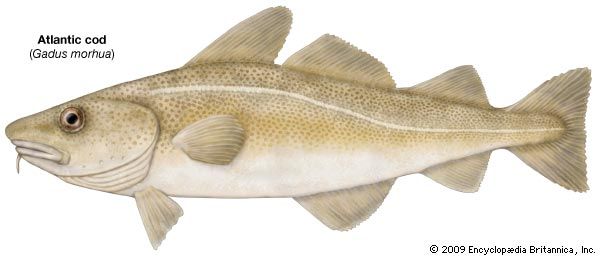
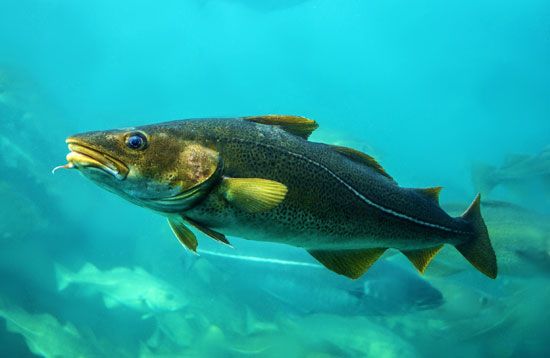
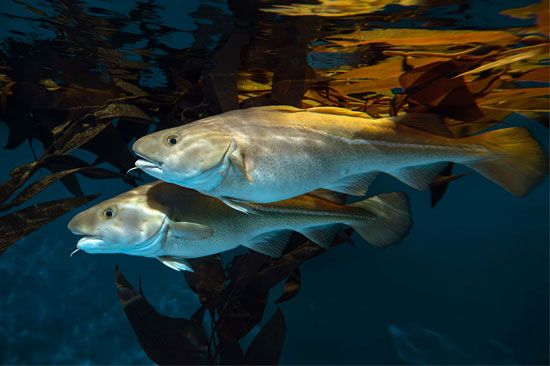
Members of the genus Gadus are large, economically significant marine fishes belonging to the family Gadidae. While historically associated with the Atlantic cod (Gadus morhua), the term now encompasses several species, including the Pacific cod (G. macrocephalus), Greenland cod (G. ogac), and Alaska pollock (G. chalcogrammus).12
Key characteristics of these fish include:
- Physical Appearance: They are typically dark-spotted with three dorsal fins, two anal fins, and a distinctive chin barbel. Colors vary from greenish or grayish to brown, blackish, or even reddish.1
- Habitat and Behavior: These are primarily cold-water, bottom-dwelling fish found in the North Atlantic and North Pacific. They are voracious, migratory predators that feed on various invertebrates and other fishes.1
- Size: Sizes vary significantly by species; for example, the Atlantic cod can reach lengths of over 1.8 metres (6 feet) and weights exceeding 91 kg (201 pounds), while the Alaska pollock is generally smaller, growing up to 91 cm (36 inches).1
- Economic Importance: They are highly valued for their edible flesh and cod-liver oil.1
What fishing methods are commonly used to catch cod?
Common methods for catching cod include several commercial techniques, though the use of industrial-scale technology has historically led to severe overfishing and population collapse.56
- Bottom Longlines: This traditional method involves setting a heavy main line with numerous baited branch lines at depths typically ranging from 80 to 270 metres. While historically operated by hand from small dories, modern enterprises often use automated systems that bait, clean, and stow hooks, allowing smaller crews to set significantly more lines.7
- Gill Nets: These nets are set in long rows, either drifting or anchored at or near the sea floor. Icelandic fishermen, for example, have used sets of up to 90 nets to target cod at depths reaching 180 metres.8
- Trawling: The introduction of industrial-scale trawlers—essentially factory ships that process catch at sea—significantly increased fishing capacity in the late 20th century. When combined with technologies like sonar, these methods enabled the massive overexploitation that led to the cod fishery collapse of 1992.56
Where are cod fish typically found in the world’s oceans?
Cod fish of the genus Gadus are primarily cold-water, bottom-dwelling species found across the Northern Hemisphere. Their distribution varies by species:
- Atlantic Cod (Gadus morhua): These fish inhabit both sides of the North Atlantic, ranging from the east coast of North America eastward to the Baltic and Kara seas. They are typically found from inshore regions to deeper waters near the sea bottom.1
- Pacific Cod (Gadus macrocephalus): This species is found in both the northeastern and northwestern Pacific Ocean.1
- Greenland Cod (Gadus ogac): Their range extends from Baffin Bay and Hudson Bay along the Labrador coast into the Gulf of Saint Lawrence.1
- Alaska Pollock (Gadus chalcogrammus): These fish inhabit continental shelf regions in the North Pacific, stretching from the Sea of Japan (East Sea) to the California coast, with the highest concentrations in the Bering Sea.1
How has the collapse of cod fisheries affected coastal communities?
The 1992 collapse of the Atlantic cod fishery in Newfoundland and Labrador triggered a profound socioeconomic crisis, as the industry had served as the region’s cultural and economic backbone for over 500 years.10
The imposition of a federal moratorium resulted in the largest industrial closure in Canadian history, leading to the direct loss of approximately 19,000 fishing and processing jobs, alongside an estimated 20,000 indirect job losses. This mass unemployment crippled hundreds of coastal communities, forcing many residents to dock their boats and close fish plants.910
Despite government relief programs like the Northern Cod Adjustment and Recovery Program (NCARP), the economic damage was severe. Unemployment remained high, and the province suffered a 10 percent population decline over the following decade as families migrated elsewhere for work. While the commercial fishery was cautiously reopened in 2024, the collapse serves as a stark example of the tragedy of the commons, where overexploitation led to long-term regional ruin.910
Sources
- cod — Encyclopædia Britannica
- Gadus — Encyclopædia Britannica
- paracanthopterygian - General features — Encyclopædia Britannica
- Gadiformes — Merriam-Webster
- commercial fishing - Bottom longlines — Encyclopædia Britannica
- commercial fishing - Gill nets and drift nets — Encyclopædia Britannica
- Atlantic Ocean - Fisheries of the Atlantic Ocean — Encyclopædia Britannica
- Atlantic cod — Merriam-Webster
- cod fishery collapse of 1992 — Encyclopædia Britannica
- cod fishery collapse of 1992: Top Questions — Encyclopædia Britannica
- Marine ecosystem - Geography, oceanography, and topography — Encyclopædia Britannica
Published on · 3 min read