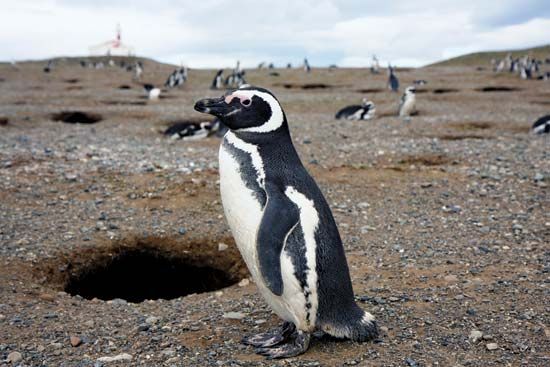
Magellanic Penguin
The diet of the Magellanic penguin consists primarily of fish, krill, and cephalopods. Specifically, their fish consumption includes species such as…
What is the typical diet of Magellanic penguins?
The diet of the Magellanic penguin consists primarily of fish, krill, and cephalopods. Specifically, their fish consumption includes species such as anchovies, sardines, hake, sprat, and cod.1
To capture this prey, these penguins often engage in group foraging, frequently diving to depths between 75 and 90 metres (250–300 feet).1
Where are Magellanic penguins primarily found in the wild?
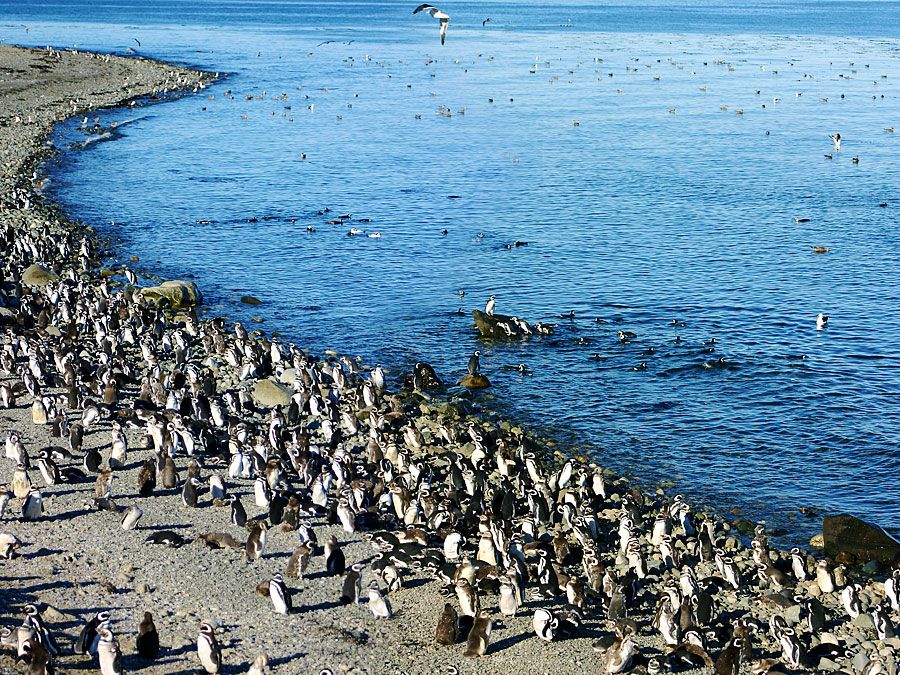
Magellanic penguins are primarily found in the Falkland Islands and on various nearshore islands along the Atlantic and Pacific coasts of southern South America.1
While these regions constitute their primary geographic range, individual penguins have occasionally been documented traveling as far as Brazil, Peru, Australia, New Zealand, and the Antarctic Peninsula.1
How do Magellanic penguins communicate with each other?
The provided search results do not contain information regarding the specific methods or behaviors Magellanic penguins use to communicate with one another. While the articles detail their nesting habits, dietary patterns, and monogamous pair bonds, they do not describe the vocalizations or physical displays used for communication.
What conservation efforts are in place to protect Magellanic penguins?
The provided search results do not detail specific, active conservation programs or management initiatives currently in place to protect Magellanic penguins. While the data identifies the species as near threatened on the IUCN Red List, it focuses primarily on the threats they face rather than the efforts to mitigate them.1
The primary challenges identified by ecologists include:
- Oil Pollution: Significant mortality rates have been recorded due to oil spills along the coast of Argentina.1
- Commercial Competition: The species faces pressure from the commercial fishing industry, which competes for the same food sources, such as anchovies.1
- Environmental Disruptions: El Niño and Southern Oscillation events cause reproductive and food supply disruptions.1
- Incidental Capture: Penguins are sometimes inadvertently caught in fishing nets.1
Because these threats are well-documented, they remain a primary concern for conservationists monitoring population declines in areas like the Falkland Islands and Punta Tombo.1
Sources
- Magellanic penguin — Encyclopædia Britannica
- Are penguins monogamous? — Encyclopædia Britannica
- Galapagos penguin — Encyclopædia Britannica
Published on · 2 min read