Herring
Herring are members of the family Clupeidae, characterized by their streamlined, "slab-sided" bodies, small heads, and forked tails. They are typically…
What are the main characteristics that distinguish herring from other fish?
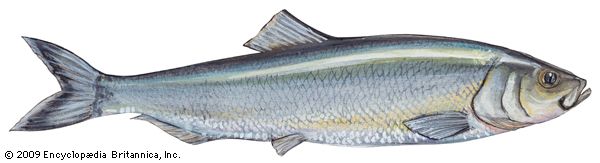
Herring are members of the family Clupeidae, characterized by their streamlined, “slab-sided” bodies, small heads, and forked tails. They are typically recognized by their beautiful, iridescent silvery sides and metallic blue or greenish-blue backs.12
Key distinguishing characteristics include:
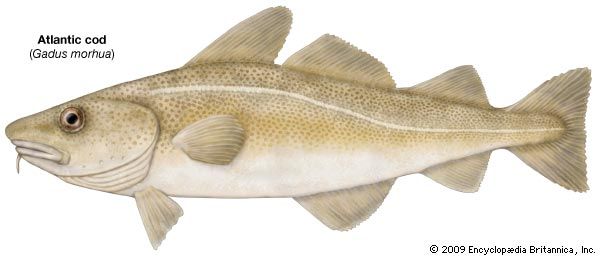
- Schooling Behavior: Herring are highly social, traveling in vast schools. This behavior makes them a vital forage fish, serving as a primary food source for larger predators like cod, tuna, and salmon.12
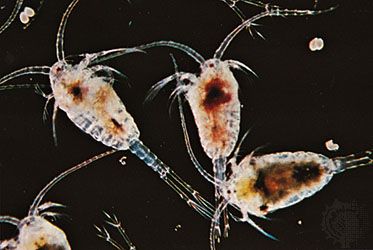
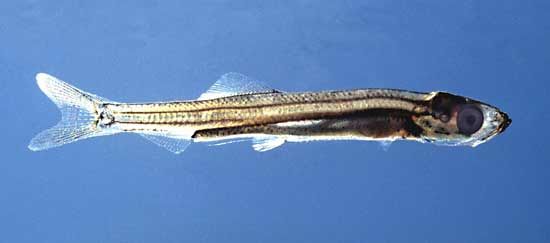
- Dietary Habits: Most herring are filter feeders that consume minute organisms, including copepods, zooplankton, and fish larvae. This distinguishes them from predatory species like the wolf herring, which possess fanglike teeth to hunt other fish.123
- Physical Anatomy: They generally feature a round belly and a protruding lower jaw. While most members of the order Clupeiformes are small and non-specialized, herring are specifically noted for their abundance and economic importance.214
What are some common methods used to catch herring, and how has overfishing affected their populations?
Herring are primarily caught using drift nets, seine nets, and trawls. Drift nets are often set in long rows to capture herring as they migrate vertically in the water column, while purse seines are used to surround schools of fish from the sides and underneath to prevent escape. In some regions, such as eastern Canada and the northeastern United States, young herring are also harvested using inshore weirs.156
The impact of overfishing on herring populations has been significant. During the 1970s, global populations declined substantially due to intensive fishing pressure, leading to the collapse of several major stocks, including those in the northeast Atlantic. While the implementation of catch limits and government regulations has allowed some populations to recover, many stocks remain depleted, with some estimates suggesting they are at only a fraction of their target biomass. Effective management remains a complex challenge, as international waters are often subject to the tragedy of the commons, making enforcement of sustainable practices difficult.37
How are herring used in various cuisines around the world?
Herring is a versatile staple in global cuisines, prepared through various preservation methods that highlight its distinct flavor. In Europe, it is frequently salted, pickled in barrels, or cured by smoking to produce kippered herring.19
In Scandinavian gastronomy, herring is a cornerstone of the smorgasbord, where it may be served filleted, baked, jellied, or stewed. It also appears in traditional dishes such as vorshmack, a Finnish preparation of ground meat, herring, and onion. Additionally, in parts of eastern Canada and the northeastern United States, young herring are commonly canned as sardines. Because herring are often canned with their bones intact, they serve as a significant source of calcium. In the Pacific region, a large portion of the catch is processed into fish meal and oil, though smaller quantities are still enjoyed pickled or smoked.1011112
What is the role of herring as a forage fish in the ocean food web?
Herring serve as a vital forage fish within the ocean food web, acting as a critical link between lower and higher trophic levels. As plankton-eating, schooling fish, they efficiently convert energy from minute organisms—such as copepods, zooplankton, krill, and fish larvae—into biomass that supports a wide array of predators.13
Because of their immense abundance and schooling behavior, herring are a primary food source for numerous larger marine animals, including cod, salmon, tuna, mackerel, and sharks. They are also essential prey for seabirds and marine mammals, such as seals and porpoises. Furthermore, the role of herring extends to the seafloor; bottom-dwelling species like haddock, winter flounder, and red hake rely on herring eggs as a significant nutritional resource.13
Sources
- herring — Encyclopædia Britannica
- clupeiform - General features — Encyclopædia Britannica
- Atlantic herring — Encyclopædia Britannica
- wolf herring — Encyclopædia Britannica
- commercial fishing - Gill nets and drift nets — Encyclopædia Britannica
- commercial fishing - Seines — Encyclopædia Britannica
- commercial fishing - Seine-netters — Encyclopædia Britannica
- commercial fishing - History of commercial fishing — Encyclopædia Britannica
- gastronomy - Scandinavian — Encyclopædia Britannica
- fish processing - Canning — Encyclopædia Britannica
- fish processing - Curing — Encyclopædia Britannica
- smorgasbord — Encyclopædia Britannica
- clupeiform - Food ecology — Encyclopædia Britannica
Published on · 3 min read