Hooded Seal
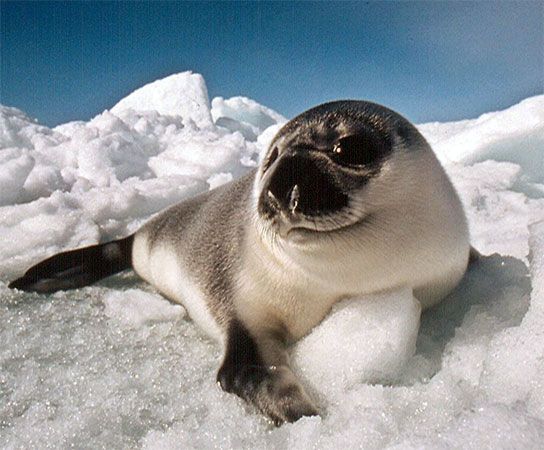
The hooded seal (Cystophora cristata) derives its name from the unique nasal ornamentation found on sexually mature males.
How did hooded seals get their name, and what is special about their ‘hood’?
The hooded seal (Cystophora cristata) derives its name from the unique nasal ornamentation found on sexually mature males.12
This “hood” is a specialized, wrinkled sac located on the forepart of the head. When relaxed, it hangs down, but males can inflate it to form a hood that covers the top of the head and the front of the face. Additionally, these males possess an elastic nasal septum that can be inflated into a reddish, balloon-like structure in front of their face.12
These features serve important biological functions, as they are used to attract females and to advertise strength to rival males during competition. Beyond these physical displays, these seals are remarkable deep-sea divers, capable of reaching depths of over 1,000 meters and remaining submerged for nearly an hour.2
What is the scientific name of the hooded seal, and what does it mean?
The scientific name of the hooded seal is Cystophora cristata.13
The genus name, Cystophora, is derived from New Latin, combining the elements cyst- and -phora. This name refers to the unique, hoodlike, inflatable sac found on the head of the male. The specific epithet, cristata, is Latin for “crested,” further referencing the distinctive nasal ornamentation that characterizes the species.23
What is the diet of hooded seals, and how do they hunt for food?
Hooded seals are specialized predators that primarily consume deepwater fish and squid. Their diet consists of species such as the Atlantic halibut, the Greenland halibut, and redfish.2
To hunt for this food, hooded seals utilize their exceptional abilities as strong swimmers. They are capable of diving to depths exceeding 1,000 meters (3,000 feet) and can remain submerged for nearly an hour, allowing them to access prey in deep-sea environments.2
What role do hooded seals play in their ecosystem?
In their Arctic and North Atlantic ecosystems, hooded seals function as both predators and prey, occupying a significant position in the marine food web.
- As Predators: Hooded seals are specialized hunters that forage in deep-sea environments. By feeding on species such as the Atlantic halibut, Greenland halibut, redfish, and squid, they help regulate the populations of these deepwater organisms.2
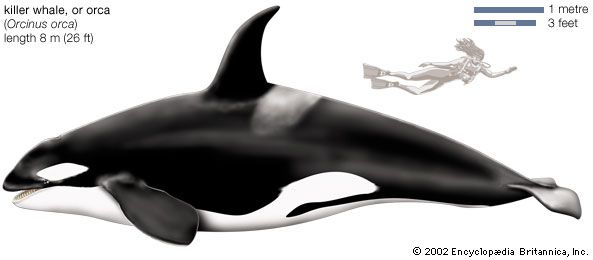
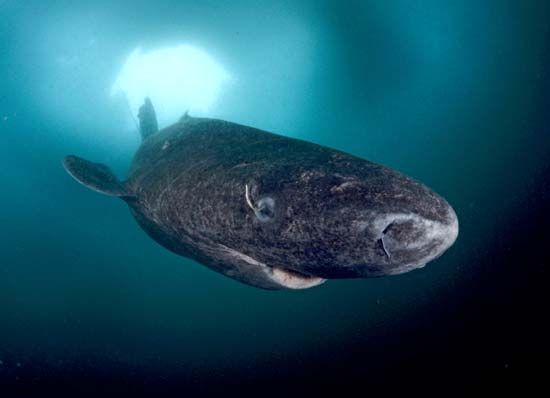
- As Prey: They serve as a vital food source for apex predators within the same habitat, including polar bears, killer whales, and Greenland sharks.2
Beyond these direct interactions, the species is sensitive to environmental shifts. Because they rely on pack ice for breeding and pupping, their presence and health are closely tied to the stability of the Arctic environment. Concerns regarding global warming and the resulting loss of sea ice highlight their vulnerability, as such changes threaten to reduce their critical habitat and impact their long-term population stability.2
Sources
- hooded seal — Merriam-Webster
- hooded seal — Encyclopædia Britannica
- Cystophora — Merriam-Webster
- seal — Encyclopædia Britannica
Published on · 2 min read