Jack
Jacks are members of the Carangidae family, a diverse group comprising over 150 species found in temperate and tropical oceans. While their size and shape…
What are the main characteristics that distinguish jack fish from other fish species?
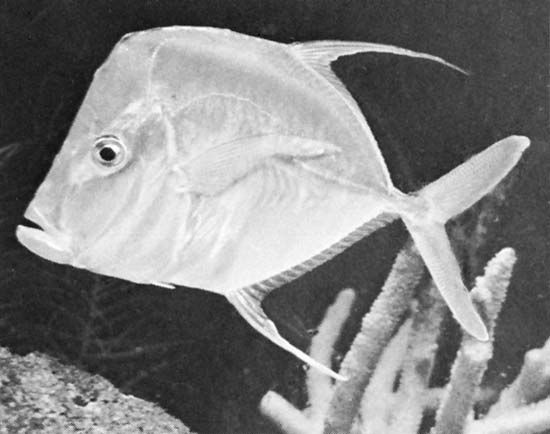
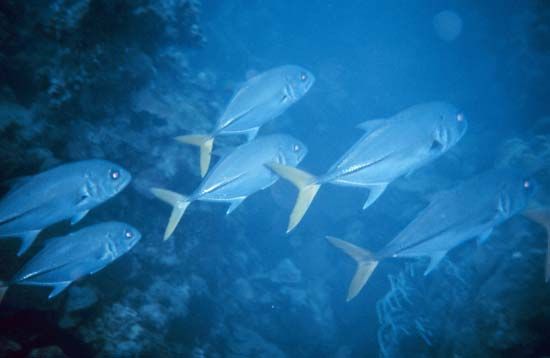
Jacks are members of the Carangidae family, a diverse group comprising over 150 species found in temperate and tropical oceans. While their size and shape vary, they are distinguished by several key physical characteristics:1
- Body Shape: Most species possess laterally compressed bodies.1
- Scales: They are typically covered in small scales that give them a smooth appearance, but they are uniquely marked by a row of enlarged, specialized scales known as scutes located along the side near the tailfin.1
- Tail: A defining feature for many jacks is a deeply forked tailfin.1
- Coloration: Many species exhibit a distinct silvery, bluish green, or yellowish sheen.1
These fish are highly regarded as both commercial food sources and popular game fish, including well-known varieties like the amberjack and the crevalle jack. While the term “jack” is sometimes applied to other species like the jack mackerel (Trachurus), the characteristics above remain the primary identifiers for the broader Carangidae family.12
Where are jack fish commonly found, and what are their preferred habitats?
Jacks, which belong to the Carangidae family, are widely distributed across the globe. They are primarily found in temperate and tropical regions of the Atlantic, Pacific, and Indian oceans.13
Regarding their preferred habitats, these fish are predominantly marine, thriving in warm and tropical seas. While they are most commonly associated with saltwater environments, some species are known to inhabit brackish waters or may occasionally move into fresh water. Many jacks are swift, predatory swimmers that frequent various marine zones, ranging from open waters to areas near coastal reefs.132
What are some popular fishing methods used to catch jack fish?
Jacks are highly regarded as popular game fish, and anglers employ various techniques to target them depending on the specific species and environment. Because many jacks, such as the amberjack and the crevalle jack, are strong, predatory swimmers, they are typically pursued using methods that mimic their natural prey.1
Common fishing methods include:
- Trolling: This is a frequent method for covering large areas of water to locate schools of jacks. Anglers often use lures or live bait pulled behind a moving boat to entice these active predators.1
- Jigging: Because many jacks, particularly larger species like the greater amberjack, often inhabit deeper waters or structure such as reefs and wrecks, vertical jigging is highly effective for reaching them.1
- Casting: In shallower coastal waters, anglers often use topwater lures or plugs to trigger aggressive strikes from jacks, which are known for their powerful fighting ability once hooked.1
What are scutes and why are they important for jack fish?
The provided search results do not contain information regarding the specific definition of scutes in the context of jack fish or their functional importance to that family. While the results discuss general scales in zoology and the classification of scad, they do not address the anatomical structures known as scutes found on members of the Carangidae family.
Sources
- jack — Encyclopædia Britannica
- jack mackerel — Merriam-Webster
- carangid — Encyclopædia Britannica
- Carangidae — Merriam-Webster
- scad — Encyclopædia Britannica
- scale — Encyclopædia Britannica
- scorpaeniform — Encyclopædia Britannica
Published on · 2 min read