Ilish
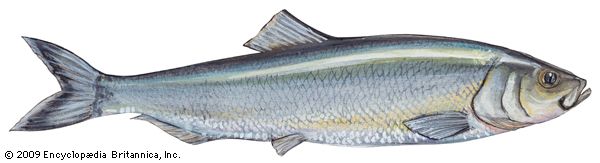
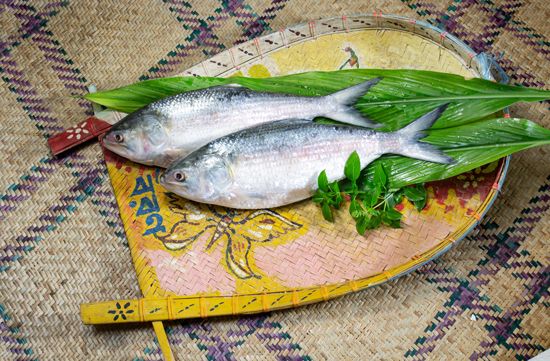
Ilish (Tenualosa ilisha), also known as hilsa shad or Indian shad, is a species of saltwater herring native to the North Indian Ocean and most populous in…
What is ilish?
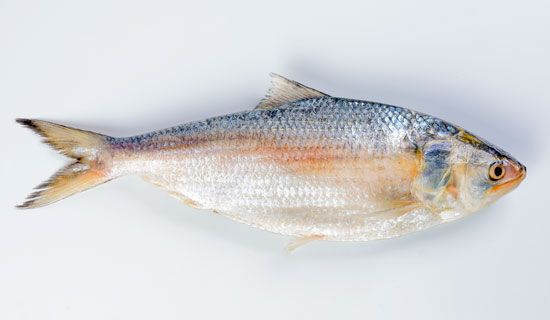
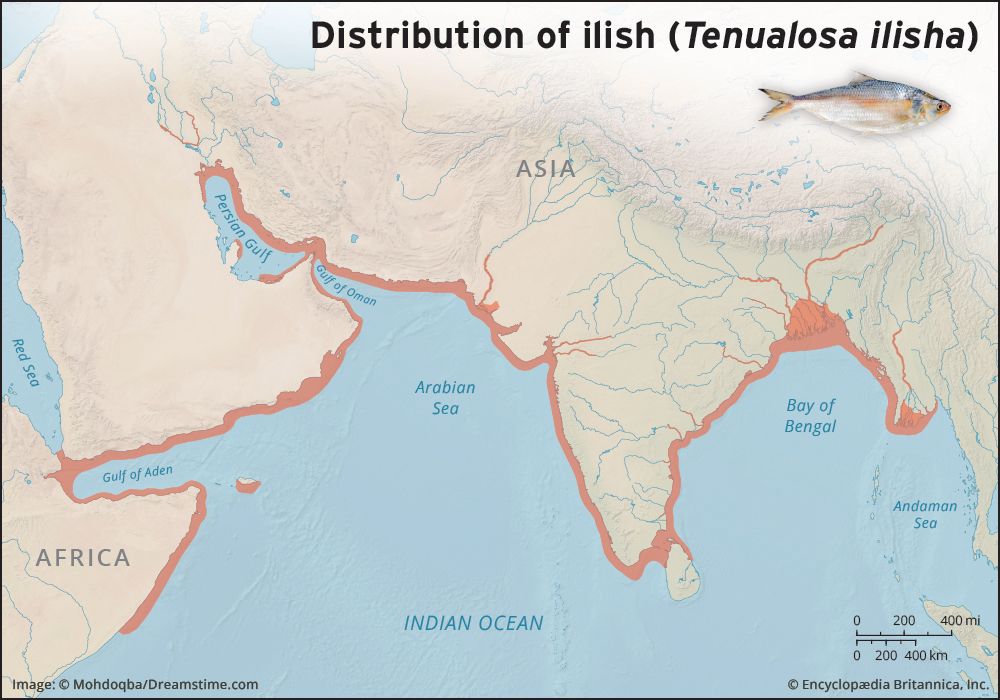
Ilish (Tenualosa ilisha), also known as hilsa shad or Indian shad, is a species of saltwater herring native to the North Indian Ocean and most populous in the Bay of Bengal. It is the national fish of Bangladesh and the state fish of West Bengal, India.12
This anadromous fish migrates from the ocean into freshwater rivers to spawn, often traveling over 1,000 km. Ilish holds immense cultural and economic importance in South Asia, serving as a symbol of Bengali identity and heritage. It is celebrated in literature, art, and cuisine, with popular preparations including shorshe ilish (mustard gravy) and bhapa ilish (steamed).2
Due to overfishing and habitat loss, conservation efforts such as seasonal fishing bans and the protection of juvenile fish, known as jatka, are critical to the species’ survival.2
What does it mean for a fish to be anadromous?
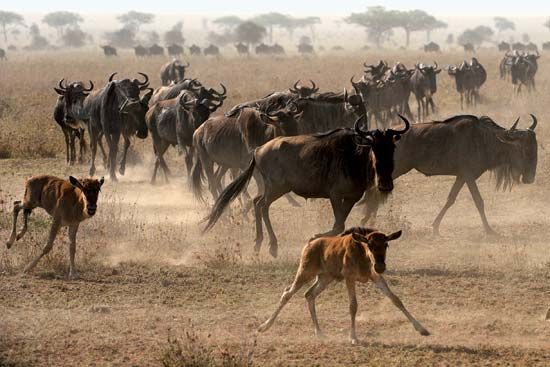
Anadromous fish are species that spend the majority of their lives in the ocean but migrate into freshwater rivers and lakes to spawn. This life cycle allows these fish to expand their range into diverse environments, often reaching areas inaccessible to species restricted to freshwater.345
Because they move between environments with vastly different salt concentrations, anadromous fish possess specialized physiological adaptations to regulate their osmotic pressure. When transitioning between saltwater and freshwater, these fish often congregate in estuaries to allow their internal systems time to adjust to the change in salinity. During their migration, they rely on environmental cues—such as the Sun, the Earth’s magnetic field, and the specific odour of their natal river—to navigate back to the waters where they were hatched.634
Well-known examples of anadromous fish include various species of salmon and trout. This behavior is the opposite of catadromous fish, such as eels, which live in freshwater and migrate to the sea to breed.3547
How do environmental changes like dams affect fish migration?
Dams significantly disrupt the natural migration of fish by acting as physical barriers that block or impede their movement between spawning grounds and feeding habitats. This interference can lead to dramatic population declines, as seen in various river systems where migrating species are unable to reach their traditional breeding areas.1011
To mitigate these effects, engineers have developed fish passes, such as fish ladders and fish locks, which are designed to help fish navigate around dams. Fish ladders typically consist of a series of stepped pools that allow fish to ascend, while fish locks operate on an intermittent principle similar to ship locks to raise fish through the height of the dam.10
Despite these technologies, sustaining fish populations remains challenging as more dams are built along a single river, often rendering passage systems less effective. Consequently, environmental concerns have led to initiatives focused on dam removal in certain regions to help revitalize spawning populations. Beyond blocking migration, dams can also cause broader environmental degradation, including the destruction of ecosystems and the loss of natural habitats.101112
Why is the lunar cycle important for the spawning of certain fish?
The lunar cycle is a critical factor in the reproductive strategies of many marine organisms, primarily because it dictates the timing of tides. The gravitational pull of the Moon and the Sun creates predictable tidal patterns, including spring tides, which occur during new and full moons when tidal ranges are at their maximum.13
For many fish, synchronizing spawning with these lunar-driven tidal events offers significant evolutionary advantages. High-amplitude tides can facilitate the transport of eggs and larvae into favorable habitats or help disperse them away from coastal predators. Furthermore, by timing reproduction to specific lunar phases, populations can ensure that a large number of individuals aggregate simultaneously, which increases the probability of successful fertilization. While fish utilize various environmental cues—such as the Earth’s magnetic field and water chemistry—to navigate toward spawning grounds, the lunar cycle acts as a reliable biological clock that helps coordinate the timing of these critical life-cycle events.14
Sources
- ilish: Top Questions — Encyclopædia Britannica
- ilish — Encyclopædia Britannica
- Migration - Anadromous fish — Encyclopædia Britannica
- Marine ecosystem - Migrations of marine organisms — Encyclopædia Britannica
- protacanthopterygian - Distribution and abundance — Encyclopædia Britannica
- clupeiform - Physiology — Encyclopædia Britannica
- catadromous — Merriam-Webster
- Biosphere - Salinity — Encyclopædia Britannica
- Migration - Catadromous fish — Encyclopædia Britannica
- dam - Fish passes — Encyclopædia Britannica
- dam - Rise of environmental and economic concerns — Encyclopædia Britannica
- reservoir — Encyclopædia Britannica
- protacanthopterygian - Life cycle and reproduction — Encyclopædia Britannica
- What causes tides in the ccean? — Encyclopædia Britannica
Published on · 3 min read