Hampton Roads
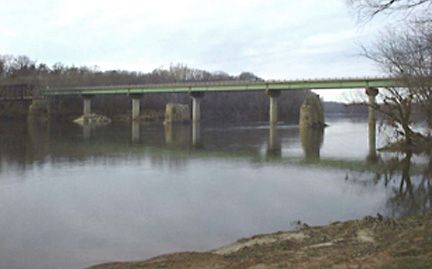
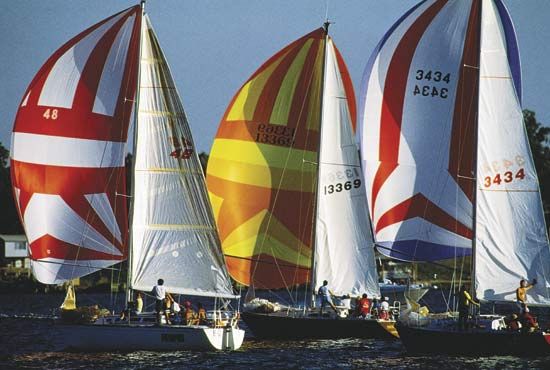
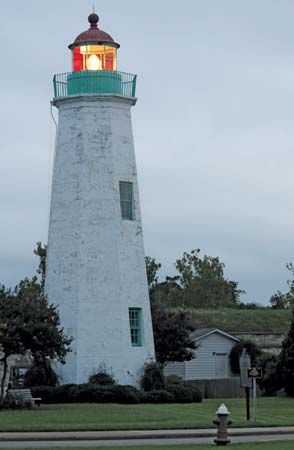
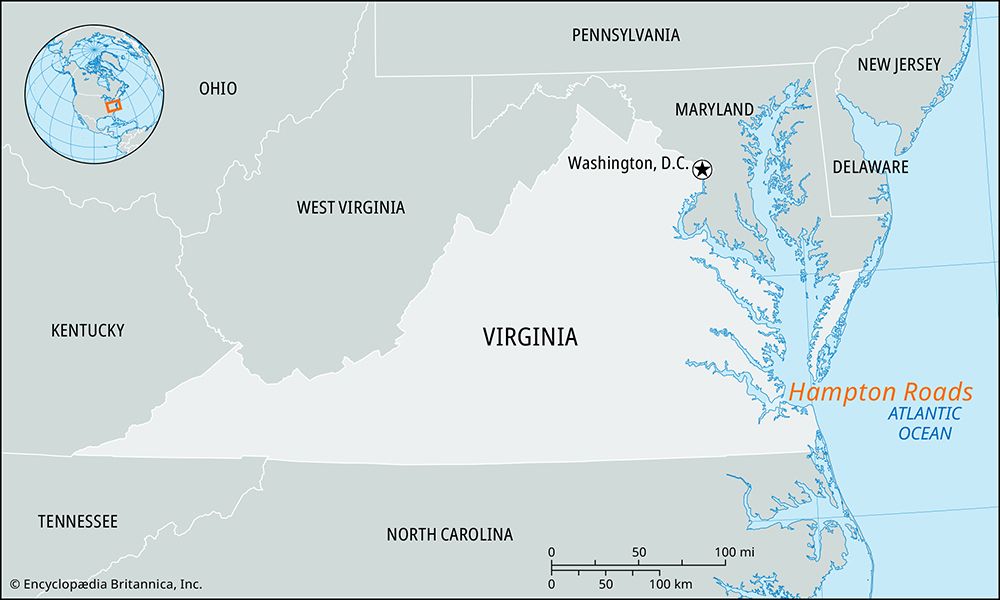
The Hampton Roads area, a significant natural roadstead in southeastern Virginia, serves as a major hub for both commercial shipping and military operations.
What are the main ports and naval facilities located in the Hampton Roads area?
The Hampton Roads area, a significant natural roadstead in southeastern Virginia, serves as a major hub for both commercial shipping and military operations.1
Commercial Ports
The Port of Hampton Roads, established in 1926 under the Virginia Port Authority, is one of the busiest seaports in the United States. It facilitates the import and export of various goods, including tobacco, paper products, petroleum, ores, and automobile parts.1
Naval and Military Facilities
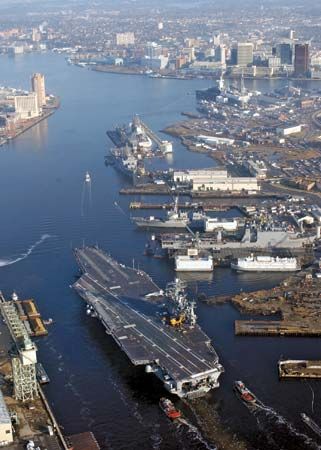
Hampton Roads has been a vital military center since colonial times and hosts an extensive complex of naval and military installations. Key facilities include:12
- Norfolk Naval Shipyard: Located in Portsmouth, this is the oldest U.S. Navy shipyard in the country.1
- Naval Complex: The region, particularly Norfolk and Portsmouth, serves as the headquarters for the U.S. Atlantic Fleet and the North Atlantic Treaty Organization (NATO) Supreme Allied Commander Atlantic. It is considered the largest harbor and naval base in the world.12
- Other Installations: The area also hosts Langley Air Force Base, Fort Monroe, and Fort Eustis.13
What role did Hampton Roads play during the American Civil War?
During the American Civil War, Hampton Roads served as a critical site for both naval innovation and diplomatic efforts.
Naval Warfare
The region is most famous for the Battle of the Monitor and Merrimack on March 9, 1862. This engagement was the first duel between ironclad warships, marking a revolutionary shift in naval warfare. The Confederate ironclad Virginia (formerly the Merrimack) had previously decimated a Union wooden fleet, but its encounter with the Union’s Monitor ended in a tactical stalemate that nonetheless had a profound impact on national morale.16
Strategic Importance
Following the ironclad battle, the area served as a staging ground for the Peninsular Campaign. In April 1862, Union forces under Major General George B. McClellan disembarked 100,000 troops at Fort Monroe to launch an unsuccessful attempt to capture the Confederate capital of Richmond.17
Diplomatic Efforts
Toward the end of the conflict, the Hampton Roads Conference took place on February 3, 1865. President Abraham Lincoln met with Confederate representatives aboard the River Queen to discuss peace terms, though the talks failed because the South would only accept independence.18
What is a roadstead, and how does Hampton Roads fit this definition?
A roadstead is a body of water that is less enclosed than a harbor, providing a protected area where ships can safely ride at anchor.1
Hampton Roads is a premier example of this geographical feature. It is a vast, natural roadstead in southeastern Virginia formed by the deepwater estuary of the James River. The area is shielded by the Virginia Peninsula and receives the waters of the Nansemond and Elizabeth rivers.9
Its strategic value as a roadstead is enhanced by its connection to the Chesapeake Bay via the Thimble Shoal Channel, which allows for deep-draft navigation. This unique combination of natural protection and deepwater access has made it one of the busiest seaports in the United States and a critical location for military and naval facilities since the colonial era.9
What Native American tribes originally inhabited the Hampton Roads area?
The Hampton Roads area was originally inhabited by the Powhatan, a powerful confederacy of at least 30 Algonquian-speaking tribes that occupied much of the tidewater region of Virginia at the time of English settlement in 1607.10
Within the specific site of present-day Hampton, the Kecoughtan tribe resided in a village of the same name. When English colonists arrived, they established Fort Algernourne—later known as Fort Monroe—directly on the site of this indigenous village. The Powhatan confederacy, organized by the chief Powhatan, maintained a sophisticated society characterized by palisaded villages, agricultural cultivation of crops like corn and beans, and a system of mutual military and economic support among its member tribes.1110
Sources
- Hampton Roads — Encyclopædia Britannica
- Norfolk — Encyclopædia Britannica
- Virginia - Transportation — Encyclopædia Britannica
- Hampton — Encyclopædia Britannica
- naval station — Merriam-Webster
- Battle of the Monitor and Merrimack — Encyclopædia Britannica
- Peninsular Campaign — Encyclopædia Britannica
- Hampton Roads Conference — Encyclopædia Britannica
- roadstead — Merriam-Webster
- Powhatan — Encyclopædia Britannica
- Powhatan — Merriam-Webster
Published on · 3 min read