James River
There are two prominent rivers in the United States named the James River:
What is James River?
There are two prominent rivers in the United States named the James River:
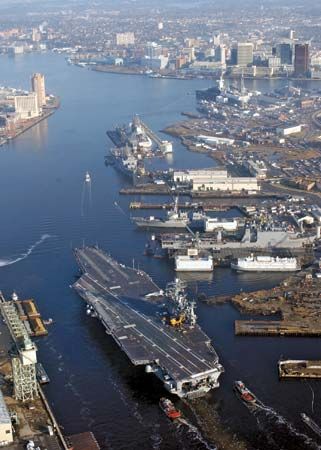
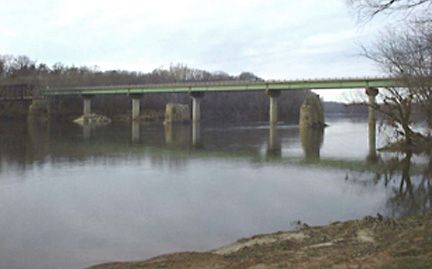
- James River (Virginia): This river flows 340 miles across central Virginia. Formed by the junction of the Jackson and Cowpasture rivers, it passes through Richmond and empties into Hampton Roads at Newport News. Its lower course is historically significant as the site of Jamestown, the first permanent English settlement in America.12
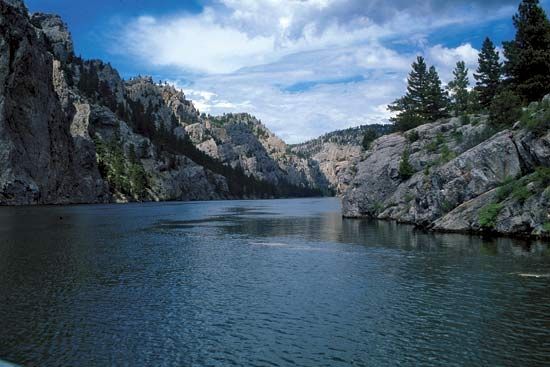
- James River (Dakotas): This river rises in central North Dakota and flows 710 miles in a south-southeasterly direction across South Dakota to join the Missouri River. It serves as a vital water source and recreational area for cities such as Jamestown, Huron, and Mitchell.3
Why was the Jamestown settlement established along the James River?
The Jamestown settlement was established along the James River in 1607 by the Virginia Company for several strategic and practical reasons.34
At the time, the site offered distinct advantages that influenced the leaders’ decision:
- Navigability: The river provided deep water, allowing ships to pull up close to the shore for the efficient loading and unloading of supplies.3
- Defensibility: The chosen location was a peninsula (now an island) connected to the mainland by only a narrow neck of land, which made it significantly easier to defend against potential threats.3
- Accessibility: The site was unoccupied, allowing the colonists to establish their settlement without immediate conflict over land usage.3
While the marshy, humid environment eventually proved unhealthful for the settlers, these logistical benefits made it an attractive choice for the initial landing. The settlement was named in honor of King James I, who had granted the charter for the venture.3
What is the difference between the James River in Virginia and the one in the Dakotas?
The James River in Virginia and the James River in the Dakotas are distinct geographical features with significant differences in length, location, and historical context.
Feature
James River (Virginia)
James River (Dakotas)
Location
Central
Virginia
North Dakota
and
South Dakota
Length
340 miles (550 km)
710 miles (1,140 km)
Flow Direction
Flows east into
Hampton Roads
Flows south-southeasterly to join the
Missouri River
Key Characteristics
Navigable for deep drafts to
Richmond
; site of
Jamestown
Features dams for flood control, irrigation, and recreation
The Virginia river is historically notable for its role in the first permanent English settlement in America and its strategic importance during the American Civil War. In contrast, the Dakota river is a major tributary of the Missouri River, serving as a vital water source for agricultural and municipal needs in the Great Plains.51
How did the American Civil War impact the James River region?
During the American Civil War, the James River region served as a critical theater of conflict, primarily because Richmond—the capital of the Confederacy—was located at the head of the river’s navigation.17
The river was a major strategic artery for Union forces attempting to capture the Confederate capital:1
- The Peninsular Campaign (1862): Union Major General George B. McClellan utilized the peninsula between the York and James rivers to launch a large-scale effort to seize Richmond. This campaign included the Seven Days’ Battles, during which Confederate General Robert E. Lee successfully forced the Union army to withdraw to a new base on the James River.897
- Military Engineering and Siege: Throughout the war, Union troops frequently used the river for transport and logistics. During the later siege of Richmond and Petersburg, Union forces famously dug the Dutch Gap Canal to bypass a bend in the river.1
- Final Capture: The region remained a primary target until April 3, 1865, when General Ulysses S. Grant finally broke the Confederate defenses, leading to the fall of Richmond.7
Sources
- James River — Encyclopædia Britannica
- James River — Encyclopædia Britannica
- Jamestown Colony - Origins (1606–07) — Encyclopædia Britannica
- American colonies - How colonization took place — Encyclopædia Britannica
- James — Merriam-Webster
- Jamestown — Encyclopædia Britannica
- Peninsular Campaign — Encyclopædia Britannica
- American Civil War - The Peninsular Campaign — Encyclopædia Britannica
- Richmond — Encyclopædia Britannica
Published on · 3 min read