James River
The James River in Virginia is a prominent waterway in the central part of the state. It is formed by the junction of the Jackson and Cowpasture rivers in…
What is the geographical location and course of the James River in Virginia?
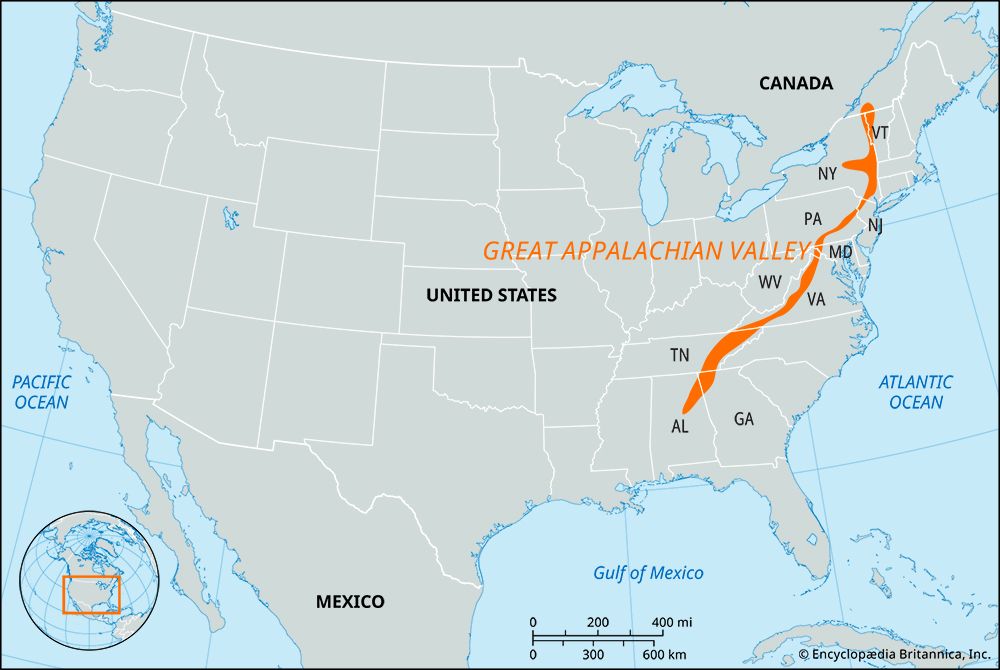
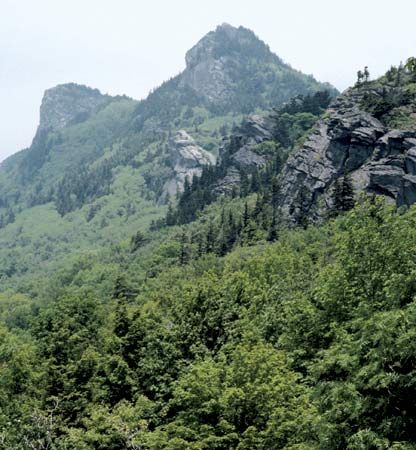
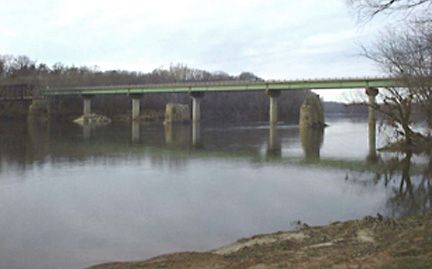
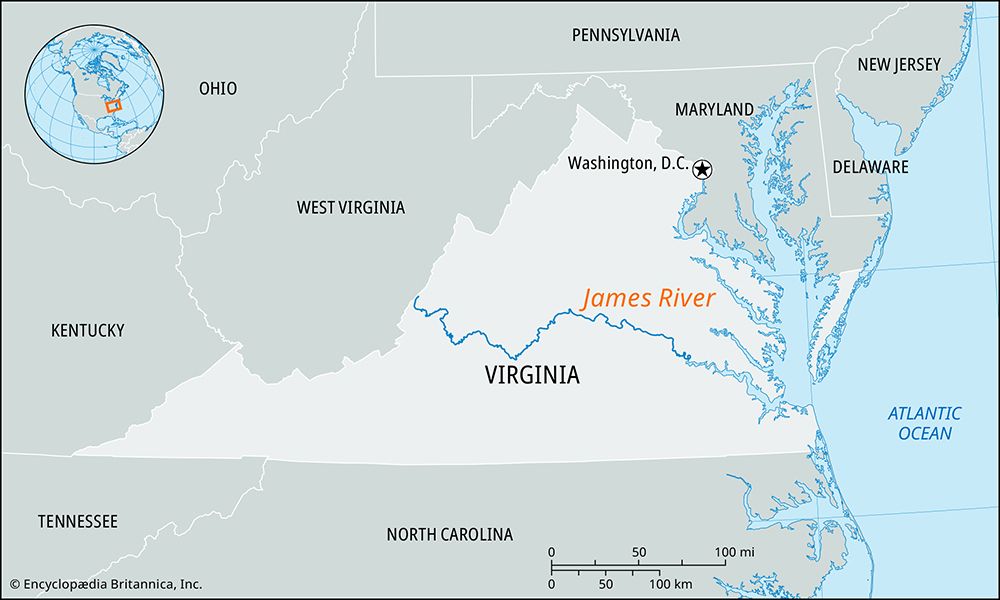
The James River in Virginia is a prominent waterway in the central part of the state. It is formed by the junction of the Jackson and Cowpasture rivers in northern Botetourt County. From there, it flows eastward, cutting through the Great Appalachian Valley and crossing the Blue Ridge Mountains via a series of gorges near Lynchburg.1
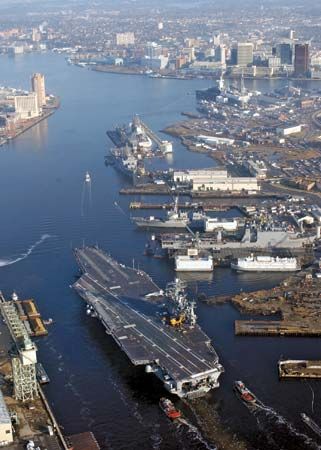
Continuing past Richmond, which serves as the fall line and the head of tidewater, the river meanders southeast for a total course of 340 miles (550 km). It eventually enters Hampton Roads through a 5-mile-wide estuary at Newport News. Notably, the river’s lower course is home to Jamestown, the site of the first permanent English settlement in America.1
(Note: There is also a separate James River located in North and South Dakota, which flows into the Missouri River.)2
How long is the James River, and what are its major tributaries?
The James River in Virginia has a total course of 340 miles (550 km). It is formed by the junction of the Jackson and Cowpasture rivers, and its chief tributaries are the Appomattox and Chickahominy rivers.1
It is important to distinguish this from the James River in North and South Dakota, which is a separate waterway that flows for 710 miles (1,140 km) before joining the Missouri River.2
What historical significance does the James River hold in relation to early American settlements?
The James River holds profound historical significance as the gateway for the first permanent English settlement in America. In 1607, the Virginia Company of London, acting under a charter from King James I, sent a contingent of colonists to the region. After arriving in the Chesapeake Bay, these settlers navigated the river and established Jamestown on a peninsula along its lower course on May 14, 1607.13
The river was chosen for its strategic advantages: it provided deep water for ships to dock close to the shore, and the site’s geography—connected to the mainland by a narrow neck—offered a defensible position against potential threats. Beyond its role in colonial origins, the river served as a vital artery for exploration and trade, as the Virginia Company initially hoped to use such waterways to locate precious metals and find a passage to the Pacific Ocean.3
How did the James River play a role in the American Civil War?
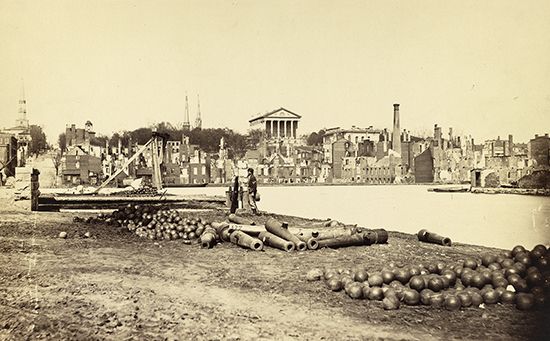
During the American Civil War, the James River served as a critical strategic corridor, primarily because it provided a direct water route toward Richmond, the capital of the Confederacy. Because the river was navigable for deep-draft vessels up to the city, it became a primary target for Union military operations aimed at capturing the Confederate seat of government.14
Key aspects of the river’s role included:
- The Peninsular Campaign (1862): Union forces under Major General George B. McClellan utilized the peninsula formed by the York and James rivers to launch a large-scale attempt to seize Richmond. This campaign featured the famous engagement between the ironclads Monitor and Merrimack at Hampton Roads, which highlighted the importance of naval control in the region.15
- Siege Operations: Throughout the war, the river remained a focal point for Union pressure. During the later stages of the conflict, specifically the siege of Richmond and Petersburg in 1864, Union troops utilized the river for logistics and engineering, including the construction of the Dutch Gap Canal to bypass Confederate river defenses.14
Sources
- James River — Encyclopædia Britannica
- James River — Encyclopædia Britannica
- Jamestown Colony - Origins (1606–07) — Encyclopædia Britannica
- Peninsular Campaign — Encyclopædia Britannica
- Richmond — Encyclopædia Britannica
Published on · 3 min read