Harrier
Harriers are a group of approximately 11 species of slender, long-tailed hawks belonging to the subfamily Circinae. These birds are known for hunting by…
What are some of the most common harrier species found around the world?
Harriers are a group of approximately 11 species of slender, long-tailed hawks belonging to the subfamily Circinae. These birds are known for hunting by cruising low over open habitats like meadows and marshes.1
Some of the most common species include:
- Northern harrier (Circus cyaneus): Also known as the hen harrier or marsh hawk, this is the best-known species, with a range spanning the Northern Hemisphere and parts of South America.12
- Marsh harrier (C. aeruginosus): Found across most of Europe, stretching from the Mediterranean to Mongolia.1
- Montagu’s harrier (C. pygargus): Shares a similar range to the marsh harrier, extending from Europe to North Africa and Central Asia.1
- Pallid harrier (C. macrourus): Breeds in regions from the Baltic through southeastern Europe and into Central Asia.1
- Other species: These include the cinereous harrier of South America, the long-winged harrier, the South African marsh harrier, and the pied harrier of central eastern Asia.1
What are the distinctive physical characteristics of harriers?
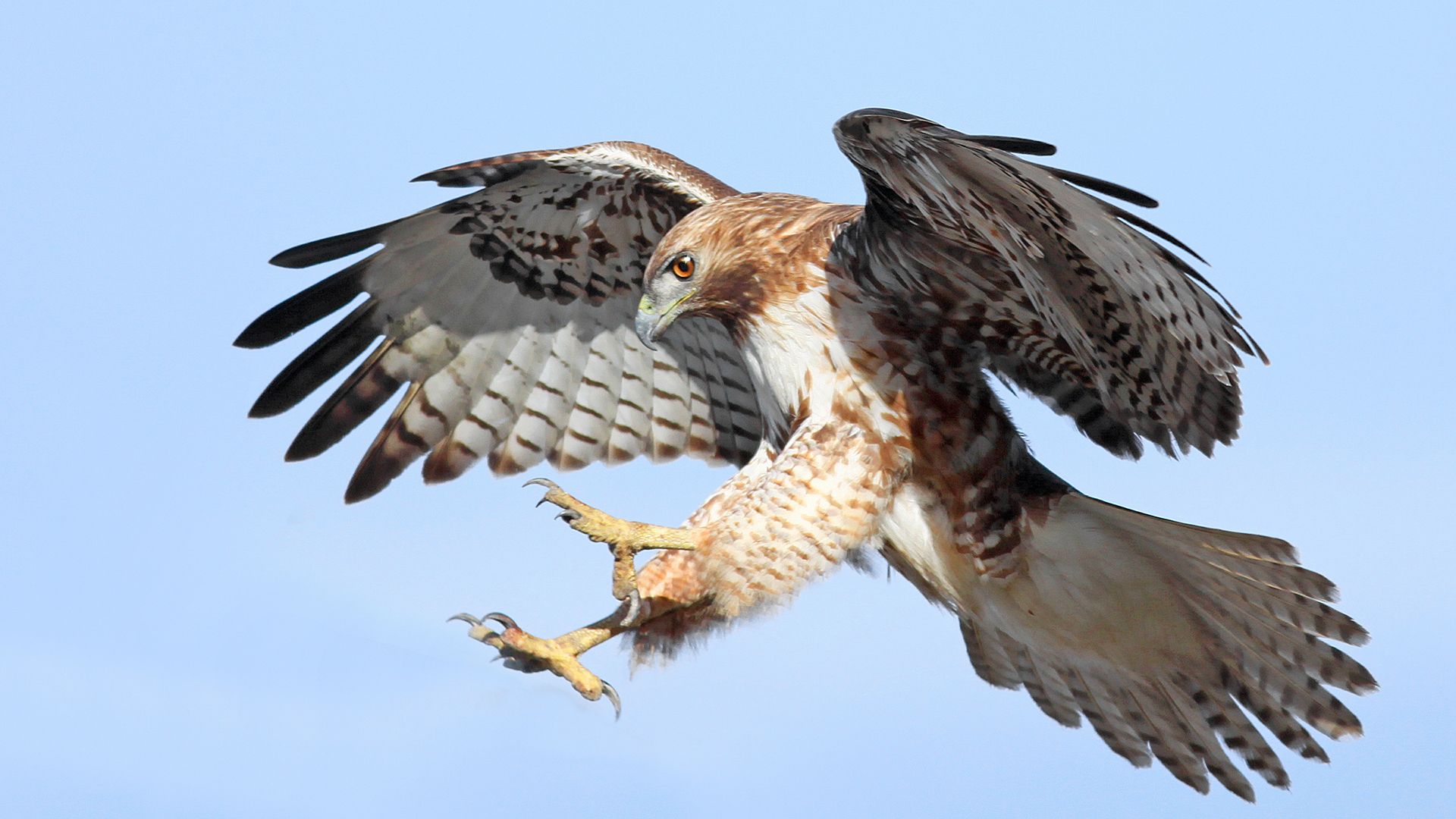
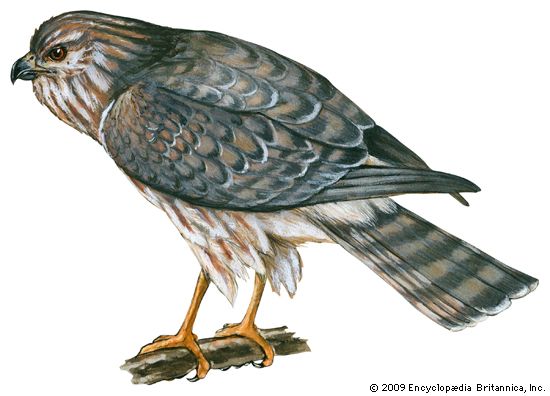
Harriers are a group of approximately 11 species of hawks within the subfamily Circinae that possess several distinctive physical traits suited to their hunting style.
Key physical characteristics include:
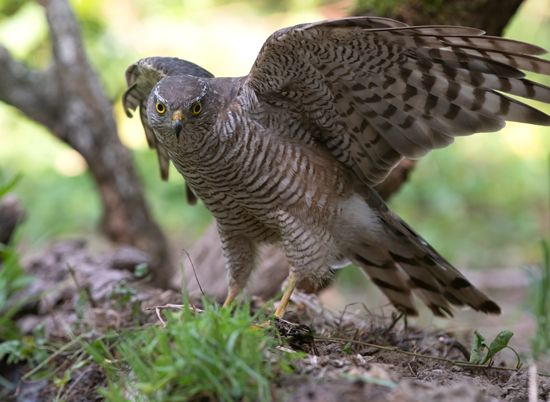
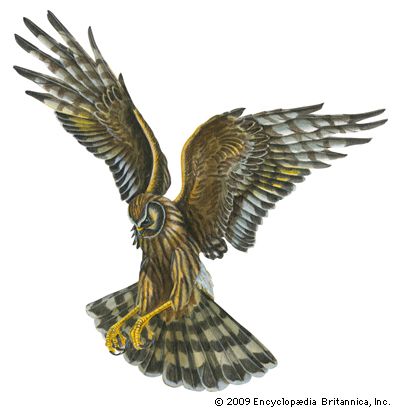
- Build: They are slender, plain-looking birds with long legs and long tails.1
- Size: On average, these birds reach a length of about 50 cm (20 inches).1
- Facial Features: A notable feature is the arrangement of their face feathers into facial discs, which help them detect prey while hunting.1
- Beak: They possess relatively small beaks compared to other raptors.1
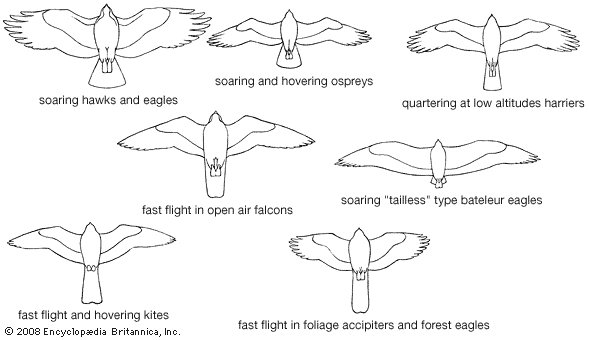
These birds are specialized for hunting by cruising low over open environments such as marshes and meadows to locate prey, including insects, snakes, frogs, small birds, and mice. Unlike many other hawks that nest in trees, harriers typically nest on the ground in tall grass or marshy areas.14
What is the average lifespan of a harrier in the wild versus in captivity?
Sorry, the Britannica knowledge base does not contain specific information regarding the average lifespan of harriers in the wild or in captivity.
While general data on raptors indicates that smaller species often have shorter lifespans—frequently averaging less than three years—and larger species can live significantly longer, specific longevity statistics for the subfamily Circinae are not provided in the available records.1
In what types of habitats are harriers typically found?
Harriers are primarily associated with open, expansive landscapes. They are most commonly found in meadows and marshes, where they cruise low to the ground to hunt for prey.1
Specific habitat preferences vary by species and region:
- Northern Harriers: These birds breed across temperate and boreal regions throughout the Northern Hemisphere, as well as in parts of South America. In Britain, they are notably found on moorland environments, particularly in Scotland.17
- Marsh and Montagu’s Harriers: These species have a broad range extending across Europe, from the Mediterranean shores of North Africa to Mongolia.1
- Other Species: The long-winged harrier is widely distributed across South America, particularly east of the Andes, while the pied harrier is found in central eastern Asia.1
Because of their reliance on these open environments, harriers typically nest directly on the ground, utilizing tall grass or marsh vegetation for cover.1
Sources
- Harrier — Encyclopædia Britannica
- Northern harrier — Encyclopædia Britannica
- northern harrier — Merriam-Webster
- Harrier — Encyclopædia Britannica
- Hawk — Encyclopædia Britannica
- Falconiform - The breeding adult — Encyclopædia Britannica
- hen harrier — Merriam-Webster
Published on · 3 min read