Accipiter
Accipiter is a genus of approximately 50 species of birds of prey commonly known as "true" hawks. These birds are characterized by their broad, short wings…
What is Accipiter?
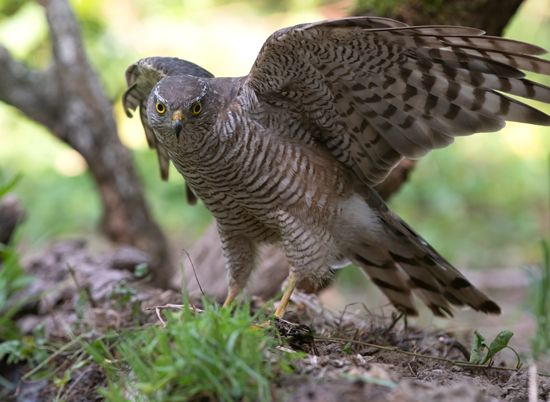
Accipiter is a genus of approximately 50 species of birds of prey commonly known as “true” hawks. These birds are characterized by their broad, short wings and relatively long legs and tails, and they primarily hunt other birds.1
Members of this genus vary significantly in size, ranging from the small sparrowhawk of Africa—measuring about 20 cm—to the northern goshawk, which can reach 60 cm in length. They inhabit forested regions globally, where they construct stick nests in tall trees. While historical classifications sometimes grouped them with falcons, most modern taxonomies place them within the family Accipitridae in the order Accipitriformes, alongside eagles, kites, and vultures.1
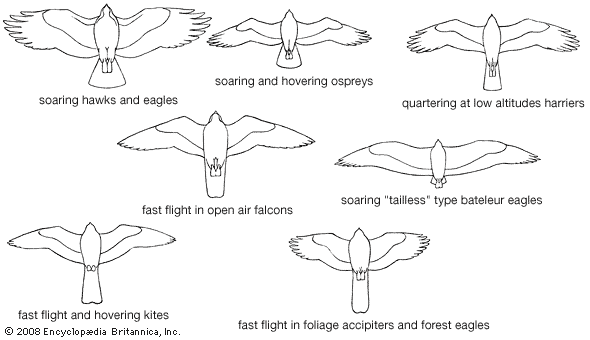
How do Accipiters hunt differently than other hawks?
Accipiters (the “true” hawks) possess distinct physical adaptations that allow them to hunt differently than other hawks and birds of prey, such as falcons or buteos.112
- Maneuverability in Wooded Areas: Unlike falcons, which are built for speed in open spaces, accipiters have broad, short wings and long tails. This anatomy provides them with exceptional agility, making them highly effective at navigating and hunting within dense, wooded environments.12
- Hunting Technique: Accipiters are known for their ability to accelerate rapidly using bursts of flapping flight to pursue prey. Their primary hunting method involves “raking,” or swiftly following their prey’s attempts to escape through complex terrain.31
- Prey Specialization: While many other hawks (such as buteos) primarily hunt small mammals, reptiles, or insects, accipiters are specialized predators that focus heavily on hunting other birds.41
- Falconry Roles: This difference in hunting style is reflected in falconry, where falcons are typically preferred for catching birds in flight, whereas accipiters like goshawks and sparrowhawks are favored for hunting ground game.2
What are the main differences between hawks and falcons?
Hawks and falcons are both birds of prey, but they belong to distinct taxonomic families and have evolved different physical and behavioral traits to master their respective environments.3
Taxonomic Differences
Hawks are primarily members of the family Accipitridae, a group that also includes kites, buzzards, harriers, and eagles. Falcons belong to the family Falconidae, which includes caracaras and true falcons caracaras and true falcons.35
Physical and Behavioral Distinctions
- Anatomy: Hawks generally have broader wings and tails, which provide the maneuverability needed for hunting in wooded areas. Falcons possess long, pointed wings and streamlined bodies, enabling them to achieve incredible speeds during dives in open spaces.34
- Nesting: Hawks typically build nests in trees, though some nest on the ground or cliffs. Falcons generally prefer nesting in tree holes or on cliff ledges and do not build nests in the same manner as many accipitrids.35
- Hunting: In the sport of falconry, falcons are often preferred for hunting birds in flight due to their speed, while “true” hawks (such as goshawks and sparrowhawks) are favored for hunting ground game.36
What are some common species of Accipiters found in North America?
Common species of Accipiters—often referred to as “true hawks”—found in North America include:
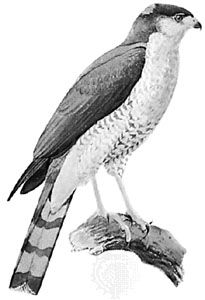
- Sharp-shinned hawk (A. striatus): A small bird of prey, typically reaching about 30 cm (12 inches) in length. It is characterized by its gray upper plumage and fine, rusty-colored barring on its underparts.2
- Cooper’s hawk (A. cooperii): Similar in appearance to the sharp-shinned hawk but significantly larger, growing up to 50 cm (20 inches) long. It is well-known for its agility and occasional raids on poultry yards.2
- Northern goshawk (Accipiter gentilis): The most powerful of the North American Accipiters, reaching lengths of approximately 60 cm (2 feet). These birds are primarily forest-dwellers that hunt game as large as grouse and foxes.7
These species are distinguished by their long tails and short, rounded wings, which provide the high level of maneuverability required for hunting in wooded environments.27
Sources
- Accipiter — Encyclopædia Britannica
- Hawk — Encyclopædia Britannica
- What are the differences between hawks and falcons? — Encyclopædia Britannica
- Falconiform - Flapping, soaring , and diving — Encyclopædia Britannica
- Falconiform - Annotated classification — Encyclopædia Britannica
- falconry - Types of birds used in falconry — Encyclopædia Britannica
- Goshawk — Encyclopædia Britannica
Published on · 3 min read