Havel River
The Havel River is a significant tributary of the Elbe River located in Germany. It originates on the Mecklenburg Plateau and flows for 213 miles (343 km)…
What is Havel River?
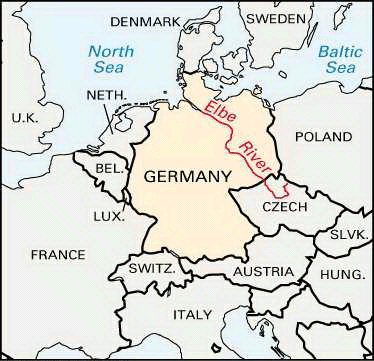
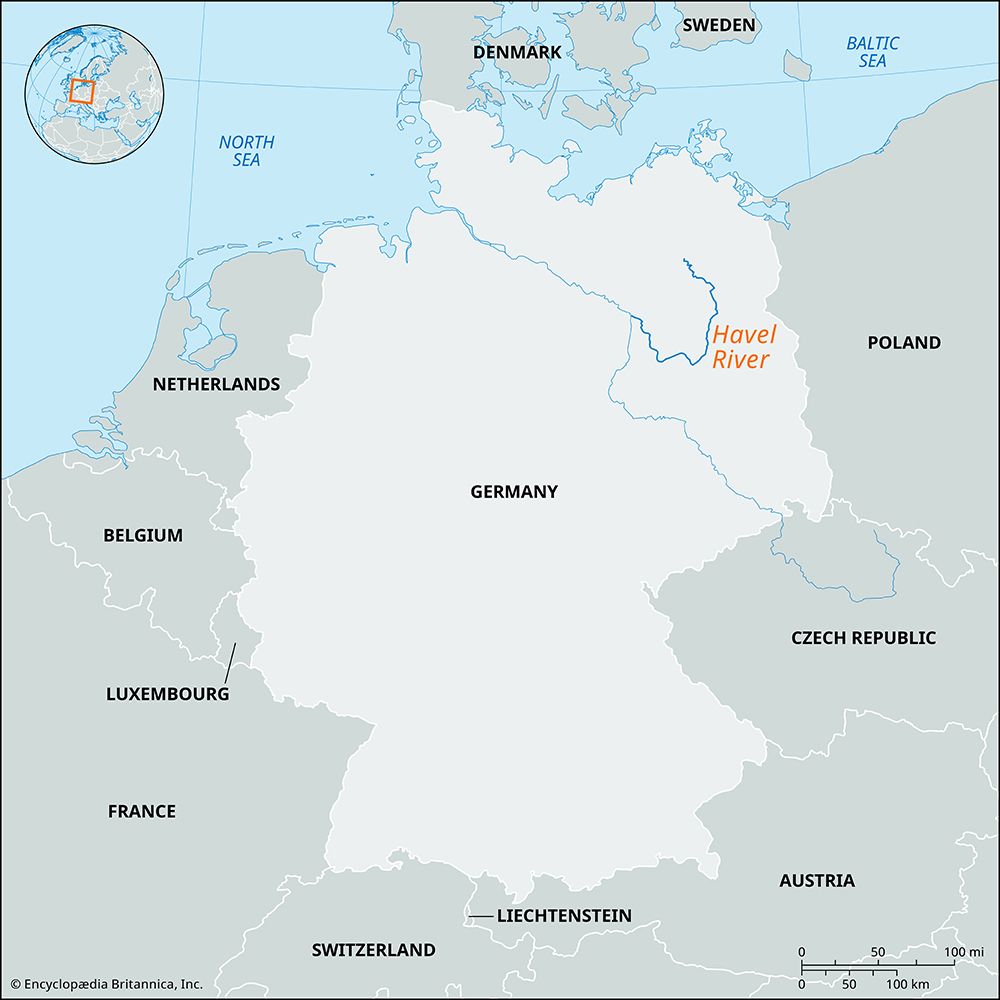
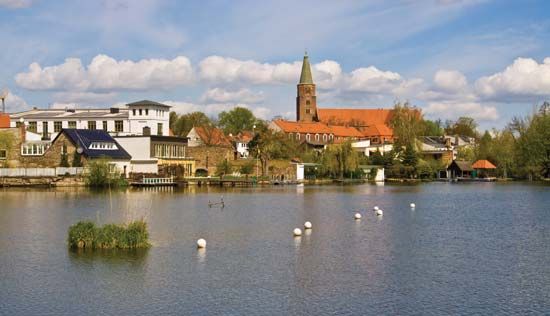
The Havel River is a significant tributary of the Elbe River located in Germany. It originates on the Mecklenburg Plateau and flows for 213 miles (343 km) through a series of lakes, passing through Spandau in Berlin, where it meets the Spree River. Continuing southwest past Potsdam and Brandenburg, the river eventually joins the Elbe near Havelberg.1
The river drains an area of 9,372 square miles (24,273 square km) and features a gentle gradient with a total fall of only 158 feet (43 meters). It is navigable downstream from the Mecklenburg lakes and serves as a vital component of a canal system connecting the Elbe in the west to the Oder River in the east.1
What is the significance of the Spree River?
The Spree River is a vital waterway in northeastern Germany, stretching 250 miles (403 km) from the Lusatian Mountains to its confluence with the Havel River at Spandau.2
Its significance is primarily historical and geographical:
- Founding of Berlin: The city of Berlin was established in the 13th century specifically to command a natural east-west trade route crossing the Spree. The river served as a strategic anchor for early settlements like Berlin-Kölln, Spandau, and Köpenick.3
- Landscape and Geography: The river flows through a wide glacial valley that defines the center of Berlin. It also forms the Spree Forest, a unique marshy region that is both a center for market gardening and a popular recreational area.42
- Connectivity: The Spree acts as a key link in Germany’s inland navigation, connected to neighboring rivers via canals, most notably the Oder-Spree Canal, which facilitates trade toward the Oder River.2
How do canal systems connect major rivers in Germany?
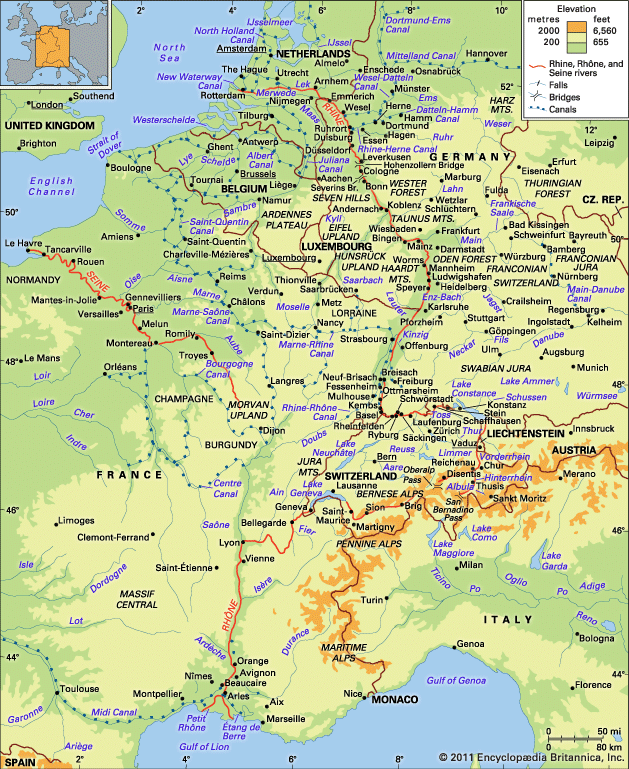
Germany’s extensive network of inland waterways is defined by a series of canals that link its major rivers—the Elbe, Oder, Weser, and Rhine—to facilitate commercial and political connectivity.67
Key Canal Systems
- Mittelland Canal: Completed in 1938, this major waterway runs eastward from the Dortmund-Ems Canal to the Elbe River. It serves as a central artery, connecting with the Elbe-Havel Canal to provide a continuous route to Berlin.6
- Elbe Lateral Canal: Opened in 1977, this canal connects the Elbe to the Mittelland Canal, allowing vessels to bypass older routes and improving navigation between Hamburg and the industrial regions of the Ruhr.68
- Main-Danube Canal: Completed in 1992, this vital link connects the Rhine-Main system with the Danube River, creating a trans-European route from the North Sea to the Black Sea.8
- Oder-Spree and Oder-Havel Canals: These canals integrate the Oder River into the broader German waterway network, connecting it westward toward the Spree and Havel rivers.9
Historically, these connections were developed to bypass tolls and unify trade routes across the fragmented states of the Holy Roman Empire. Today, these systems are standardized to accommodate large, modern cargo vessels.768
What are some famous landmarks located along the Havel River?
The Havel River flows through a region rich in history and architecture, particularly in and around the city of Potsdam. Many of the most famous landmarks along its banks are part of a UNESCO World Heritage site recognized for its beautifully landscaped parks and palaces.210
Notable landmarks include:
- Sanssouci Palace: A masterpiece of German Rococo architecture built between 1745 and 1747, featuring extensive grounds covering more than 700 acres.2
- Neues Palais (New Palace): Constructed between 1763 and 1769, this grand structure is one of the prominent royal residences located within the palace parklands.2
- Cecilienhof Palace: Historically significant as the site of the Potsdam Conference in 1945, where Allied leaders met following World War II. It now serves as a museum and memorial.2
- Additional Architectural Sites: The area also features the Orangerie, the Bildergalerie (Picture Gallery), the Neue Kammern (New Rooms), and the historic Brandenburg Gate in Potsdam.2
Sources
- Havel River — Encyclopædia Britannica
- Spree River — Encyclopædia Britannica
- Berlin - Origins — Encyclopædia Britannica
- Berlin - The city site — Encyclopædia Britannica
- Spandau — Encyclopædia Britannica
- Mittelland Canal — Encyclopædia Britannica
- canals and inland waterways - Germany — Encyclopædia Britannica
- Oder River — Encyclopædia Britannica
- canals and inland waterways - Major inland waterways of Europe — Encyclopædia Britannica
- Potsdam — Encyclopædia Britannica
- Oder–Havel Canal — Encyclopædia Britannica
Published on · 3 min read