Helgoland
Sorry, the Britannica knowledge base does not contain information regarding traditional customs or festivals unique to Helgoland. The available records focus…
What are some traditional customs or festivals unique to Helgoland?
Sorry, the Britannica knowledge base does not contain information regarding traditional customs or festivals unique to Helgoland. The available records focus primarily on the island’s geological history, its strategic military significance, and its transition between various national administrations.
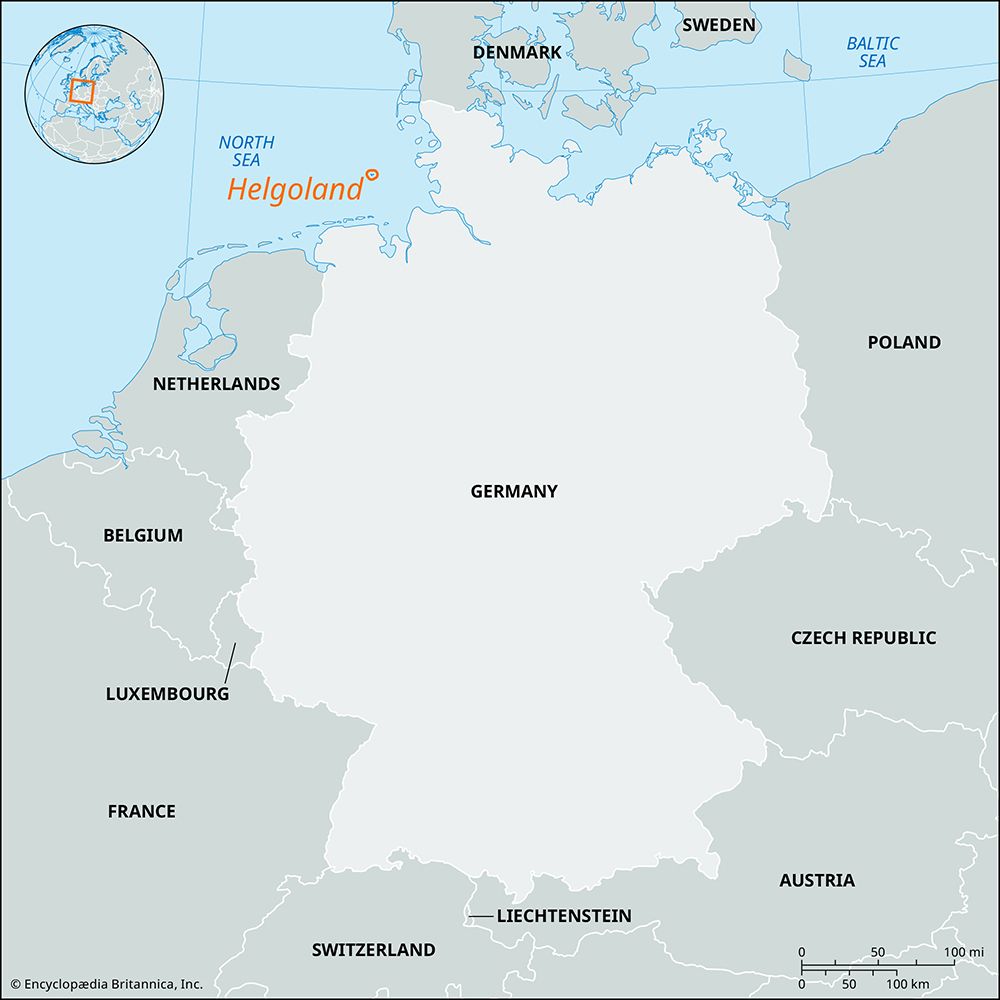
How did Helgoland’s ownership change over time, and how did it become part of Germany?
Helgoland has a complex history of shifting sovereignty. Originally inhabited by Frisian people, the island came under the control of the dukes of Schleswig-Holstein in 1402 before becoming a Danish possession in 1714.1
During the Napoleonic Wars, the British navy seized the island in 1807, and it was formally ceded to Britain in 1814. The island’s transfer to Germany occurred in 1890, when Britain exchanged Helgoland for Zanzibar and other African territories.1
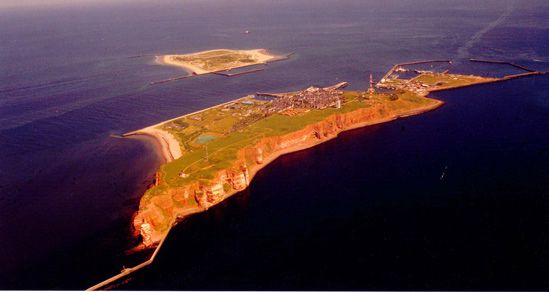
Following its development as a major naval base, the island faced significant destruction during and after World War II. After being used as a bombing range by the Royal Air Force, the island was finally returned to West Germany on March 1, 1952, and subsequently rebuilt as a tourist destination and research site.1
What role did Helgoland play during World War I and World War II?
Helgoland served as a critical strategic asset for Germany during both World Wars, earning the nickname the “Gibraltar of the North Sea” due to its extensive military infrastructure.1
World War I
Following its transfer to Germany in 1890, the island was heavily fortified with coastal batteries, dockyards, and underground installations. Throughout World War I, these facilities were in constant use by German naval forces. However, following Germany’s defeat, the Treaty of Versailles mandated the demolition of these military and naval works between 1920 and 1922, after which the island transitioned into a tourist resort.1
World War II
Under the Nazi regime, Helgoland was re-militarized and restored as a naval stronghold. Toward the end of World War II, the island sustained severe damage from Allied bombing raids. After the war, the population was evacuated, and British authorities conducted deep blasting to destroy the remaining fortifications. The island subsequently served as a bombing range for the Royal Air Force until it was returned to West Germany in 1952](https://www.britannica.com/place/West-Germany) in 1952.1
What is the historical significance of Helgoland in German history?
Helgoland holds significant historical importance in German history, primarily as a strategic naval asset and a symbol of shifting geopolitical power. Originally inhabited by Frisian people, the island transitioned through Danish control before being seized by the British in 1807. Its return to Germany in 1890 via the Zanzibar Treaty was a pivotal moment, as it allowed Germany to develop the island into the “Gibraltar of the North Sea,” a heavily fortified naval base essential to its maritime strategy during World War I.14
The island’s history also reflects the volatility of 20th-century conflicts. Following the Treaty of Versailles, its military works were demolished, only to be rebuilt under the Nazi regime, leading to its destruction during World War II. After the war, the island served as a British bombing range before being returned to West Germany in 1952. Today, it stands as a site for scientific research, wind-energy production, and tourism.1
Sources
- Helgoland — Encyclopædia Britannica
- flag of Denmark — Encyclopædia Britannica
- Battle of Heligoland — Encyclopædia Britannica
- Zanzibar Treaty — Encyclopædia Britannica
Published on · 3 min read