Fanø
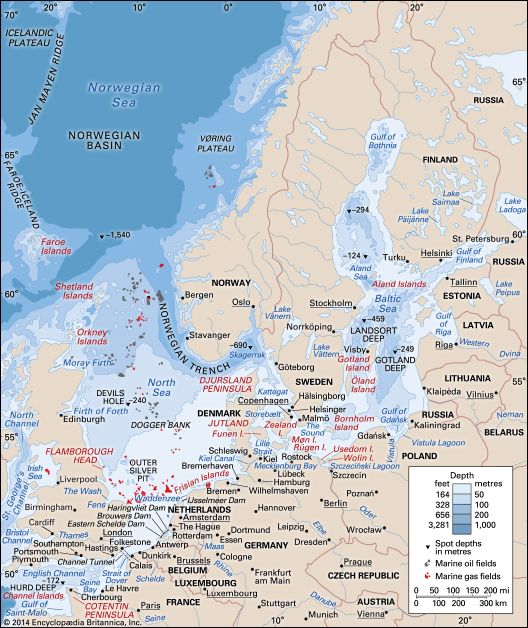
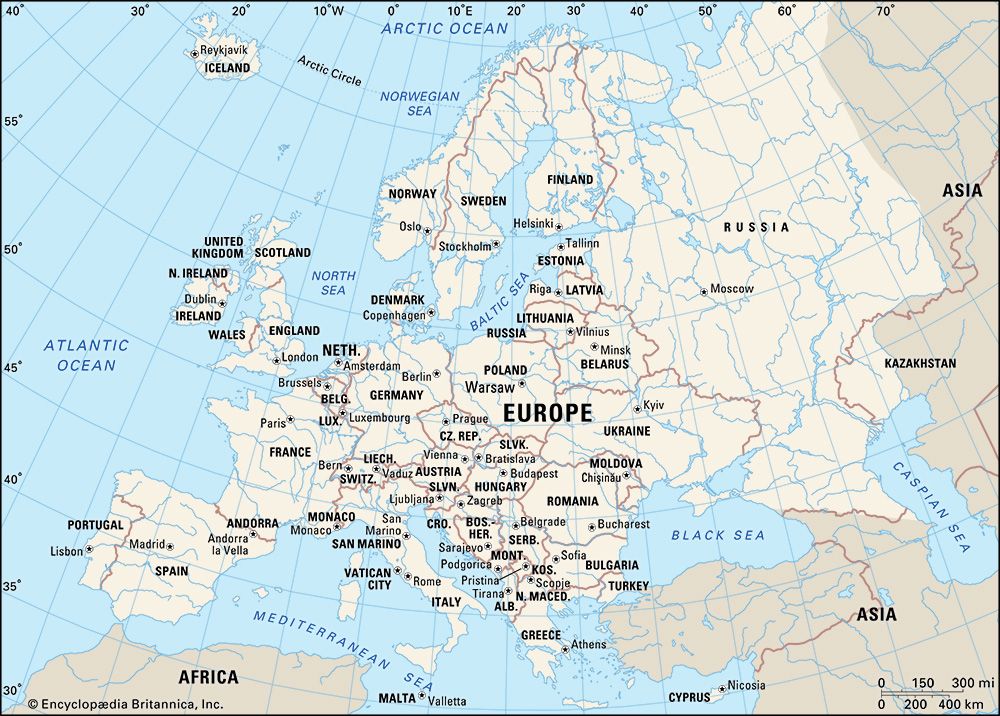
Fanø is an island belonging to the North Frisian group, located in the North Sea off the coast of Esbjerg in southwestern Denmark.
What is Fanø?
Fanø is an island belonging to the North Frisian group, located in the North Sea off the coast of Esbjerg in southwestern Denmark.1
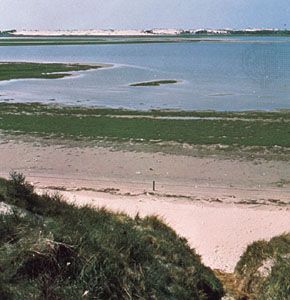
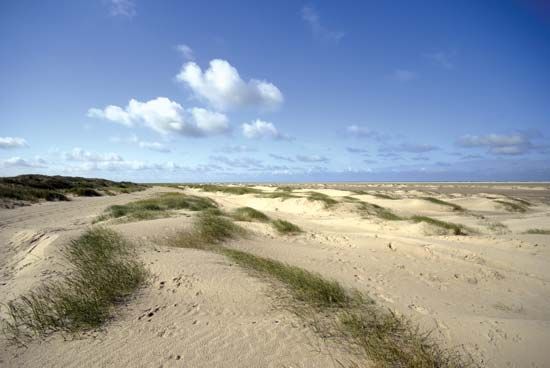
Spanning approximately 22 square miles (56 square km), the island is characterized by its extensive beaches, dunes, heath, and marshland. Its primary settlements are Nordby and Sønderho. Historically, Fanø was crown property until the inhabitants purchased it in 1741, subsequently developing a significant fishing fleet throughout the 18th and 19th centuries.1
Around 1900, the island gained popularity as a resort destination among the Jutland nobility. Today, the local economy is driven by tourism and daily ferry commutes to the mainland city of Esbjerg. Visitors can learn about the island’s rich nautical heritage at the Fanø Maritime and Costume Museum in Nordby.1
What are the North Frisian Islands?
The North Frisian Islands are a segment of the Frisian Islands chain, situated in the North Sea off the coast of northern Europe. They are politically divided between Germany and Denmark.23
Geographically, the chain extends northward from Trischen, located near the Elbe River estuary, along the coasts of Schleswig-Holstein and the Jutland Peninsula, ending at Fanø near the Danish port of Esbjerg. The group includes several notable islands:2
- German islands: These include Sylt, Föhr, Amrum, Hooge, Nordmarsch-Langeness, Pellworm, Nordstrandischmoor, and Nordstrand. The rocky island of Helgoland is also part of this group, though it is geologically and geographically distinct.2
- Danish islands: These include Rømø, Mandø, and Fanø.2
Many of these islands have been shaped by historical flooding and subsidence. Notably, Sylt and Rømø are linked to the mainland by long embankments.2
How did the island’s history as a fishing hub shape its culture?
Fanø’s history as a prominent fishing hub during the 18th and 19th centuries fundamentally shaped its cultural identity, leaving a legacy that remains central to the island today. After the inhabitants purchased the island from the crown in 1741, the development of a large fishing fleet fostered a resilient, independent seafaring community.1
This maritime heritage is preserved and celebrated through the island’s cultural institutions. The Fanø Maritime and Costume Museum in Nordby serves as a focal point for this history, memorializing the generations of sailors and fishermen who defined the island’s character. While the economy has since shifted toward tourism and commuting to Esbjerg, the influence of this seafaring past persists in the local traditions and the pride taken in the island’s nautical roots.1
What unique wildlife can be found in the island’s dunes and marshes?
The dunes and marshes of islands like Fanø and the broader Wadden Sea region serve as vital habitats for a diverse array of wildlife. While specific species lists for every dune system are extensive, the region is internationally recognized as a critical refuge for waterfowl and various migratory birds.1
The muddy coastal areas and marshes are particularly significant for:
- Seabirds and Shorebirds: The region supports numerous species of seabirds and marsh birds that utilize these environments for nesting, feeding, or as stopover points during migration.24
- Marine Life: The tidal flats, or wadden, are home to various mollusks and other sea life that thrive in the nutrient-rich, shallow waters.2
- Terrestrial Wildlife: In the dune and heathland areas, wildlife is often relegated by the specific vegetation present. While larger mammals like roe deer or foxes may be found in protected nature reserves within the region, their presence is often restricted to these managed habitats.2
The entire Wadden Sea tidal flat region is designated as a World Heritage site due to its immense ecological importance in supporting these diverse populations.1
Sources
- Fanø — Encyclopædia Britannica
- Frisian Islands — Encyclopædia Britannica
- North Frisian Islands — Encyclopædia Britannica
- Wadden Sea — Encyclopædia Britannica
- Netherlands - Plant and animal life — Encyclopædia Britannica
- Migration - In coastal and pelagic regions — Encyclopædia Britannica
- Migration - Modes of migration — Encyclopædia Britannica
Published on · 3 min read