Morotai
Morotai is an island located in the North Moluccas (Maluku Utara) province of Indonesia, situated northeast of the larger island of Halmahera. Covering…
What is Morotai?
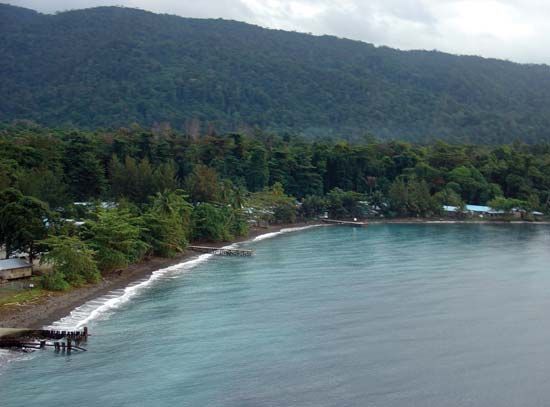
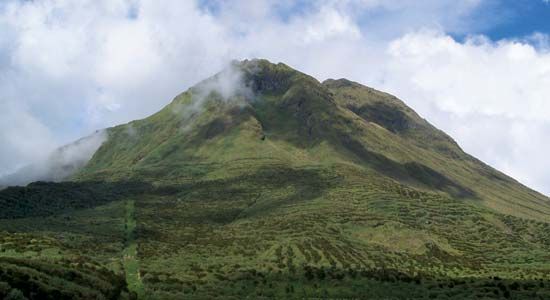
Morotai is an island located in the North Moluccas (Maluku Utara) province of Indonesia, situated northeast of the larger island of Halmahera. Covering approximately 700 square miles (1,800 square km), the island is characterized by mountainous, wooded terrain and swampy areas in the southwest. Its economy relies primarily on the production of resin and timber, and its population consists largely of Tobilorese and Galelorese people.1
During World War II, Morotai served as a significant Japanese military base. On September 15, 1944, Allied forces—specifically the U.S. XI Corps—captured the island, bypassing the Japanese stronghold on nearby Halmahera. The Allies subsequently developed Morotai into a strategic air base, which provided essential air support for the subsequent advance into the Philippines. An operational airfield remains in use today near Pitu on the island’s southwestern end.12
What role did the Maluku Islands play in the spice trade?
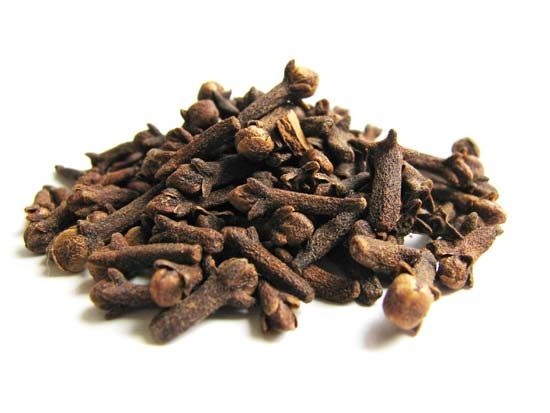
The Maluku Islands, historically known as the Spice Islands, were the primary global source of highly valued spices, particularly cloves from the northern islands and nutmeg from the central islands. Long before European arrival, these spices were traded throughout Asia by Indian, Chinese, and Arab merchants.34
In the 16th century, the region became a focal point of intense European competition. The Portuguese arrived in 1512, sparking decades of conflict with local sultans and later with the Spanish, English, and Dutch. By the early 17th century, the Dutch East India Company (VOC) sought to establish a commercial monopoly, eventually securing control of the region by 1667.356
While some historians argue that the VOC initially integrated into existing Asian trade patterns, the company’s aggressive pursuit of monopoly eventually laid the foundation for a Dutch territorial empire. By the end of the 18th century, however, the spice trade had diminished, and the islands’ economic prominence faded.573
How did Allied air bases change the strategy of the Pacific War?
Allied air bases were a cornerstone of the Pacific War, fundamentally shifting strategy from direct, costly assaults to a more efficient approach of isolation and neutralization. By establishing airfields on captured islands, the Allies gained the ability to project power, protect supply lines, and bypass heavily fortified Japanese positions, leaving them to “die on the vine” without the need for direct combat.910
Key strategic impacts included:
- Bypassing Strongholds: With airfields operational in the Admiralty Islands, Allied commanders could skip major Japanese bases like Hansa Bay and Wewak, accelerating their advance toward the Philippines.10
- Strategic Bombing: Bases in the Marianas allowed B-29 bombers to conduct heavy aerial bombardment of the Japanese home islands, which ultimately rendered a surface invasion unnecessary.1112
- Combined Operations: Air bases enabled the close coordination of land, sea, and air power. This “combined operations” warfare allowed the Allies to cut Japanese communication lines to the Dutch East Indies and Malaya, effectively strangling the Japanese war effort.119
- Air Supremacy: By securing airfields at locations like Morotai and Hollandia, the Allies established the necessary air cover to support amphibious landings and neutralize enemy air installations, ensuring they consistently outclassed Japanese forces.1110
What are some other major islands in the Indonesian archipelago?
The Indonesian archipelago comprises approximately 17,500 islands, with the vast majority of the country’s land area concentrated in a few major islands and island groups.14
Major Islands and Groups
- Sumatra: A large island spanning the Equator, characterized by the Barisan Mountains and extensive eastern alluvial lowlands.15
- Java: The most densely populated island, featuring a central belt of active volcanoes and fertile alluvial plains.15
- Borneo: The third largest island in the world; Indonesia administers about three-fourths of its territory, known as Kalimantan.1415
- Celebes: Also known as Sulawesi, this island is part of the Greater Sunda Islands.1416
- New Guinea: Indonesia administers the western portion of this large island.1417
- Moluccas: An expansive group of islands historically significant for the spice trade, including Halmahera, Buru, and Ceram.1417
- Lesser Sunda Islands: A chain of smaller, volcanically active islands east of Java, including Bali, Lombok, Sumbawa, Flores, Sumba, and Timor.1516
Sources
- Morotai — Encyclopædia Britannica
- Pacific War - The campaign in New Guinea — Encyclopædia Britannica
- spice trade — Encyclopædia Britannica
- history of Indonesia - Expansion of European influence — Encyclopædia Britannica
- Maluku — Encyclopædia Britannica
- Moluccas — Encyclopædia Britannica
- Spice Islands — Merriam-Webster
- Indonesia - Expansion of European influence — Encyclopædia Britannica
- Pacific War - The Allied offensive in the Pacific, 1944 — Encyclopædia Britannica
- naval warfare - The age of the aircraft carrier — Encyclopædia Britannica
- strategic bombing during World War II - U.S. air campaigns in Europe and the Pacific — Encyclopædia Britannica
- Pacific War - The Aleutians, Rabaul, and the Gilberts — Encyclopædia Britannica
- Pacific War - The Philippines — Encyclopædia Britannica
- Indonesia - Land — Encyclopædia Britannica
- list of islands - Indonesia — Encyclopædia Britannica
- Indonesia - Islands of the Sunda Shelf — Encyclopædia Britannica
- Banyak Islands — Encyclopædia Britannica
- Sunda Islands — Encyclopædia Britannica
Published on · 3 min read