Hickory
The scientific name for the genus of hickory trees is Carya. These trees belong to the walnut family, known as Juglandaceae.
What is the scientific name for hickory trees and which plant family do they belong to?
The scientific name for the genus of hickory trees is Carya. These trees belong to the walnut family, known as Juglandaceae.12
How long do hickory trees typically live, and how tall can they grow?
Hickory trees typically grow to a height of about 30 metres (100 feet).1
Regarding their lifespan, the provided search results do not contain information on the typical longevity of hickory trees.
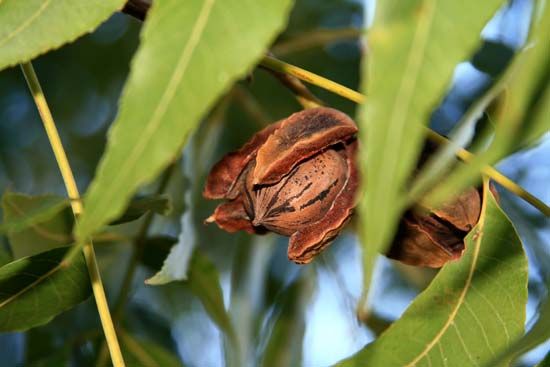
How are hickory nuts used by humans and wildlife?
Hickory nuts serve as a significant resource for both humans and wildlife. For humans, the pecan is the most economically valuable species, cultivated specifically for its flavorful nuts. Other species, such as the shagbark hickory, shellbark hickory, and mockernut hickory, also produce large, sweet-tasting edible seeds that are consumed by people. While many other hickory species produce edible seeds, they are often too small to be of commercial importance. Conversely, some species like the bitternut hickory and water hickory produce bitter, inedible nuts due to the presence of tannin in the skin covering their kernels.1
In the context of wildlife, these nuts are a natural food source, though the search results do not explicitly detail the specific animals that consume them. Beyond their nutritional value, the trees themselves are valued for their wood, which is utilized for fuel, furniture, flooring, tool handles, and sports equipment.1
What are the main characteristics of hickory trees and where are they typically found?
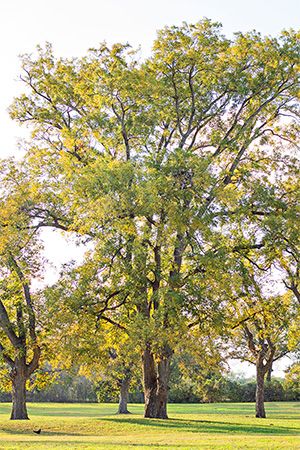
Hickory trees belong to the genus Carya, which consists of about 18 species of deciduous, nut-producing trees within the walnut family. They are primarily native to North America, where about 15 species are found, while the remaining 3 are native to eastern Asia.1
Physical Characteristics
- Size: Hickories typically reach heights of approximately 30 metres (100 feet) and possess a long taproot.1
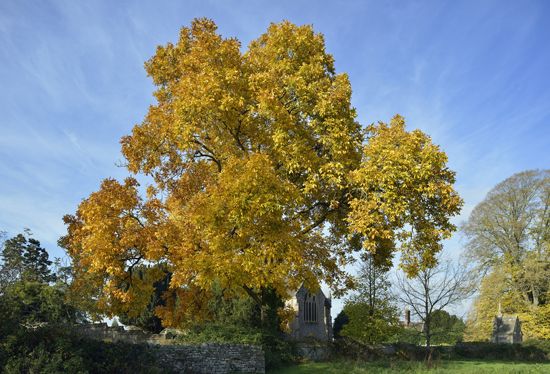
- Foliage: The trees feature compound leaves made up of 3 to 17 leaflets; in some species, these turn a vibrant yellow during autumn.1
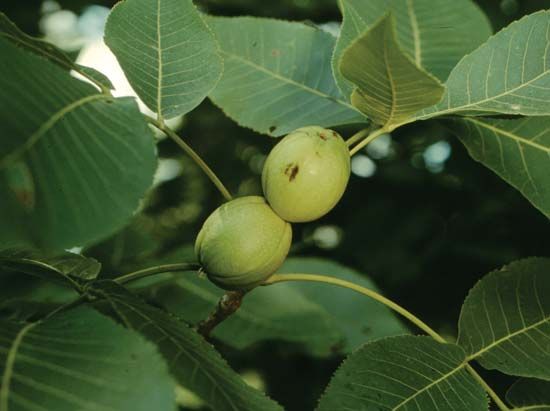
- Reproduction: Male and female flowers grow on the same tree in separate clusters—males in hanging catkins and females in terminal spikes. The fruit is an egg-shaped drupe with a husk that splits into four woody valves as it matures.1
- Bark: Bark patterns vary by species, with some, such as the shagbark hickory, known for a distinct, rough, shingle-like appearance.3
Sources
- hickory — Encyclopædia Britannica
- Juglandaceae — Merriam-Webster
- hickory — Merriam-Webster
- Tree - Tree bark — Encyclopædia Britannica
Published on · 2 min read