Palmetto
The term palmetto refers to several species of fan-leaved palms primarily found in the southeastern United States and the West Indies.
What is Palmetto?
The term palmetto refers to several species of fan-leaved palms primarily found in the southeastern United States and the West Indies.12
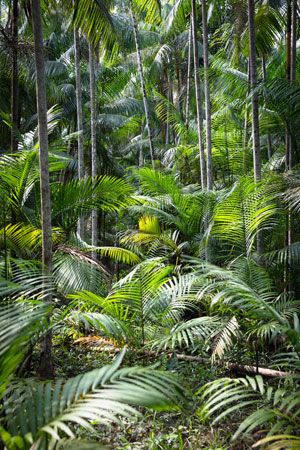
The most prominent species, the cabbage palmetto (Sabal palmetto), can grow up to 80 feet tall and is frequently used as an ornamental plant. Its water-resistant trunk is utilized for wharf pilings, while its leaves are used to weave mats and baskets. Another common variety, the saw palmetto (Serenoa repens), is a shrubby palm known for its spiny-toothed leafstalks and its presence in the Florida Everglades.13
Beyond its botanical significance, the palmetto holds historical importance as the chief state symbol of South Carolina. It earned this status after the logs of the tree were used to construct a fort in Charleston Harbor, which successfully withstood British cannonballs during the American Revolution.4
How do palm trees differ from other types of trees?
Palm trees are distinct from typical woody trees due to their unique biological structure and growth patterns. As monocotyledons, they differ from most other trees in the following ways:
- Lack of Secondary Growth: Unlike woody broad-leaved trees, palms do not have a cambium layer, meaning they cannot grow a thicker trunk through secondary growth. Instead, a palm typically reaches its maximum girth below ground before it begins to grow upward.56
- Stem Structure: A typical tree trunk is a woody cylinder with vascular tissue arranged in a ring. In contrast, a palm stem consists of hundreds to thousands of conducting strands scattered throughout softer ground tissue. The outer region is often composed of densely packed fibers, which provides the strength necessary to withstand high winds.5
- Single Growing Point: Palms possess only a single growing point at the apex. If this point is damaged, the tree cannot continue to grow.6
- Leaf Development: The compound leaves of palms develop from a single meristem that forms a plicated blade, which then undergoes lateral cell degradation to form separate pinnae. This process is unique among flowering plants.7
Why were palmetto logs effective at protecting Fort Moultrie?
Palmetto logs were highly effective at protecting Fort Moultrie during the American Revolution because of their unique physical properties. Unlike the rigid, dense wood of traditional timber, the trunks of the cabbage palmetto (Sabal palmetto) are fibrous and water-resistant.2
When British cannonballs struck the fort’s walls, the soft, spongy nature of the palmetto logs allowed them to absorb the impact rather than splintering or shattering. This caused the cannonballs to simply sink into the wood or bounce off, leaving the fortification largely intact and providing superior protection for the patriot guards commanded by William Moultrie. This remarkable defensive success led to the palmetto being adopted as the chief state symbol of South Carolina.1
What other plants are native to the southeastern United States?
The southeastern United States is home to a diverse array of native flora, ranging from the hardwood forests of the Appalachian Mountains to the subtropical wetlands of Florida.1213
Forest and Woodland Trees
The region features extensive deciduous and mixed forests. Common trees include:
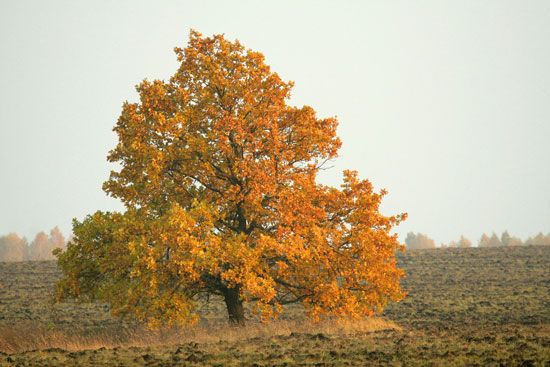
- Hardwoods: Various species of oak (including live oak), hickory, walnut, ash, elm, poplar, and sycamore.1415
- Conifers: The Southern Pineries are dominated by loblolly, longleaf, and slash pines, while eastern hemlock is found in mountainous areas.1415
- Flowering and Tropical Species: The region supports magnolias, dogwood, tulip trees, redbud, sourwood, and pawpaws.1415
Shrubs and Wetland Flora
In specialized environments like pocosins and coastal areas, you will find:
- Shrubs: Rhododendron, azalea, mountain laurel, and various members of the heath family.1416
- Wetland Plants: Saw grass, cordgrass, cypress, and mangroves.cypress-pine), and mangroves.14
Cultivated and Foraged Plants
Historically, Indigenous peoples of the Southeast cultivated corn, beans, squash, sunflowers, and tobacco. They also gathered wild foods such as berries, nuts, acorns, zamia roots, and smilax.17
Sources
- Palmetto — Encyclopædia Britannica
- flag of South Carolina — Encyclopædia Britannica
- palmetto — Merriam-Webster
- Saw palmetto — Encyclopædia Britannica
- Palm - Trunks and stems — Encyclopædia Britannica
- Arecales — Encyclopædia Britannica
- Eudicotyledon — Encyclopædia Britannica
- Palm - Characteristic morphological features — Encyclopædia Britannica
- Tree - Tree bark — Encyclopædia Britannica
- lower vascular plant - Vascular system — Encyclopædia Britannica
- Palm - Evolution — Encyclopædia Britannica
- Indigenous peoples of the American Southeast — Encyclopædia Britannica
- Indigenous peoples of the American Southeast - Subsistence and material culture — Encyclopædia Britannica
- Everglades - Natural environment — Encyclopædia Britannica
- Appalachian Mountains - Plant and animal life — Encyclopædia Britannica
- North America - The Eastern mesophytic forest — Encyclopædia Britannica
- Bog - Pocosins — Encyclopædia Britannica
Published on · 3 min read