Pecan
The pecan (Carya illinoinensis) is a nut and tree belonging to the walnut family (Juglandaceae), native to temperate North America.
What is Pecan?
The pecan (Carya illinoinensis) is a nut and tree belonging to the walnut family (Juglandaceae), native to temperate North America.1
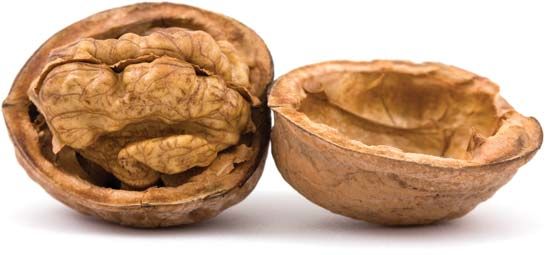
Known for its rich flavor and texture, the pecan possesses one of the highest fat contents of any vegetable product, with a caloric value comparable to butter. These nuts can be consumed raw, sweetened, or salted and are a staple ingredient in various pastries and confections, such as pecan pie and praline candy.1
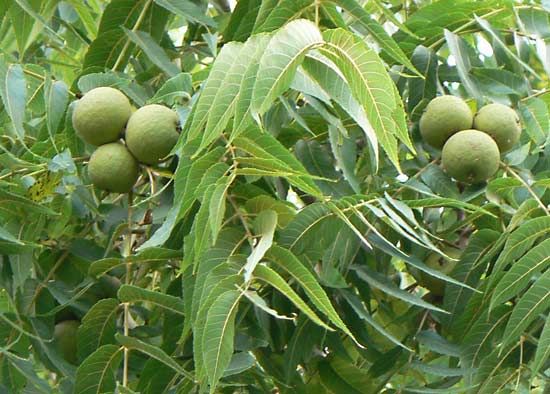
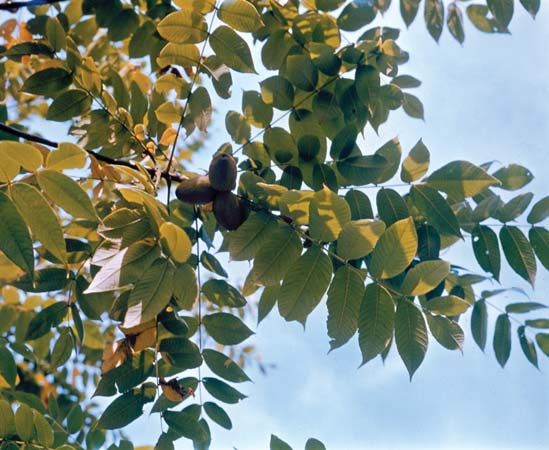
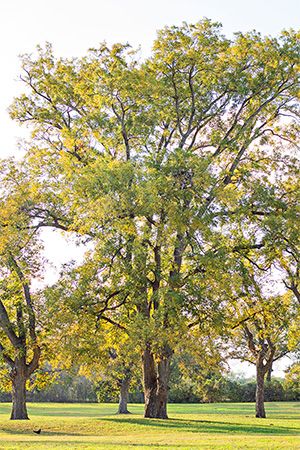
The pecan tree can reach heights of approximately 50 meters (160 feet) and features compound leaves and deeply furrowed bark. While native to the United States, particularly in regions like Texas, the tree is now cultivated commercially in the southeastern U.S. and has been introduced to countries such as Australia and South Africa.1
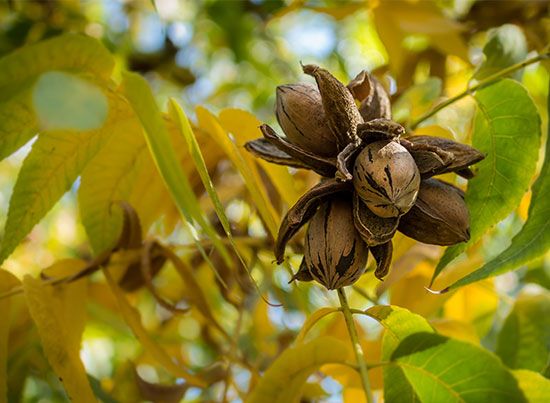
How are grafted pecan trees different from wild ones?
Grafted pecan trees differ from wild ones primarily through their controlled cultivation and selection for specific traits. While wild pecan trees grow naturally across regions like Texas and the Midwestern United States, grafted varieties are intentionally propagated to ensure consistent quality and production.1
The practice of grafting, which began in Louisiana by 1847, allows growers to select and replicate trees that produce superior nuts. In contrast, wild trees exhibit significant natural variation in the size, shape, and shell thickness of their nuts, which can range from 100 to 500 nuts per kilogram. By using grafted varieties, commercial producers in states like Georgia, Alabama, and Mississippi can maintain reliable harvests of high-quality pecans, whereas wild trees are subject to the unpredictable genetic diversity inherent in their natural populations.1
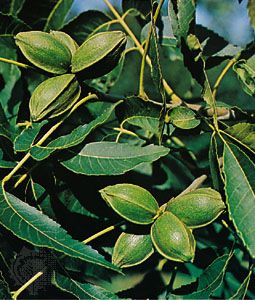
What other types of trees belong to the walnut family?
The Juglandaceae family, commonly known as the walnut family, consists of deciduous trees characterized by their odd-pinnate leaves and fruit that are botanically classified as drupes.345
The family is primarily divided into two major groups:
- Walnuts (genus Juglans): This group includes about 20 species, such as the black walnut (J. nigra), the English (or Persian) walnut (J. regia), and the butternut.4
- Hickories (genus Carya): This group comprises about 18 species, including the economically significant pecan (C. illinoinensis). Other notable species include the shagbark hickory, shellbark hickory, and mockernut hickory.56
Additionally, the family includes the beaked hickory (Annamocarya sinensis), which is native to China and is the sole species within its own genus, Annamocarya.5
How do pecan trees reproduce in the wild?
In the wild, pecan trees (Carya illinoinensis) reproduce through a process involving distinct male and female flowers borne on the same tree. The male flowers develop as hanging catkins, while the female flowers are arranged in tight clusters at the ends of the shoots.1
Following pollination, the tree produces fruits that contain the nuts. As these fruits reach maturity, their fleshy hulls dry out and split along suture lines. The hulls then separate into four approximately equal sections, which gradually releases the mature nuts to the ground, allowing for natural dispersal and potential germination.1
Sources
- Pecan — Encyclopædia Britannica
- list of culinary nuts — Encyclopædia Britannica
- Juglandaceae — Merriam-Webster
- walnut family — Merriam-Webster
- Walnut — Encyclopædia Britannica
- hickory — Encyclopædia Britannica
- black walnut — Encyclopædia Britannica
Published on · 2 min read