Beringia
Scientists study the submerged region of Beringia through a combination of paleontological, archaeological, and ethnographic research conducted in the…
How do scientists study Beringia today, given that it’s now underwater?
Scientists study the submerged region of Beringia through a combination of paleontological, archaeological, and ethnographic research conducted in the surrounding Arctic regions. Because much of the former land bridge is now inundated by the Bering Sea and the Bering Strait, researchers focus on accessible coastal areas and preserved deposits on either side of the strait.12
Key methods and resources include:
- Field Research: Institutions in the northern regions of Alaska and Siberia conduct ongoing investigations to fill gaps in the prehistoric record.1
- Protected Sites: Areas such as the Bering Land Bridge National Preserve serve as critical sites for studying the environment that once connected the continents.1
- Interpretive Centers: Facilities like the Yukon Beringia Interpretive Centre in Whitehorse and museums in Provideniya are dedicated to the scientific and cultural study of the region.1
- Historical Data: Researchers also rely on long-term hydrographic and deep-sea studies of the Bering Sea, which have been systematically conducted by international investigators since the 19th century.3
What is Beringia and where was it located?
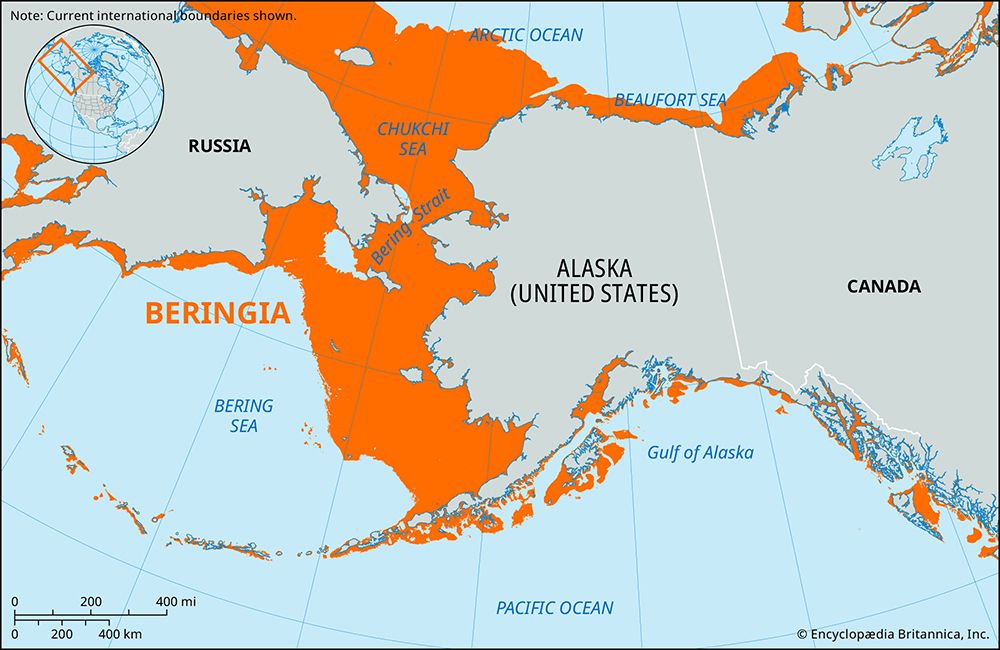
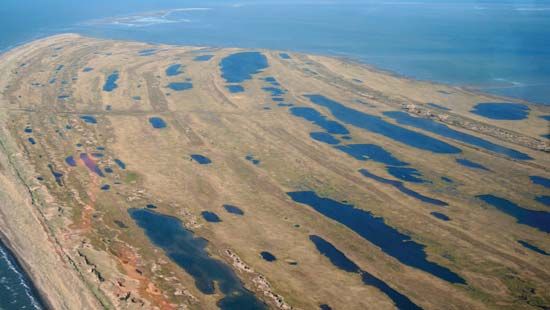
Beringia refers to a series of landforms that periodically connected northeastern Asia and northwestern North America during periods of worldwide glaciation and lowered sea levels.1
While these landforms appeared as early as 70 million years ago, the term is most commonly associated with the Pleistocene Epoch, specifically the period from about 38,000 years ago until the end of the epoch. At its greatest extent roughly 20,000 years ago, Beringia stretched from the Lena River delta in Siberia to the Mackenzie River delta in Canada. It extended southward for approximately 1,000 miles through the seafloor of the Bering Strait, covering much of the northern Bering Sea.1
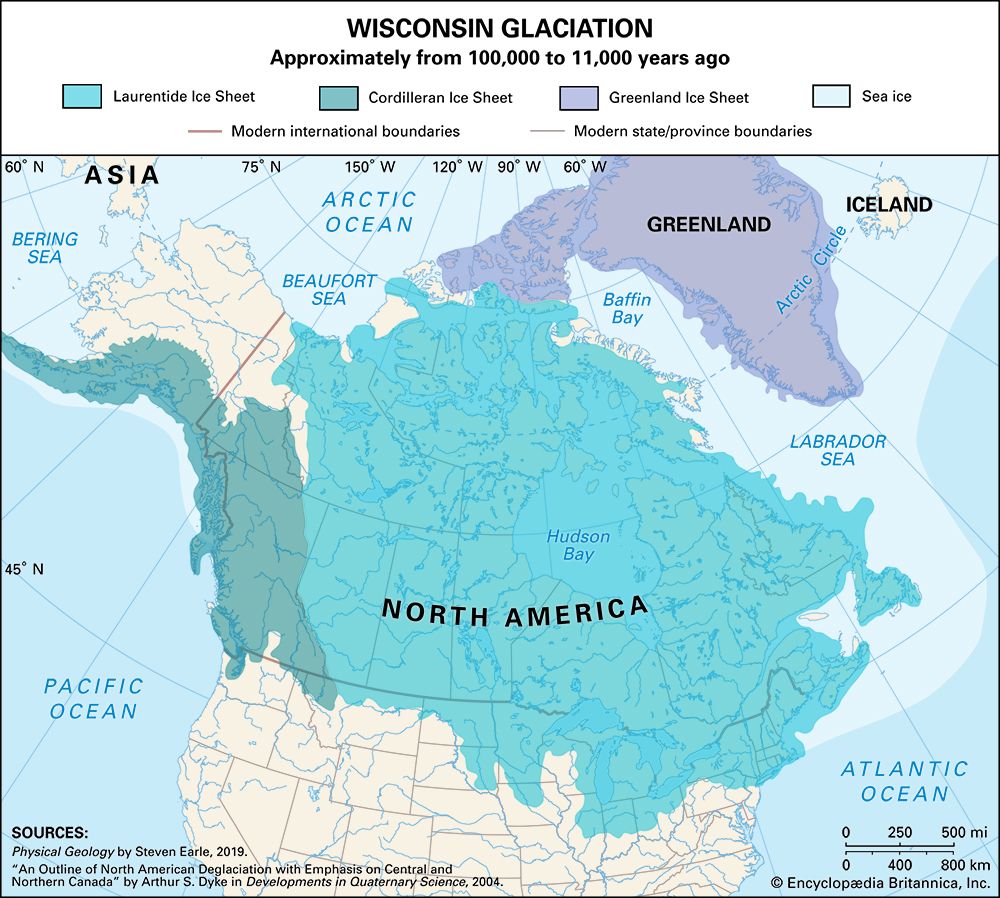
Despite extensive glaciation elsewhere, much of Beringia remained unglaciated, supporting tundra vegetation that allowed animals and, likely, humans to migrate between the Old and New worlds. As glaciers melted, rising sea levels eventually submerged the land bridge.1
What types of plants and animals inhabited Beringia during its existence?
During the Pleistocene Epoch, the unglaciated, dry climate of Beringia supported a unique ecosystem that facilitated the migration of various species between Asia and North America.
Vegetation
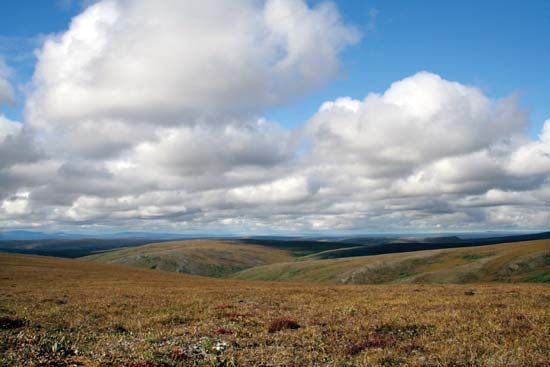
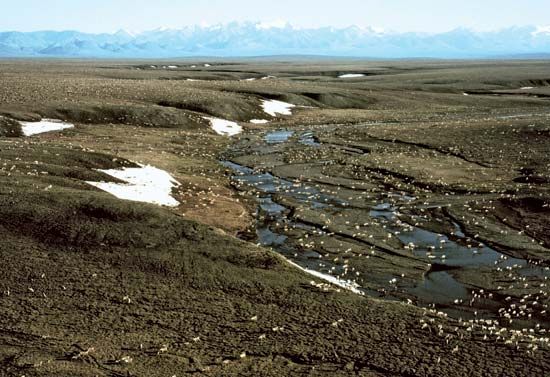
The region was characterized primarily by cold-hardy tundra vegetation. This landscape consisted of:1
- Lichens and Mosses: These formed a dominant carpet in well-drained areas, often referred to as heath tundra.6
- Grasses and Sedges: In areas with more moisture, these plants formed tussock or hillock tundra.6
- Shrubs: In warmer or more sheltered parts of the region, woody dwarf shrubs such as willow, birch, juniper, and alder were present.6
Animal Life
The vast, open environment of Beringia served as a corridor for diverse terrestrial fauna. Fossil evidence confirms that the land bridge allowed for the intercontinental movement of many land mammals. While specific species varied over time, the region supported a range of animals, including:17
- Large Herbivores: The landscape provided habitat for animals such as moose, musk oxen, and reindeer.8
- Predators: The presence of large herbivores supported populations of wolves, as well as polar bears and brown (grizzly) bears.8
Additionally, the coastal areas of the region were home to various marine mammals, including seals, walruses, and beluga and bowhead whales.8
What evidence supports the existence of Beringia in the past?
The existence of Beringia is supported by a combination of geological, paleontological, and archaeological evidence that confirms the periodic connection between Asia and North America.
- Geological Evidence: During the Pleistocene Epoch, worldwide glaciation locked vast amounts of water into ice sheets, causing global sea levels to drop by as much as 400 feet (120 meters). This process exposed large areas of the seafloor, creating a dry land bridge that linked northeastern Siberia to northwestern North America.ia) to northwestern North America.1
- Paleontological Evidence: Fossil records provide strong support for the existence of this land bridge. The presence of similar animal species on both continents indicates that Beringia served as a corridor, allowing for the migration of land mammals between the Old and New worlds.1
- Archaeological Research: Extensive studies in Arctic regions, including excavations and the analysis of prehistoric records, have been conducted to understand how this route facilitated the movement of early humans into the Americas.1
Sources
- Beringia — Encyclopædia Britannica
- Bering Sea and Strait - Study and exploration — Encyclopædia Britannica
- Bering Strait — Encyclopædia Britannica
- Bering Sea and Strait - Physiography — Encyclopædia Britannica
- Pleistocene Epoch - Coastal environments and sea-level changes — Encyclopædia Britannica
- Taiga - Origin — Encyclopædia Britannica
- Arctic - Vegetation — Encyclopædia Britannica
- Bering Land Bridge National Preserve — Encyclopædia Britannica
- Arctic Ocean - Origin — Encyclopædia Britannica
Published on · 3 min read