Horseshoe Bat
The name "horseshoe bat" is derived from the distinct physical appearance of the animal's muzzle. These bats, which belong to the family Rhinolophidae…
What is the origin of the name ‘horseshoe bat’ and how does it relate to their appearance?
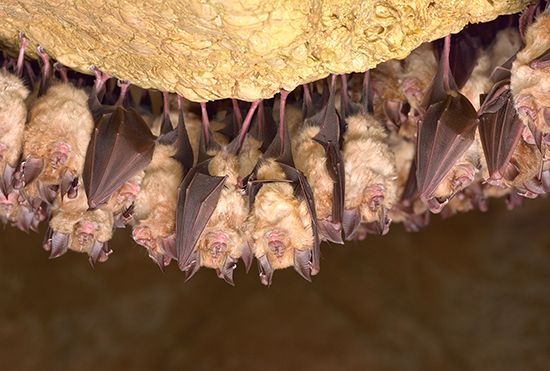
The name “horseshoe bat” is derived from the distinct physical appearance of the animal’s muzzle. These bats, which belong to the family Rhinolophidae, possess a complex, fleshy structure on their nose known as a “nose leaf”. This structure is composed of three distinct sections, one of which is shaped like a horseshoe, providing the basis for their common name.12
While the exact function of these facial features remains a subject of scientific study, researchers believe that the nose leaf may play a role in directing the bats’ outgoing echolocation calls. These bats are found across tropical and temperate regions, where they primarily feed on insects.1
What is the significance of horseshoe bats in scientific research, particularly in relation to zoonotic diseases?
Horseshoe bats (Rhinolophus) are of significant interest to the scientific community due to their role as natural reservoirs for various coronaviruses, some of which have the potential to cause severe respiratory diseases in humans.2
Zoonotic Spillover and Disease Research
The primary significance of these bats in research lies in their connection to zoonotic spillover, the process by which pathogens jump from animals to humans. Genetic analyses have revealed that horseshoe bats carry coronaviruses with sequences up to 96 percent identical to SARS-CoV-2, the virus responsible for the COVID-19 pandemic. Similar genetic links have been established between these bats and SARS-CoV, the virus that caused the 2002 SARS outbreak.32
Scientific Importance
Studying these bats is essential for several reasons:
- Pandemic Prevention: By deciphering the origins of past outbreaks, scientists aim to improve wildlife surveillance and disease monitoring.3
- Ecological Understanding: Researching the environmental and ecological conditions that facilitate the transmission of viruses from bats to humans helps guide public health strategies.3
- Viral Evolution: Scientists investigate how these viruses mutate and potentially pass through intermediate hosts—such as pangolins, civets, or raccoon dogs—before infecting human populations.23
Understanding the natural history of these animals, including their colonial behavior and long lifespans, provides critical context for how they interact with pathogens and maintain immunity within their populations.4
What are the distinguishing physical characteristics of horseshoe bats?
Horseshoe bats, which belong to the family Rhinolophidae, are defined by several distinct physical characteristics:
- Nose Leaf: Their most notable feature is a complex, fleshy structure on the muzzle known as a “nose leaf.” This structure consists of three sections, one of which is shaped like a horseshoe, which is the origin of their common name. Scientists believe this facial structure helps direct their outgoing echolocation calls.1
- Size and Weight: These bats are relatively small, measuring approximately 3.5–11 cm (1.4–4.3 inches) in length, excluding the tail, and weighing between 5 and 30 grams (0.17–1 ounce).1
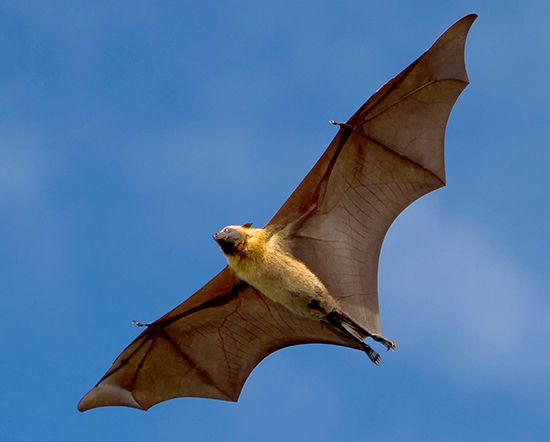
- Appearance: They typically have large ears and are generally brown in color, though some individuals may appear red.1
- General Morphology: As members of the suborder Microchiroptera, they possess specialized auditory systems, including large external ears, which are adapted for high-frequency sensitivity to interpret the echoes used for navigation and hunting.2
What is the geographical distribution of horseshoe bats, and in what types of habitats are they commonly found?
Horseshoe bats (family Rhinolophidae) have a broad geographical distribution, extending throughout the Old World. They are found across tropical and temperate regions, ranging from Europe to Japan and from Asia to Africa.82
Regarding their habitat preferences, these bats are social animals that typically live in groups. They favor damp, dark environments for roosting, most notably caves. In temperate regions, their habitat use is also dictated by seasonal needs, as these species hibernate during the winter months to survive the cold.2
Sources
- horseshoe bat — Merriam-Webster
- horseshoe bat — Encyclopædia Britannica
- How Did the COVID-19 Pandemic Start? — Encyclopædia Britannica
- bat - Life cycle — Encyclopædia Britannica
- bat - Orientation — Encyclopædia Britannica
- leaf-nosed bat — Encyclopædia Britannica
- leaf-nosed — Merriam-Webster
- bat - Distribution — Encyclopædia Britannica
- perissodactyl - Rhinoceroses — Encyclopædia Britannica
Published on · 3 min read