Hualalai
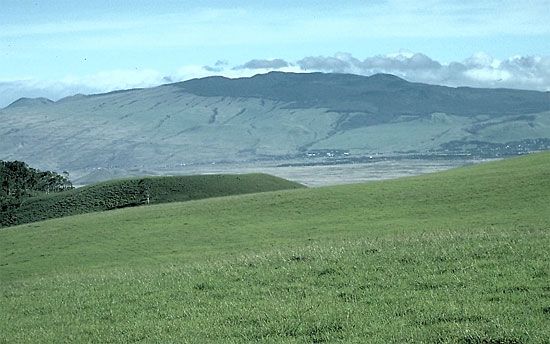
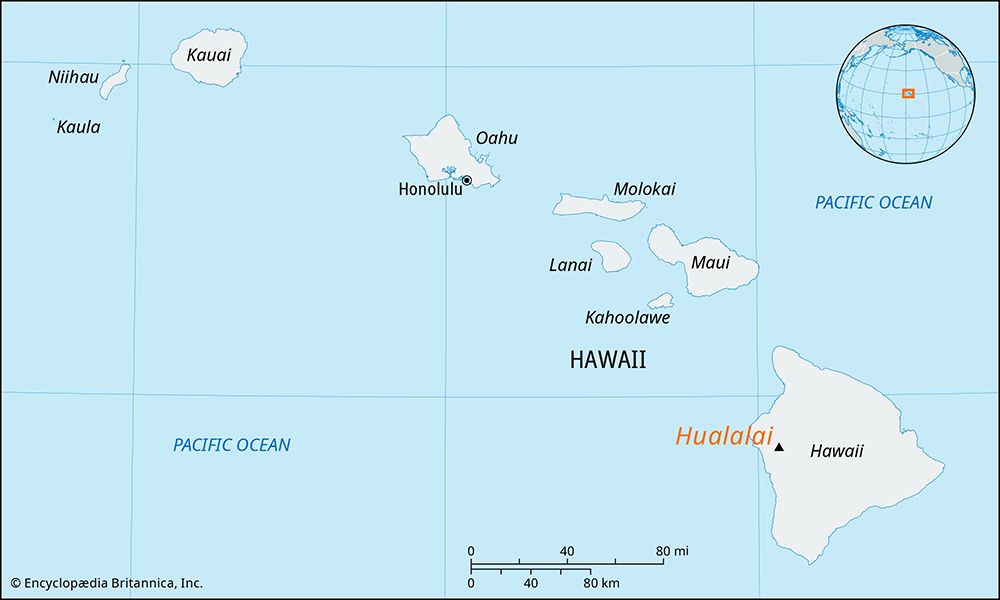
Hualalai is a dormant volcano standing 8,271 feet (2,521 metres) tall on the northwestern side of the island of Hawaii. It is one of five volcanoes that form…
What is Hualalai?
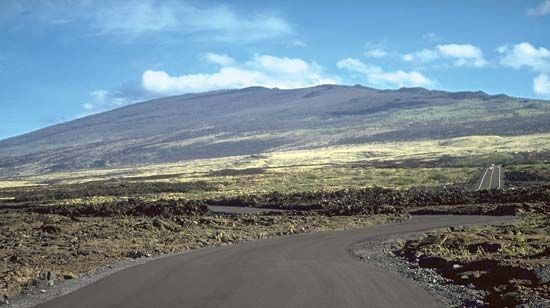
Hualalai is a dormant volcano standing 8,271 feet (2,521 metres) tall on the northwestern side of the island of Hawaii. It is one of five volcanoes that form the island, emerging from the ocean approximately 300,000 years ago.12
The volcano’s dome spans 24 miles (39 km) in length and 20 miles (32 km) in width, covering an area of 290 square miles (751 square km). Its summit is marked by numerous craters, and the surrounding slopes are covered in cinder and spatter cones. Notably, the volcanic ash from these cones provides the soil necessary for the region’s famous Kona coffee belt.1
Hualalai was last active during an eruption in 1800–01. Its lava flows are scientifically significant for containing mantle xenoliths—fragments of the Earth’s mantle brought to the surface by volcanic activity.1
What are mantle xenoliths and why are they important?
A xenolith is a rock fragment that becomes incorporated into an intrusive igneous body while the magma is still fluid. These fragments are unrelated to the host igneous body and represent older, foreign rock that has been trapped within the intrusion.3
Why Mantle Xenoliths Are Important
Mantle xenoliths are of critical scientific importance because they provide rare, direct evidence of the Earth’s interior. Because direct sampling of the mantle is not feasible, these fragments—often brought to the surface by volcanic activity—serve as essential windows into the composition and physical state of the Earth’s mantle.45
Key reasons for their significance include:
- Compositional Insight: They allow geologists to study the mineralogy and chemistry of the mantle, which is primarily composed of peridotite in the upper regions.4
- Depth Indicators: Certain inclusions, such as diamond-bearing rocks, provide evidence of conditions at depths of at least 100 kilometres.4
- Geochemical Research: By analyzing these samples, scientists can better understand the distribution of elements within the planet and the processes that lead to the concentration of minerals and ore deposits.4
- Thermal and Pressure Data: Studying the mineralogical changes within xenoliths caused by heat and fluids—a process known as contact metamorphism—helps researchers determine the temperature and pressure conditions of the magmatic body that transported them.3
How do the five volcanoes of Hawaii island interact?
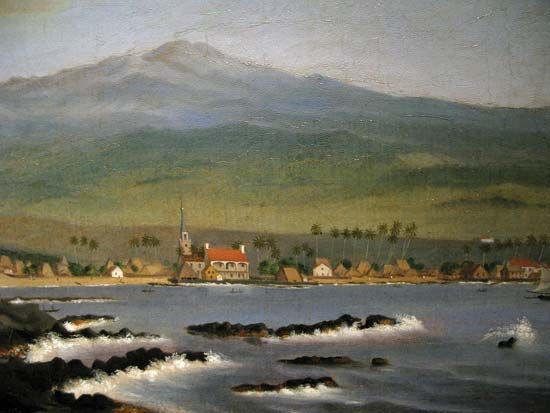
The island of Hawaii is formed by five distinct volcanoes: Hualalai, Kilauea, Kohala, Mauna Kea, and Mauna Loa. These volcanoes are physically connected by lava saddles, or ridges, which have helped create the island’s roughly triangular shape.8
While these volcanoes share a common deep-seated source of magma located approximately 60 km (37 miles) beneath the surface, they function as independent systems. Scientific observations, such as the simultaneous eruptions of Mauna Loa and Kilauea in 1984, demonstrate that the volcanoes maintain separate conduits and shallow magma chambers. Consequently, an eruption at one volcano typically does not have an apparent effect on the others, despite their proximity.9
Collectively, these volcanoes are the result of the Pacific Plate moving over a stationary hotspot in the Earth’s mantle. As the plate drifts, the hotspot continues to supply magma, fueling the growth of the island and the ongoing activity of its youngest volcanoes.2610
What are the differences between active, dormant, and extinct volcanoes?
Volcanologists classify volcanoes based on their eruptive history and potential for future activity. While these categories help assess risk, they are often subject to scientific uncertainty due to the long time scales involved in volcanic processes.11
Active Volcanoes
An active volcano is one that is currently erupting or has erupted in recent history and is expected to erupt again. These volcanoes are characterized by ongoing activity, such as the emission of lava, ash, or volcanic gases, and are often monitored by volcano observatories to track seismic tremors and surface deformation. Examples include Kilauea in Hawaii and Mount Etna in Italy.121311
Dormant Volcanoes
A dormant volcano is one that is not currently erupting but is considered “potentially active” because it has erupted in the past and is expected to erupt again in the future. These volcanoes often have long “repose periods”—the time between eruptions—which can lead to public complacency, as nearby residents may mistakenly perceive them as extinct. For example, Mount Fuji has been dormant since 1707 but is still classified as active and is monitored constantly due to the potential for future eruptions.121114
Extinct Volcanoes
An extinct volcano is one that is not expected to erupt again because it no longer has a supply of magma. Determining if a volcano is truly extinct is difficult, as many volcanoes have such long intervals between eruptions that they may appear extinct even when they are merely dormant.1211
Sources
- Hualalai — Encyclopædia Britannica
- Hawaii — Encyclopædia Britannica
- xenolith — Encyclopædia Britannica
- igneous rock - Origin of magmas — Encyclopædia Britannica
- chemical element - The Earth’s mantle — Encyclopædia Britannica
- igneous rock - Divergent plate boundaries — Encyclopædia Britannica
- geology - Igneous petrology — Encyclopædia Britannica
- Hawaii - Relief — Encyclopædia Britannica
- volcano - Intraplate volcanism — Encyclopædia Britannica
- volcano - Mauna Loa , Hawaii, 1984 — Encyclopædia Britannica
- geology - Volcanology — Encyclopædia Britannica
- world’s major volcanoes — Encyclopædia Britannica
- volcano - Volcano forecasting and warning — Encyclopædia Britannica
- Mount Fuji: Top Questions — Encyclopædia Britannica
Published on · 4 min read