Kohala Mountains
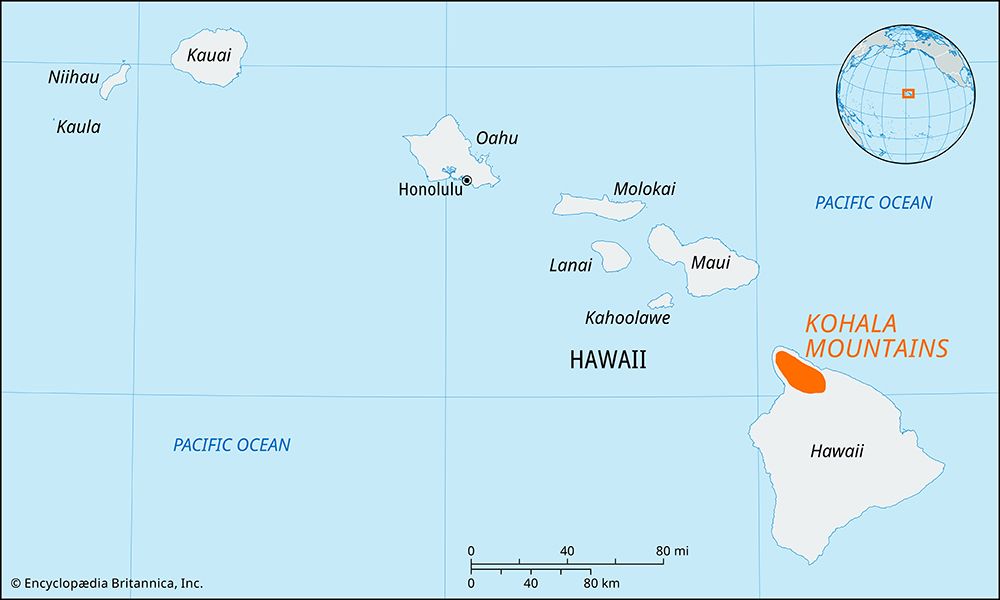
The Kohala Mountains are a volcanic range located on the northern part of Hawaii island in the U.S. state of Hawaii. As the oldest shield volcano on the…
What is Kohala Mountains?
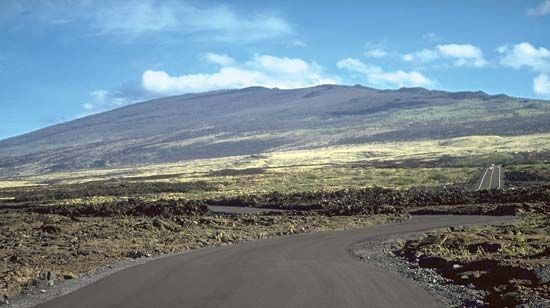
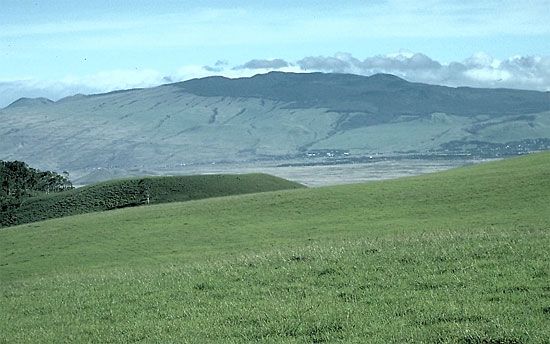
The Kohala Mountains are a volcanic range located on the northern part of Hawaii island in the U.S. state of Hawaii. As the oldest shield volcano on the island, having formed approximately 700,000 years ago, the range consists of an eroded dome that spans 234 square miles (606 square km).12
The mountains reach a peak elevation of 5,480 feet (1,670 meters) at Kaumu o Kaleihoohie. Due to prevailing trade winds, the eastern slopes are lush, while the western slopes are younger and have thinner soil. The range is also home to the Waipio Valley, a site of significant cultural history and natural beauty characterized by steep cliffs and waterfalls. Historically, the construction of the Kohala Ditch in 1906 allowed water to be channeled to northern sugarcane fields, supporting the local sugar industry.123
How does the age of the Kohala volcano compare to other volcanoes on Hawaii?
The Kohala Mountains are the oldest shield volcano on the island of Hawaii, having formed approximately 700,000 years ago.1
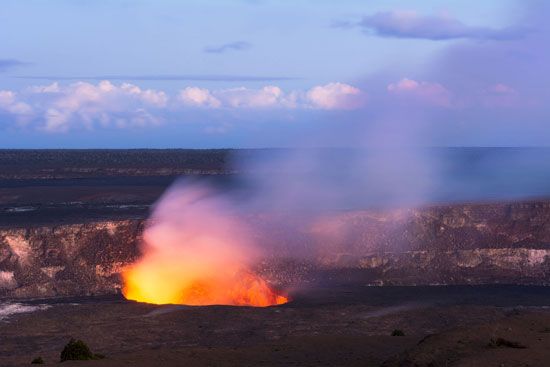
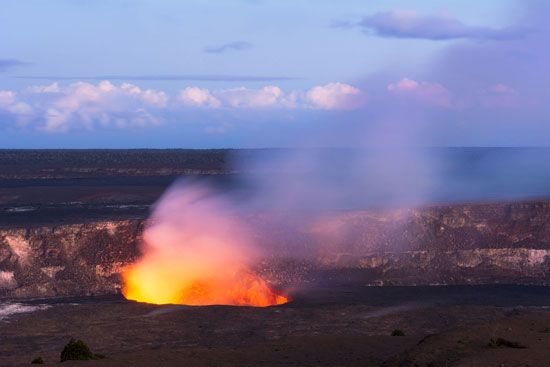
In comparison to the other four volcanoes that comprise the island, Kohala is significantly older and more geologically mature. For instance, the volcano Hualalai emerged from the ocean much later, roughly 300,000 years ago. While Kilauea and Mauna Loa remain active, Kohala is considered dormant and has undergone extensive erosion.4561
This age difference is reflected in the physical landscape:
- Dissection: Because Kohala is the oldest, it shows more pronounced erosion and high-density drainage on its northeastern slopes compared to the younger, less dissected shields like Kilauea.1
- Weathering: Deep weathering of Kohala’s basalt has reduced water infiltration, promoting the development of valleys, whereas younger volcanoes like Mauna Loa often lack such dissection due to the high permeability of their newer lava flows.1
What is the significance of the Waipio Valley in Hawaiian history?
The Waipio Valley, located in the Kohala Mountains, holds profound significance in Hawaiian history as a former center of native population and a cradle of cultural heritage. Known as the “Valley of the Kings,” it served as the childhood home of Kamehameha I, the monarch who eventually unified the Hawaiian Islands.
Beyond its royal associations, the valley is deeply embedded in the oral traditions of the region, serving as the birthplace of numerous island legends. Historically, the valley supported a large native community that relied on its fertile alluvial floor for agriculture, a tradition that continues today through taro farming. While the valley was once a bustling hub, its human footprint changed dramatically following a devastating tsunami in 1946, which led to the area becoming virtually uninhabited. Today, it remains a site of immense cultural and natural importance, defined by its dramatic 2,500-foot cliffs and historical legacy.
How do trade winds influence the landscape of the Hawaiian Islands?
The northeast trade winds are a primary influence on the climate and physical landscape of the Hawaiian Islands. By carrying moisture-laden air across the islands, these winds dictate significant variations in local precipitation and vegetation patterns.8
As the air encounters the islands’ mountainous terrain, it is forced upward, causing the moisture to condense and form cap clouds. This process leads to frequent rainfall along the windward coasts, resulting in lush, dense foliage. Conversely, the leeward sides of the islands receive significantly less moisture, creating a stark contrast in the landscape. This phenomenon is responsible for dramatic rainfall disparities across the state, ranging from extremely wet areas like Mount Waialeale on Kauai to much drier regions such as Kawaihae on the island of Hawaii.8
Beyond shaping the vegetation, these persistent winds help regulate the islands’ tropical temperatures, contributing to the mild climate that characterizes the region throughout most of the year.8
Sources
- Kohala Mountains — Encyclopædia Britannica
- valley - Valley evolution in Hawaii — Encyclopædia Britannica
- Waipio Valley — Encyclopædia Britannica
- Hawaii - Relief — Encyclopædia Britannica
- Hualalai — Encyclopædia Britannica
- volcano - Shield volcanoes — Encyclopædia Britannica
- Hawaii — Encyclopædia Britannica
- Hawaii - Climate of Hawaii — Encyclopædia Britannica
- Pacific Ocean - The trade winds — Encyclopædia Britannica
- Trade wind — Encyclopædia Britannica
Published on · 3 min read