Hawaii
Native Hawaiian culture originated from two primary waves of Polynesian migration: the first from the Marquesas Islands around 400 CE, and the second from…
How did the native Hawaiian culture develop and what are its key aspects?
Native Hawaiian culture originated from two primary waves of Polynesian migration: the first from the Marquesas Islands around 400 CE, and the second from Tahiti between the 9th and 10th centuries2.1
Key Aspects of Traditional Culture
- Social Structure: Society was organized around the ahupuaa, a land unit extending from the mountains to the sea, ensuring self-sufficiency. Rank was hereditary, often descending through the mother.2
- Religion: The system was deeply interwoven with politics, featuring four principal gods—Kane, Kanaloa, Ku, and Lono—and numerous lesser deities. Religious life included the construction of stone temples (heiau) and strict, often oppressive, taboo laws.23
- Arts and Skills: Hawaiians excelled in featherwork, navigation, and the construction of outrigger canoes. Cultural expression included the hula, oral traditions, and the creation of kapa (bark cloth).245
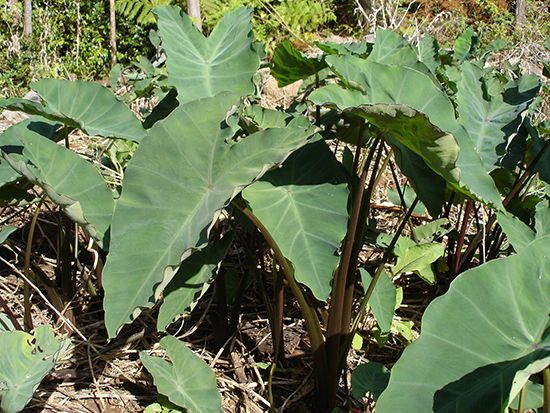
- Diet: Staples included poi, made from taro, and raw fish.52
Since the 1970s, a cultural renaissance has revitalized the Hawaiian language, traditional navigation, and arts.54
How does the volcanic activity in Hawaii affect the islands and their inhabitants?
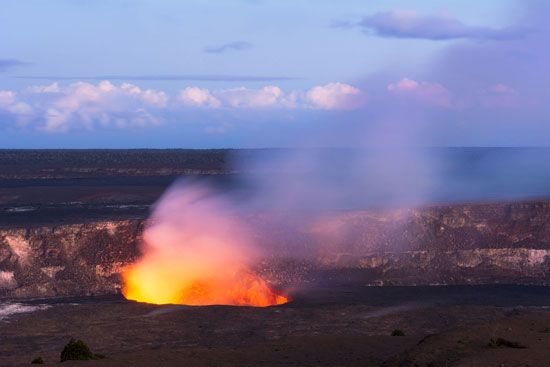
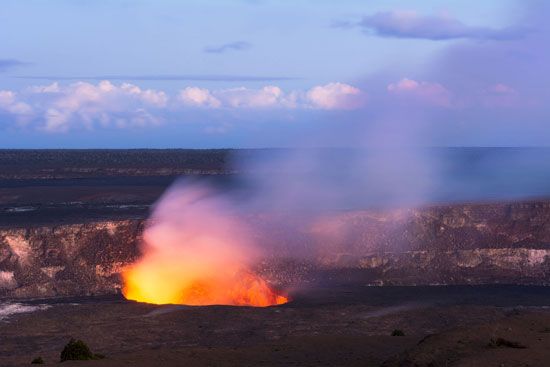
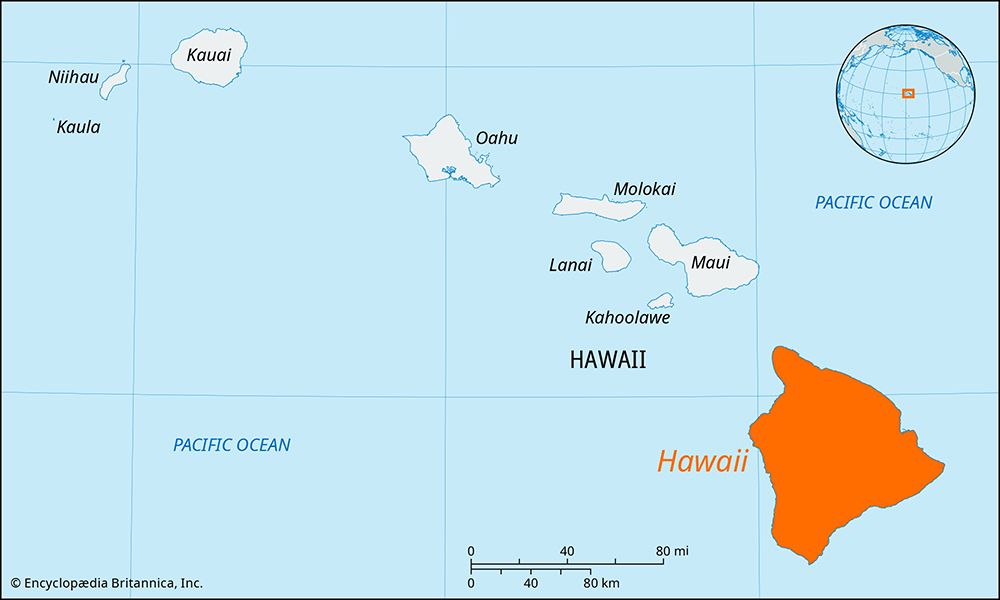
Volcanic activity is the fundamental force that created the Hawaiian Islands and continues to shape their geography and the lives of their inhabitants today.7
Geological and Environmental Impact
The islands were formed as the Pacific Plate moved over a volcanic hotspot, with magma eruptions building the landmasses. On the island of Hawaii, active volcanoes like Kilauea and Mauna Loa continue to add land to the southern shore. While lava flows can bury land, they eventually weather into rich, loamy soils that support diverse vegetation. Conversely, the mountains created by these volcanoes act as barriers to trade winds, creating distinct climate zones ranging from tropical jungles to arid lava deserts.78910
Impact on Inhabitants
Volcanic activity presents significant challenges to residents:
- Destruction of Property: Eruptions have historically destroyed homes, communities, and agricultural land, such as the 1990 burial of the Kalapana community and the 2018 fissure eruptions that cut through residential neighborhoods.118
- Health and Safety: Eruptions often release clouds of sulfur dioxide gas and volcanic ash, which pose respiratory risks.118
- Natural Hazards: Volcanic events can trigger secondary disasters, including violent earthquakes and tsunamis.11
To mitigate these risks, the Hawaiian Volcano Observatory monitors seismic activity and surface deformation to provide warnings, though forecasting remains a complex challenge fraught with uncertainty.1112
How has the Hawaiian language been preserved and revitalized in recent years?
By the early 1990s, the Hawaiian language was nearly extinct, spoken by only a small number of native speakers. The revitalization of the language has been driven primarily by the establishment of Hawaiian-language immersion schools, which successfully fostered a new generation of fluent speakers.13
Today, the language is integrated into the formal education system, with instruction offered from the kindergarten level through graduate school. Notably, the University of Hawaii at Hilo plays a significant role in this academic preservation, featuring a dedicated College of Hawaiian Language that offers a master’s degree in Hawaiian language and literature. Beyond formal schooling, the language remains a vibrant part of local culture through its presence in place-names, street names, and traditional songs.1314
What significant historical events led to Hawaii becoming a U.S. state?
The path to Hawaii becoming a U.S. state was a complex process rooted in economic interests and political maneuvering.
Economic and Political Foundations
In the 19th century, American influence grew through the sugar industry. The Reciprocity Treaty of 1875 established a duty-free market for Hawaiian sugar in the U.S., granting the U.S. special economic privileges and eventually exclusive access to Pearl Harbor. In 1887, a group of non-native businessmen forced King Kalakaua to sign the “Bayonet Constitution,” which shifted political power away from the monarchy and toward the wealthy, largely American, business elite.151617
Overthrow and Annexation
When Queen Liliuokalani ascended the throne in 1891, she sought to restore power to the monarchy. In 1893, the Committee of Safety, supported by U.S. Marines, deposed her. Although President Grover Cleveland initially blocked annexation, the strategic importance of Pearl Harbor during the Spanish-American War led to the Newlands Resolution, which annexed Hawaii in 1898.151817
Statehood
Hawaii became a U.S. territory in 1900. Following the attack on Pearl Harbor in 1941, the islands saw increased military integration. After a long constitutional path, Hawaii officially achieved statehood in 1959.1517
Sources
- Hawaii - Cultural life — Encyclopædia Britannica
- Hawaiian — Encyclopædia Britannica
- Pacific Ocean - Early exploration and settlement — Encyclopædia Britannica
- Hawaii - The arts — Encyclopædia Britannica
- Polynesian culture - Contemporary Polynesia — Encyclopædia Britannica
- Kapaa — Encyclopædia Britannica
- Kilauea — Encyclopædia Britannica
- Hawaii - Relief — Encyclopædia Britannica
- Hawaii Volcanoes National Park — Encyclopædia Britannica
- volcano - Long-term environmental effects — Encyclopædia Britannica
- volcano - Volcano forecasting and warning — Encyclopædia Britannica
- Hawaii — Encyclopædia Britannica
- Hawaii - Population composition — Encyclopædia Britannica
- University of Hawaii — Encyclopædia Britannica
- Hawaii - Establishment of U.S. dominance — Encyclopædia Britannica
- How was Hawaii acquired by the U.S.? — Encyclopædia Britannica
- Reciprocity Treaty of 1875 — Encyclopædia Britannica
- Liliuokalani — Encyclopædia Britannica
Published on · 3 min read