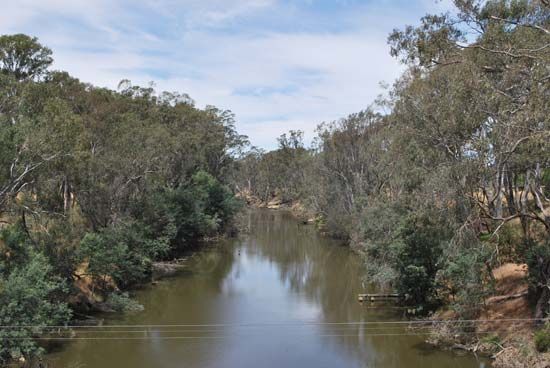
Hunter River
The Hunter River is a vital economic and geographic artery in New South Wales, Australia. Its significance stems from its rich natural resources and its role…
What is the significance of the Hunter River to the surrounding region?
The Hunter River is a vital economic and geographic artery in New South Wales, Australia. Its significance stems from its rich natural resources and its role in supporting diverse industries.1
- Energy and Industry: Historically known as the “Coal River,” the region is a major hub for coal mining, particularly in the Singleton–Muswellbrook–Denman area. This coal supply was instrumental in establishing the iron and steel industry in Newcastle, which sits at the river’s mouth. Additionally, the area hosts six major thermal power plants, making it a key exporter of electricity.12
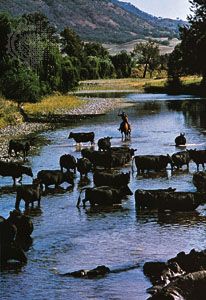
- Agriculture: The river valley supports a robust agricultural sector. The upper valley is used for grazing cattle, sheep, and horses, while the fertile riverine flats in the middle and lower reaches are dedicated to dairying, poultry, and crops such as corn, hay, and lucerne. The region is also noted for its fruit orchards and wine vineyards.1
- Water Management: The river is essential for regional infrastructure, with projects like the Glenbawn Dam providing critical flood mitigation and irrigation.1
What are some of the historical events or Indigenous stories associated with the Hunter River?
The Hunter River, originally known as the Coal River, has a history shaped by both colonial exploration and industrial development. In 1791, the river was visited by convicts who identified coal outcrops, which were being actively worked by 1800. The river was later renamed in 1797 to honor John Hunter, who served as the colonial governor of New South Wales from 1795 to 1800.1
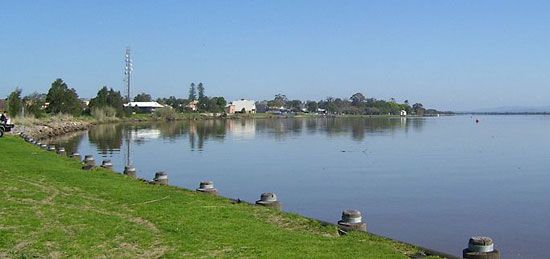
The mouth of the river became the site of the Coal Harbour Penal Settlement in 1801, which eventually grew into the city of Newcastle. This settlement served as a critical outlet for coal and agricultural goods from the surrounding fertile hinterland. Over time, the region’s industrial capacity expanded significantly, particularly with the establishment of the iron and steel industry in 1915.2
Regarding Indigenous stories or specific cultural history associated with the river, the provided search results do not contain information on this topic.
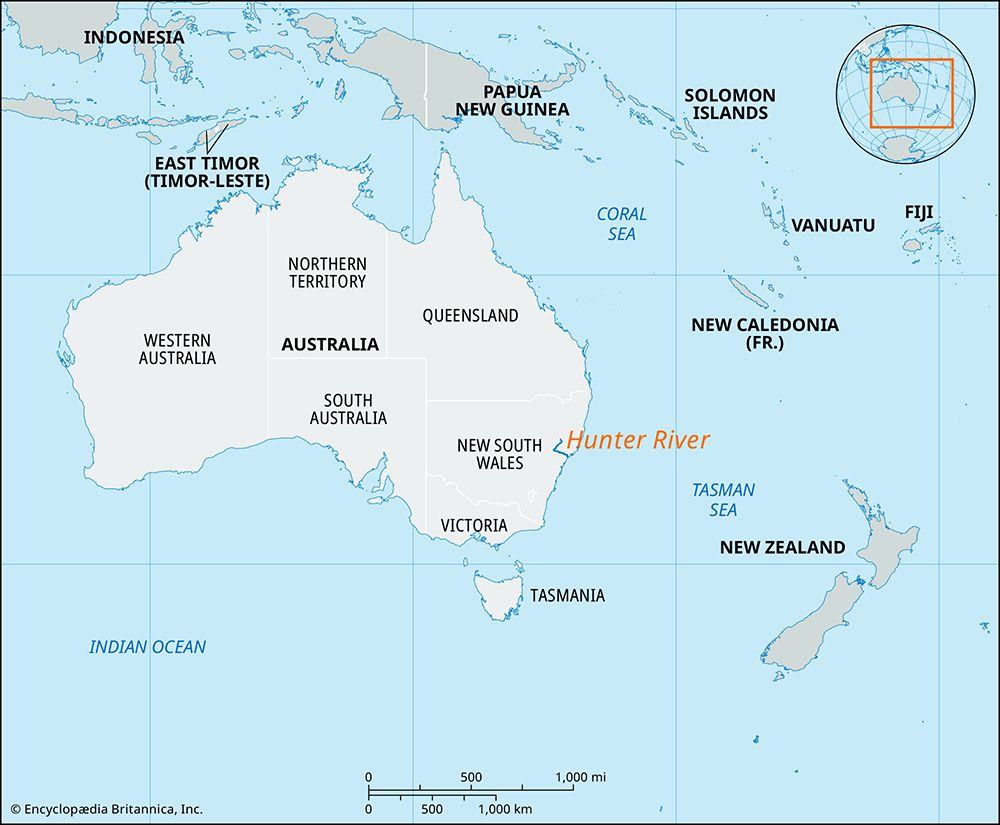
Where is the Hunter River located in New South Wales, Australia?
The Hunter River is located in east-central New South Wales, Australia. It rises in the Mount Royal Range of the Eastern Highlands and flows for 287 miles (462 km) before entering the Tasman Sea at Newcastle.1
The river’s course begins by flowing generally southwest, passing through the Glenbawn Reservoir and near towns such as Muswellbrook and Denman. After being joined by its major tributary, the Goulburn River, it turns southeast. It then flows past Singleton, Maitland, Morpeth, and Raymond Terrace before reaching its mouth at Newcastle.1
What is the geological history of the Hunter River and its valley?
The provided search results do not contain information regarding the geological history of the Hunter River or its valley. The available data focuses on the river’s geography, its role in colonial history, and its modern economic and agricultural significance.1
Sources
- Hunter River — Encyclopædia Britannica
- Newcastle — Encyclopædia Britannica
Published on · 2 min read