Litani River
The Litani River is the chief river of Lebanon. It originates west of Baalbek and flows southwest through the Bekaa valley between the Lebanon and…
What is Litani River?
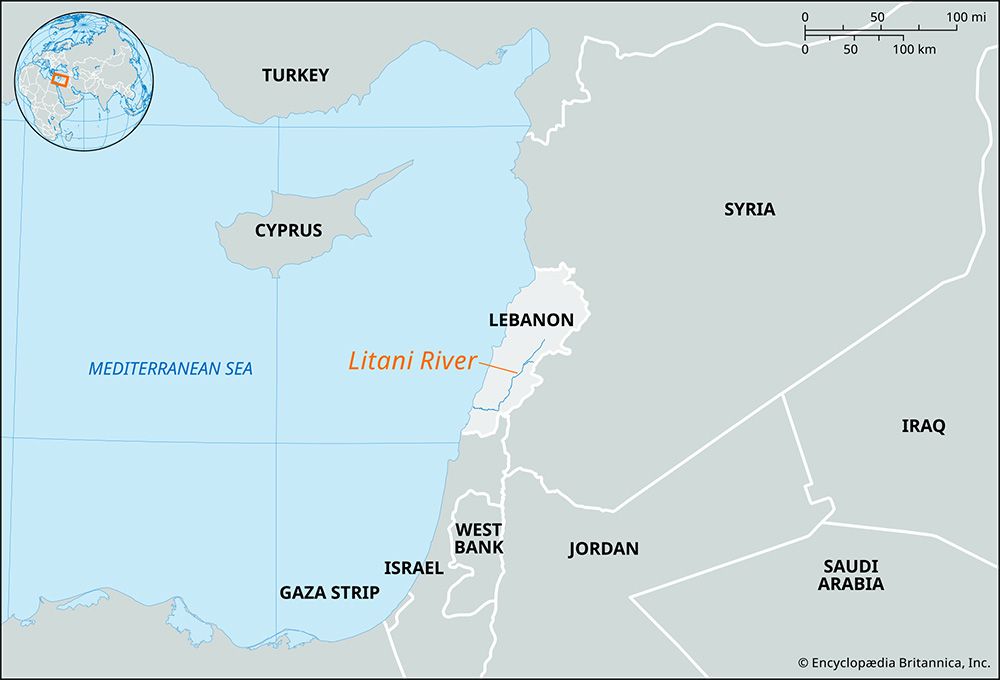
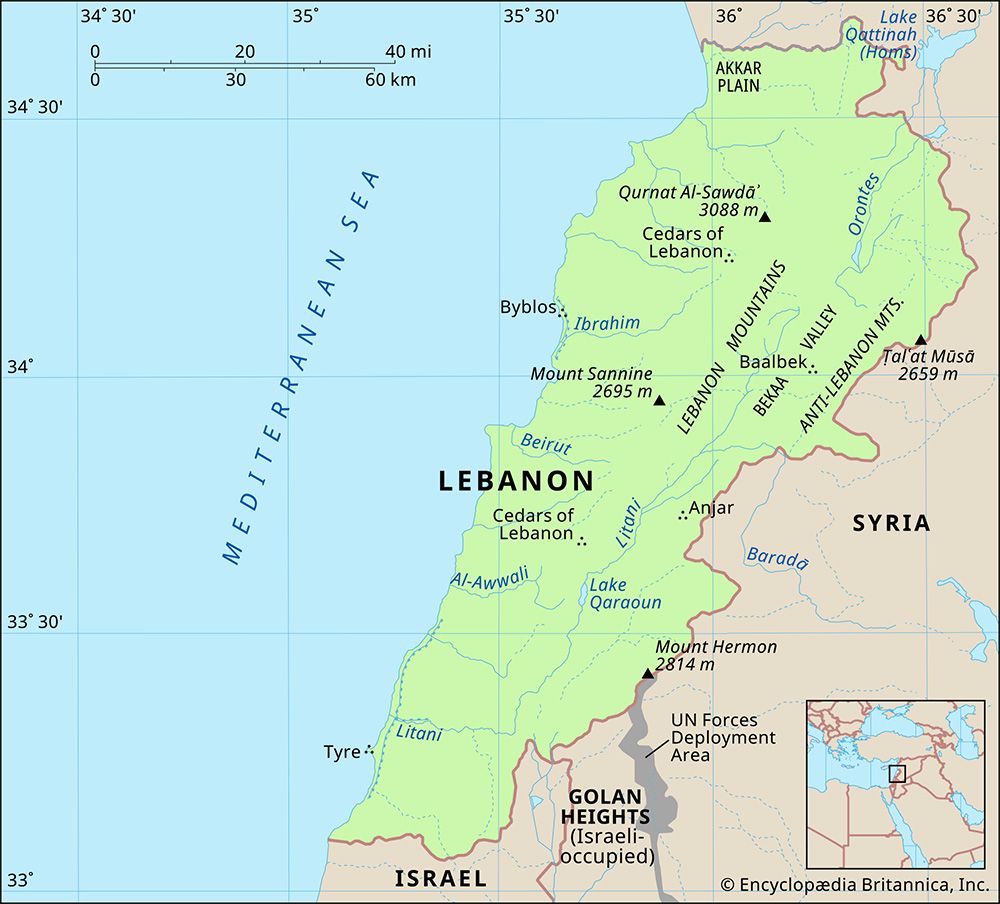
The Litani River is the chief river of Lebanon. It originates west of Baalbek and flows southwest through the Bekaa valley between the Lebanon and Anti-Lebanon mountains. Near Marjayoun, it turns west, carving a deep gorge through the mountains before reaching the Mediterranean Sea south of Sidon.12
While only about 90 miles (145 km) long, the river is vital for irrigating the Bekaa region and generating electricity. Geopolitically, it serves as a critical marker in the conflict between Israel and Hezbollah. Following the bollah](https://www.britannica.com/topic/Hezbollah). Following the 2006 Lebanon War, UN Resolution 1701 mandated that Hezbollah withdraw north of the river to create a buffer zone. This boundary has remained a central point of contention in subsequent escalations, including the Israel-Hamas War and the 2026 Iran war, with Israel repeatedly seeking to enforce the river as a security line.21
What is the significance of the Bekaa Valley to Lebanon’s agriculture?
The Bekaa valley is a cornerstone of Lebanese agriculture, containing nearly half of the country’s arable land. Its significance is defined by the following factors:3
- Crop Production: The valley is a primary region for cultivating sugar beets, cereals, and various vegetables. Additionally, towns like Zahle are renowned for their vineyards, which support the production of arak, a traditional alcoholic beverage.23
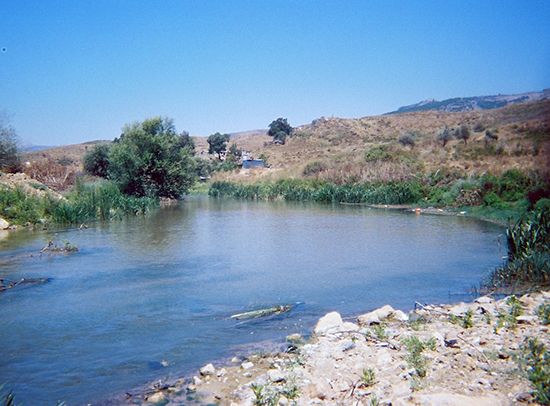
- Water Resources: The Litani River serves as a vital water source, irrigating the valley’s extensive farming regions. While the Litani River Authority was initially intended to expand irrigation and power generation, its impact has been primarily focused on electrical infrastructure.4
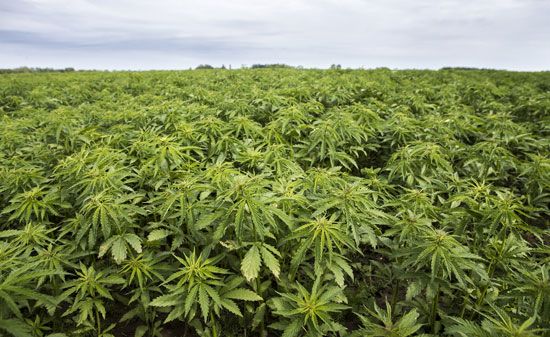
- Economic Challenges and Shifts: Although the valley is highly productive, it faces agricultural limitations compared to the coastal plain due to lower rainfall and greater temperature fluctuations. Furthermore, the region has a long history of cannabis cultivation; in 2020, Lebanon legalized this production in an effort to bolster the national economy.352
How do mountain ranges like the Lebanon and Anti-Lebanon mountains influence local climate?
The Lebanon Mountains and Anti-Lebanon Mountains significantly influence the local climate by acting as orographic barriers to moisture-laden winter storms moving eastward from the Mediterranean Sea.56
As these storms encounter the Lebanon Mountains, they are forced upward, resulting in heavy orographic precipitation on the windward (coastal) side, where rainfall can exceed 50 inches (1,270 mm) annually. This process creates a rain shadow effect in the Bekaa valley, which lies between the two ranges. Consequently, the valley is significantly drier than the coast, receiving only 15 to 25 inches (380 to 640 mm) of precipitation.576
Furthermore, elevation plays a critical role in temperature regulation. Mean temperatures drop by approximately 15 °F (8 °C) for every 5,000 feet of elevation, leading to snowcapped peaks that remain frozen until early summer. While the coastal side benefits from a milder, humid climate, the higher altitudes and the rain-shadowed Anti-Lebanon range experience more extreme conditions, including aridity and colder temperatures.5896
What are the main goals of the United Nations in peacekeeping operations?
The primary goal of United Nations peacekeeping is the maintenance of international peace and security. While not explicitly detailed in the UN Charter, these operations have evolved significantly over time to address diverse global challenges.10
Evolution of Peacekeeping Goals
- First-Generation (Classic) Peacekeeping: Initially developed during the Cold War, these missions focused on observing cease-fires and acting as a neutral buffer between warring parties. Troops were lightly armed and authorized to use force only in self-defense, operating with the consent of the involved parties.10
- Second-Generation Peacekeeping: Following the Cold War, the UN expanded its scope to address internal conflicts and humanitarian crises. These missions often involve civilian experts and relief specialists alongside military personnel. Their objectives are multifaceted, including supervising elections, encouraging peace negotiations, distributing food, and assisting in refugee resettlement.10
- Peacemaking and Peace Building: Beyond traditional monitoring, the UN now integrates peacemaking and peace-building activities to resolve disputes and foster long-term stability, often coordinating complex political, development, and human rights initiatives.1011
Sources
- Litani River: Top Questions — Encyclopædia Britannica
- Litani River — Encyclopædia Britannica
- Bekaa valley — Encyclopædia Britannica
- Lebanon - Agriculture, forestry, and fishing — Encyclopædia Britannica
- Lebanon - Climate of Lebanon — Encyclopædia Britannica
- Lebanon Mountains — Encyclopædia Britannica
- Anti-Lebanon Mountains — Encyclopædia Britannica
- Lebanon - Relief — Encyclopædia Britannica
- Rain shadow — Encyclopædia Britannica
- United Nations - Peacekeeping, peacemaking, and peace building — Encyclopædia Britannica
- United Nations - Sanctions and military action — Encyclopædia Britannica
Published on · 3 min read