Hyssop
Hyssop (Hyssopus officinalis) is a member of the Lamiaceae family, which is widely recognized for its aromatic plants. Like many of its relatives—such as…
How does hyssop compare to other herbs in the mint family?
Hyssop (Hyssopus officinalis) is a member of the Lamiaceae family, which is widely recognized for its aromatic plants. Like many of its relatives—such as thyme, sage, and oregano—hyssop is valued for its essential oils, which are used in cooking, medicine, and perfumery.12
Physically, hyssop shares the characteristic square stems and opposite leaves common to the mint family. While many Lamiaceae members are cultivated primarily for their culinary or medicinal oils, hyssop is distinct for its specific combination of a sweet scent and a warm, bitter taste. Unlike some mint family members that are strictly culinary or ornamental, hyssop has a long history of use as both a potherb and a traditional folk remedy for respiratory ailments.1234
It is important to distinguish true hyssop from the unrelated “hedge hyssop” (Gratiola), which belongs to a different family (Plantaginaceae) and is noted for having a nauseatingly bitter taste rather than the aromatic qualities of the Lamiaceae family.1
How has hyssop been used historically in traditional medicine?
Historically, hyssop (Hyssopus officinalis) has been utilized in traditional medicine primarily for its therapeutic properties regarding the respiratory system. A traditional remedy involves preparing a strong tea from the plant’s leaves, often sweetened with honey, to treat various nose, throat, and lung afflictions. Additionally, the herb has been applied externally as a folk remedy to treat bruises.1
It is important to clarify that the “hyssop” mentioned in the Bible—historically used by ancient Hebrews for ritual cleansing rites—is not the same plant as the modern Hyssopus officinalis. That biblical plant, known as ezov, is considered alien to the region where Hyssopus officinalis is native and is believed by scholars to have been a species of caper or savory.14
What are the culinary uses of hyssop?
Hyssop (Hyssopus officinalis) is a versatile herb valued for its aromatic leaves and flowers, which possess a sweet scent and a warm, bitter taste. Its culinary applications include:
- Flavoring: It is commonly used to season a variety of dishes, including meats, fish, vegetables, and salads.
- Beverages: The herb is utilized to flavor certain drinks, most notably absinthe.
- Sweets: It is used as a flavoring agent in various confections.
- Historical Context: During the Middle Ages, it was frequently employed as a stewing herb.
- Honey: Honey produced from hyssop pollen is highly regarded for its quality.
While hyssop is sometimes used as a potherb, it is important to distinguish it from the unrelated “hedge hyssop” (Gratiola), which is not used in cooking due to its nauseatingly bitter taste.14
What is hyssop and where does it naturally grow?
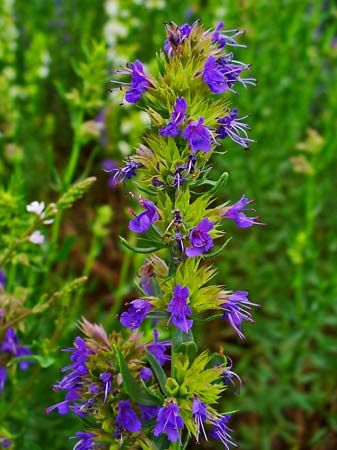
Hyssop (Hyssopus officinalis) is an evergreen perennial herb belonging to the mint family (Lamiaceae). It is characterized by its slim, woody, quadrangular stems that reach about 0.5 meters (1.5 feet) in height, featuring narrow, elliptical leaves and spikes of small, colorful flowers that bloom in the summer1.
The plant is native to a region stretching from southern Europe eastward to central Asia. Additionally, it has become naturalized in North America.1
It is important to note that the “hyssop” referenced in the Bible is not Hyssopus officinalis. That plant, known as ezov, is native to the Middle East and is believed by scholars to be a species of caper or savory, rather than the garden herb commonly known as hyssop today.1
Sources
- Hyssop — Encyclopædia Britannica
- Lamiales - Lamiaceae — Encyclopædia Britannica
- list of plants in the family Lamiaceae — Encyclopædia Britannica
- hyssop — Merriam-Webster
- list of economically important members of the family Lamiaceae — Encyclopædia Britannica
- Hyssopus — Merriam-Webster
Published on · 3 min read