Lamiales
The order Lamiales is characterized by a diverse range of floral morphologies, though several common features are frequently observed across its families.
What are the common morphological features of flowers in the Lamiales order?
The order Lamiales is characterized by a diverse range of floral morphologies, though several common features are frequently observed across its families.1
Floral Symmetry and Structure
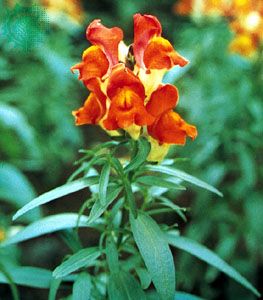
Many members possess bilaterally symmetric flowers with an irregularly shaped corolla that has only one plane of symmetry. In these species, the corolla often forms two lips—an upper lip of two petals and a lower lip of three. Some species feature a palate on the lower lip that closes the corolla throat, or a nectar-producing spur at the base.12
Androecium (Stamens)
The number of stamens is typically fewer than the number of petals. While some families follow a five-part (pentamerous) plan, most species have only two or four stamens due to the suppression of others. These stamens are often epipetalous (united with the petals) and alternate with the corolla lobes. Sterile stamens, known as staminodes, may also be present.1
Ovary and Placentation
Most species feature an ovary with two locules (chambers). While axile placentation is common, some families exhibit parietal or free-central placentation.1
Are there any medicinal uses for plants in the Lamiales order?
Many plants within the Lamiales order, particularly those in the Lamiaceae family, have a long history of use in traditional and herbal medicine. These plants are often valued for their volatile oils, which can possess antibacterial, antifungal, antiviral, and anti-inflammatory properties.24
Examples of medicinal uses include:
- Sage (Salvia officinalis): Historically used as a tonic, it was believed in medieval Europe to strengthen memory and promote wisdom.5
- Hyssop (Hyssopus officinalis), Betony (Stachys officinalis), and Self-heal (Prunella vulgaris): These were once widely regarded as curative herbs or folk remedies.2
- Mint (Mentha): Various species are used in herbal medicine to treat conditions such as irritable bowel syndrome, gastritis, enteritis, and respiratory tract disorders.4
However, it is critical to exercise caution. Some plants, such as pennyroyal (Mentha pulegium), are highly toxic. While traditionally used to induce perspiration or menstruation, its oil is dangerous and can cause organ failure, hemorrhages, and death; it should never be ingested. Always prioritize safety and consult medical professionals regarding the use of herbal preparations.4

What are some of the evolutionary relationships between different families within the Lamiales order?
The evolutionary relationships within the Lamiales order are understood primarily through the Angiosperm Phylogeny Group IV (APG IV) system. This classification relies on molecular techniques, such as DNA sequencing of chloroplasts and nuclei, rather than traditional morphological schemes.2
Within the broader asterid lineage, the Lamiales are grouped into the lamiids. The order is considered monophyletic, meaning all its member families are derived from a common ancestor. While the order is heterogeneous, it is supported by shared technical and molecular characters, such as the storage of carbohydrates as oligosaccharides rather than starch, and the production of specific chemical compounds like oxygenated flavones.27
The order encompasses 24 families, including major groups such as Lamiaceae, Plantaginaceae, Scrophulariaceae, and Orobanchaceae. These families are organized based on their evolutionary lineage, though the APG system emphasizes that this hierarchy signals relative evolutionary placement rather than implying that all families are equivalent in an evolutionary sense.12
What are the main characteristics of plants in the Lamiales order?
The Lamiales order, a diverse group of flowering plants, is characterized by several distinct technical and molecular features. Unlike many other plants, members of this order store carbohydrates as oligosaccharides rather than starch, and they frequently produce oxygenated flavones and other specialized chemical compounds.1
Morphologically, these plants typically feature opposite leaves, the presence of glandular hairs, and mostly capsular fruits. Many species exhibit bilaterally symmetric flowers with an irregularly shaped corolla, often organized into two lips. The androecium usually consists of fewer stamens than petals, with most species possessing two or four stamens, often fused to the petals (epipetaly).1
The ovary generally contains two locules, with axile placentation being the most common arrangement, though some families exhibit parietal or free-central placentation. Seed production varies significantly across the order, ranging from single-seeded fruits to the prolific output of some parasitic plants like Boschniakia rossica, which can produce over 300,000 seeds.1
Sources
- Lamiales - Order characteristics — Encyclopædia Britannica
- Lamiales — Encyclopædia Britannica
- Lamiales - Main families — Encyclopædia Britannica
- Lamiaceae — Encyclopædia Britannica
- sage — Encyclopædia Britannica
- mint — Encyclopædia Britannica
- angiosperm - Annotated classification — Encyclopædia Britannica
Published on · 3 min read