Ictalurid
An ictalurid is any fish belonging to the family Ictaluridae, which comprises approximately 50 species of freshwater catfish native to North and Central…
What is ictalurid?
An ictalurid is any fish belonging to the family Ictaluridae, which comprises approximately 50 species of freshwater catfish native to North and Central America.1
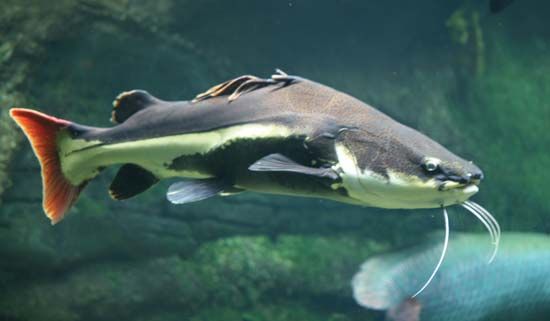
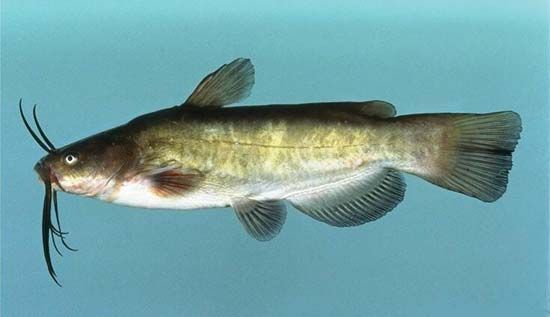
These fish are characterized by their “typical” catfish appearance, featuring large, wide heads, tapering bodies without scales, and eight prominent barbels around the mouth. The family encompasses several well-known groups, including the madtom and the bullhead.1
What are the functions of the barbels on a catfish?
The barbels of a catfish—often referred to as “whiskers”—serve as vital sensory organs that help these fish navigate and locate food, particularly in murky waters where vision is limited.23
The primary functions of these fleshy, fingerlike projections include:
- Chemoreception: Barbels are covered in numerous taste buds, allowing the fish to “taste” their environment. This sense plays a leading role in searching for and identifying food sources on the bottom of their habitat.243
- Tactile Sensing: Barbels are highly sensitive to touch. By combining touch and taste, catfish can effectively select and evaluate food items before ingestion.4
Because many catfish species are bottom dwellers that are more active at night, these sensory structures are essential for their survival and foraging success.25
How do bullheads differ from channel catfish?
While both bullheads and channel catfish belong to the family Ictaluridae, they exhibit distinct physical and size differences:
- Tail Shape: The most notable visual difference is the tail. Channel catfish possess a forked tail, whereas bullheads have a squared tail.7
- Size: Channel catfish are generally larger, capable of growing to about 1 meter (roughly 3 feet) in length and reaching weights of 12 kilograms (26 pounds). In contrast, bullheads are typically smaller, generally measuring less than 30 centimeters (12 inches) in length.17
Both groups are native to North America and are valued as food and sport fishes, though they are classified into different genera, with bullheads belonging to the genus Ameiurus (sometimes classified as Ictalurus) and the channel catfish identified as I. punctatus.7
What makes madtoms unique among ictalurids?
Madtoms, which belong to the genus Noturus, are unique among ictalurids for several distinct characteristics:
- Size: They are the smallest members of the Ictaluridae family, typically measuring only 5–7.5 cm (2–3 inches) in length.8
- Venomous Spines: Unlike many other catfishes, madtoms possess stout, saw-edged spines in their pectoral fins that are equipped with venom glands at the base. These spines are capable of inflicting jagged, painful wounds.81
- Adipose Fin Structure: They are characterized by a long adipose fin that, in certain species, connects directly to the rounded tail fin.8
These small, bottom-dwelling fish are widely distributed across the central and eastern United States and are often found hiding under stones during the day.81
Sources
- ictalurid — Encyclopædia Britannica
- fish - Taste — Encyclopædia Britannica
- Chemoreception - Fish — Encyclopædia Britannica
- ostariophysan - Barbels — Encyclopædia Britannica
- ostariophysan - Taste and smell — Encyclopædia Britannica
- catfish — Encyclopædia Britannica
- bullhead — Encyclopædia Britannica
- madtom — Encyclopædia Britannica
- madtom — Merriam-Webster
Published on · 2 min read