Ídi
The term Ídi (also spelled Ídhi or Ida) refers to a mountain located in west-central Crete, Greece. It is the highest mountain on the island, with its peak…
What is Ídi?
The term Ídi (also spelled Ídhi or Ida) refers to a mountain located in west-central Crete, Greece. It is the highest mountain on the island, with its peak, Timios Stavros, reaching an elevation of 8,058 feet (2,456 meters).12
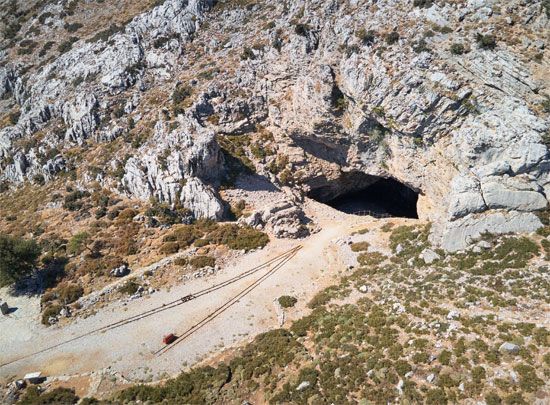
The mountain is characterized by its limestone composition and numerous caves. According to legend, Zeus was reared in a cave on its slopes. The mountain serves as a vital subterranean reservoir, providing water for surrounding agricultural communities that raise crops such as olives, citrus, and grains, as well as livestock like sheep and goats.1
It is important to distinguish this geographical feature from Idi Amin (c. 1925–2003), the military officer and president of Uganda from 1971 to 1979. His regime was marked by extreme brutality, including the persecution of ethnic groups and the expulsion of Asians, resulting in an estimated 300,000 deaths.3
What role did Mount Ìdi play in Greek mythology?
Mount Ídi (also known as Ida or Psiloriti) in Crete played a significant role in Greek mythology as the legendary site where Zeus was reared. According to tradition, he was raised in the Ídiean cave located on the mountain’s scrub-covered slopes.71
It is important to note that the name “Ida” is also associated with a mountain range in northwestern Asia Minor (modern-day Turkey), near the site of ancient Troy. This separate Mount Ida holds its own distinct mythological significance: it was the location where Paris judged the beauty of rival goddesses and where the rape of Ganymede occurred. Furthermore, in the Trojan War, the gods were said to have watched the conflict unfold from the peaks of the Anatolian Mount Ida.7
What are some other famous mountains in Greece?
Greece is home to several iconic mountain ranges, many of which hold significant cultural and mythological importance:
- Mount Olympus: As the highest massif in Greece, reaching 9,570 feet (2,917 meters) at its summit, Mytikas, it is famously known in Greek mythology as the abode of the 12 Olympian gods and the throne of Zeus.89
- Mount Parnassus: Rising to 8,061 feet (2,457 meters), this limestone mountain was sacred to Apollo and the Corycian nymphs. It was traditionally considered the home of the Muses and is located near the ancient site of Delphi.1011
- Taïyetos Mountains: Located in the southern Peloponnese, this range is the highest in that region, reaching approximately 7,874 feet (2,400 meters). Known to Homer as the “five-fingered mountain,” it serves as a geographic barrier between Laconia and Messenia.12
- Mount Ossa and Mount Pelion: These peaks are situated in eastern Greece as part of the spurs extending from the Pindus range.11
What is the historical significance of the Entebbe raid during Idi Amin’s rule?
The Entebbe raid, which took place on July 3–4, 1976, serves as a significant historical marker of the volatility and international isolation that characterized the regime of Idi Amin.
During this event, a French airliner hijacked by members of the Popular Front for the Liberation of Palestine and the Red Army Faction was flown to Entebbe, Uganda. Idi Amin was personally involved in the situation, having reversed Uganda’s previous amicable relations with Israel to align himself with Libya and Palestinian militants.132
The raid itself—a daring rescue mission where Israeli commandos flew 2,500 miles to free 103 hostages—resulted in the death of the hijackers and the destruction of 11 Ugandan MiG fighters. Beyond the tactical success that boosted Israeli morale, the incident underscored the extreme nature of Amin’s rule, as his complicity in the hijacking further alienated his government from the international community. This period of tyranny was marked by economic collapse, human rights abuses, and erratic foreign policy, eventually leading to his downfall in 1979.13214
Sources
- Ídi — Encyclopædia Britannica
- Idi Amin — Encyclopædia Britannica
- Did you know? — Merriam-Webster
- ID — Merriam-Webster
- Ídhi — Merriam-Webster
- idiom — Merriam-Webster
- Ida — Encyclopædia Britannica
- Mount Olympus: Top Questions — Encyclopædia Britannica
- Mount Parnassus — Encyclopædia Britannica
- Mount Olympus — Encyclopædia Britannica
- Greece - Eastern Greece: Thessalía and Attikí — Encyclopædia Britannica
- Taïyetos Mountains — Encyclopædia Britannica
- Entebbe raid — Encyclopædia Britannica
- Uganda - Tyranny under Amin — Encyclopædia Britannica
- All 119 References in “We Didn’t Start the Fire,” Explained - Terror on the airline — Encyclopædia Britannica
Published on · 3 min read