Irazú Volcano
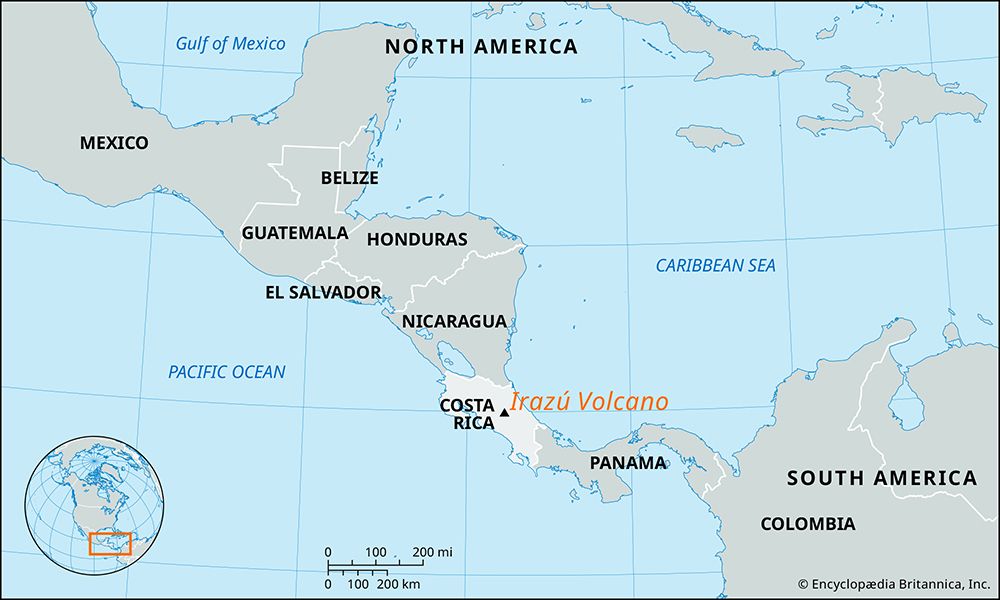
Irazú Volcano is an active volcano located in the Cordillera Central of east-central Costa Rica. Its name is derived from an indigenous word meaning…
What is Irazú Volcano?
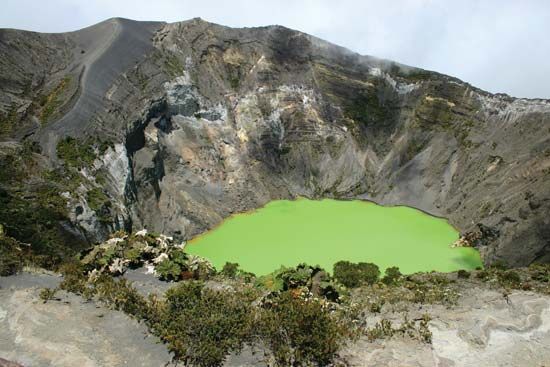
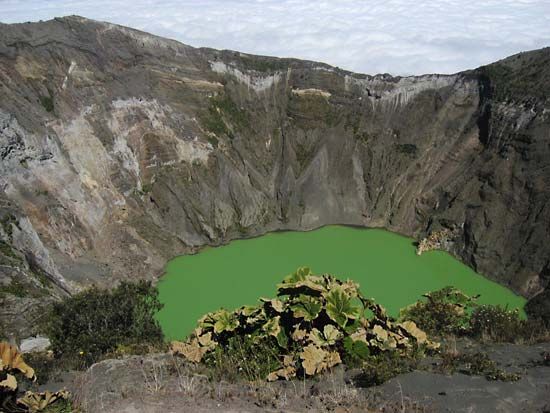
Irazú Volcano is an active volcano located in the Cordillera Central of east-central Costa Rica. Its name is derived from an indigenous word meaning “thunder.” Standing at 11,260 feet (3,432 metres), it is the highest peak in the Cordillera Central.12
The volcano features an active crater 980 feet (300 metres) deep and is a popular destination for tourists, as its summit can offer views of both the Atlantic and Pacific coasts on clear days. It is accessible via a paved road that leads to the crater rim.12
Irazú poses a significant natural hazard; its eruptions between 1963 and 1965 produced heavy ashfall that caused extensive damage to coffee crops and flooded the nearby city of Cartago, while also disrupting life in San José. The site is currently protected as a national park.1
How do volcanoes like Irazú impact the local environment and agriculture?
Volcanoes like Irazú significantly impact local environments and agriculture through both immediate destruction and long-term soil enrichment.
Immediate Hazards
Volcanic eruptions often release volcanic ash, which can cause widespread crop failure and property damage. During the 1963–65 eruptions of Irazú, heavy ashfall severely damaged coffee crops and dammed local rivers, leading to flooding in the city of Cartago rivers, leading to flooding in the city of Cartago. Furthermore, eruptions can trigger lahars—destructive mudflows of volcanic material—that move at high speeds, causing significant death and destruction to infrastructure and surrounding land.134
Long-Term Effects
While eruptions are destructive, they also play a vital role in shaping the environment. Over time, the weathering of volcanic ash creates nutrient-rich, loamy soils that are among the most fertile in the world, supporting dense populations and productive agriculture. Additionally, large-scale volcanic activity can influence climate by injecting aerosols into the stratosphere, which may temporarily lower global temperatures.15
We could dive deeper into how specific volcanic minerals contribute to soil fertility or explore the history of other major eruptions.
What are the differences between a stratovolcano and other types of volcanoes?
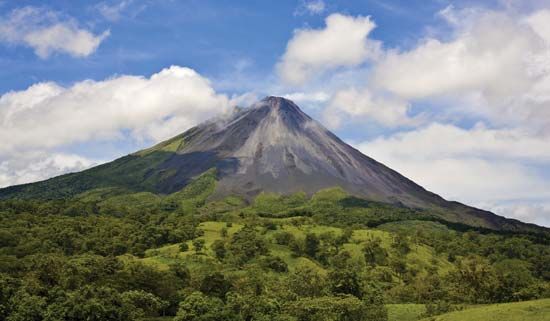
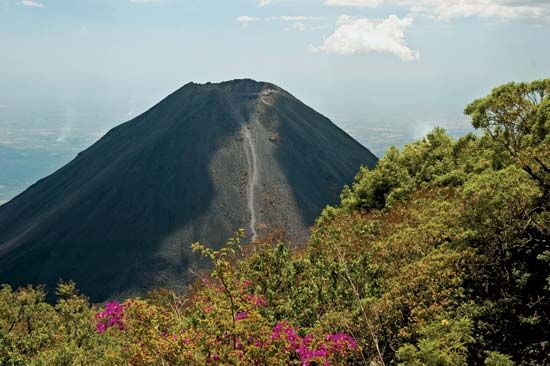
A stratovolcano—often called a composite volcano—is the most common type of volcano, characterized by a steep, conical shape built from alternating layers of ash, mud, and viscous lava flows. Unlike other volcanic forms, their composition is typically andesite or dacite, which are more viscous than the basaltic lavas found in shield volcanoes.8910
Key differences from other volcanic types include:
- Shield Volcanoes: These are broad, gently sloping structures formed by fluid, low-viscosity basaltic lava that flows easily over long distances.1110
- Cinder Cones: These are much smaller, simpler hills built from loose pyroclastic fragments. They often form on the flanks of larger volcanoes and have a characteristic 30° angle of repose.12
- Calderas: While stratovolcanoes may contain craters, a caldera is a much larger, bowl-shaped depression formed by the collapse of a magma chamber after a massive eruption.1013
- Complex Volcanoes: These result from changing eruptive habits or vent locations over time, creating a mixture of landforms rather than a single, consistent shape.11
What other active volcanoes are located in Costa Rica?
In addition to the Irazú Volcano, Costa Rica is home to several other notable active volcanoes located within the Cordillera Volcánica:
- Poás Volcano: Located in the Cordillera Central, this volcano is one of the highest peaks in the range and is well-known for having a paved road that allows visitors to reach the rim of its active crater.1
- Arenal Volcano: Situated about 56 miles northwest of San José, this is the country’s youngest stratovolcano. It gained international attention following a major eruption in 1968 that destroyed two villages and continued to produce lava and breccia into the early 21st century.12
While the Cordillera de Guanacaste contains other volcanic peaks, such as the Miravalles Volcano, it is currently classified as dormant.2
Sources
- Irazú Volcano — Encyclopædia Britannica
- Costa Rica - Relief — Encyclopædia Britannica
- volcano - Ash falls — Encyclopædia Britannica
- volcano - Long-term environmental effects — Encyclopædia Britannica
- lahar — Encyclopædia Britannica
- volcano - Lava , gas, and other hazards — Encyclopædia Britannica
- Cordillera de Guanacaste — Encyclopædia Britannica
- cinder cone — Encyclopædia Britannica
- volcano - Stratovolcanoes — Encyclopædia Britannica
- volcano - Major types — Encyclopædia Britannica
- volcano - Determinants of size and shape — Encyclopædia Britannica
- stratovolcano — Encyclopædia Britannica
- volcano - Calderas — Encyclopædia Britannica
Published on · 3 min read