Innuitian Mountains
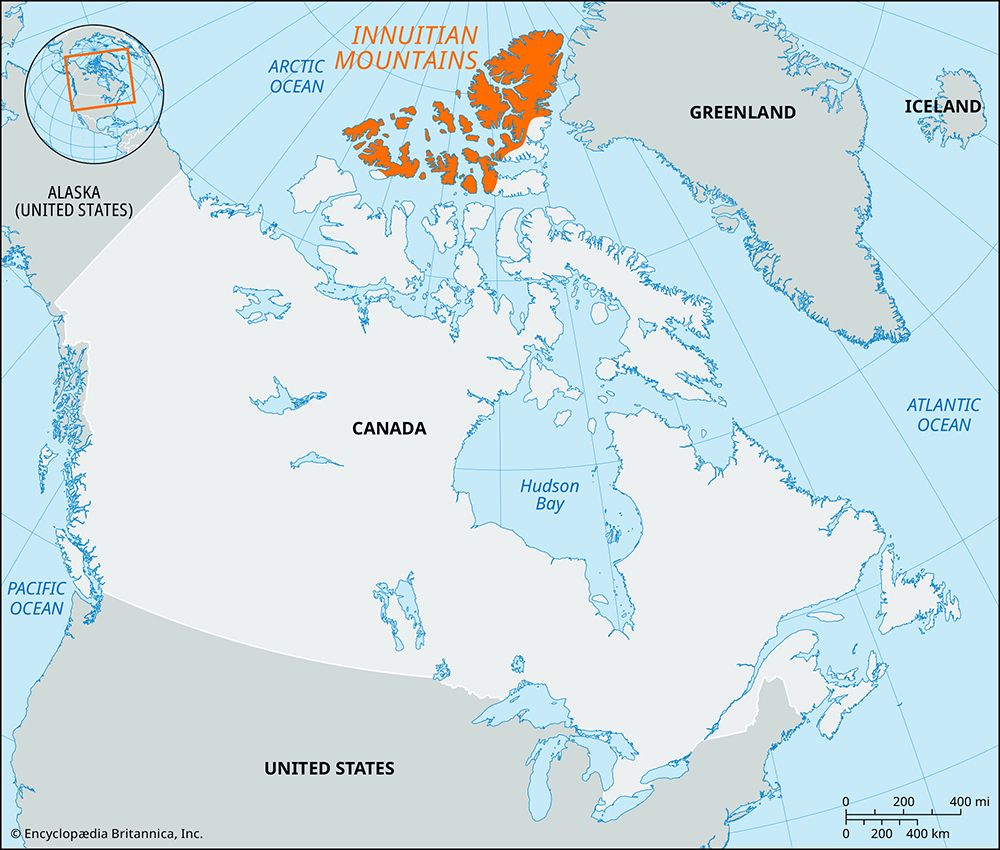
The Innuitian Mountains are a mountain range located in Nunavut, Canada. The name is derived from innuit, an alternate spelling of Inuit.
What is Innuitian Mountains?
The Innuitian Mountains are a mountain range located in Nunavut, Canada1. The name is derived from innuit, an alternate spelling of Inuit.1
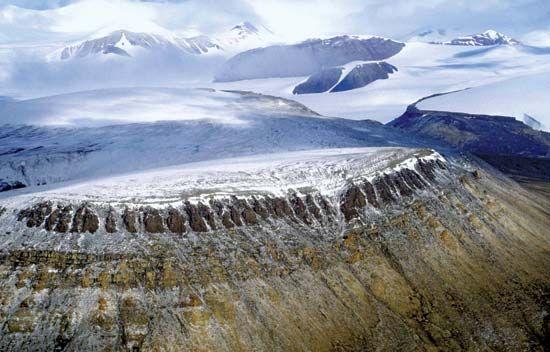
The range extends approximately 800 miles (1,300 km) in a southwest-to-northeast direction across several islands in the Arctic, reaching elevations of 6,000 feet (1,830 meters) or more. Geologically, the term “Innuitian System” is used to describe the various fold belts that developed in the Canadian Arctic Islands due to the deformation of the Franklinian Geosyncline, a process that occurred between the Devonian and Pennsylvanian periods.12
It is important to distinguish the Innuitian Mountains from other northern regions, such as the Inuvik region in the Northwest Territories, which features different mountain systems like the Mackenzie and Franklin Mountains.3
What is the Canadian Arctic Archipelago?
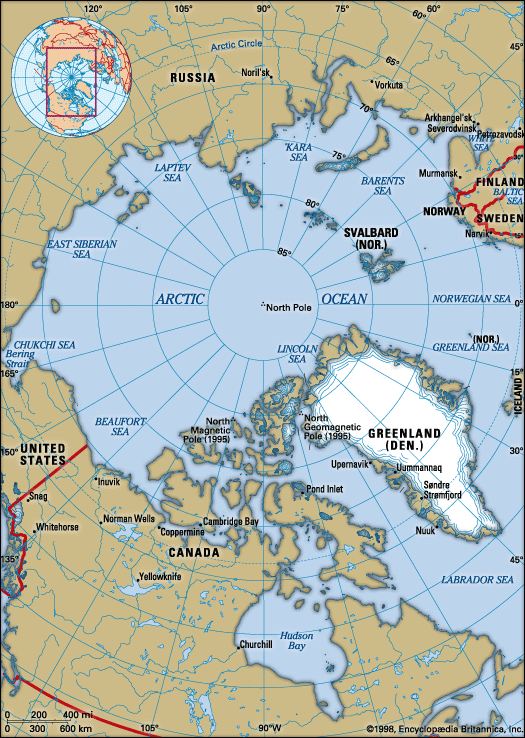
The Arctic Archipelago is a vast group of Canadian islands located in the Arctic Ocean, lying north of the Canadian mainland. Covering an area of approximately 550,000 square miles (1,424,500 square km), the archipelago includes major islands such as Baffin, Ellesmere, Victoria, Banks, and Prince of Wales.5
Geologically, the region is divided into three distinct zones:
- Canadian Shield: The southeastern islands serve as an extension of this ancient, rocky formation.56
- Arctic Lowlands: Located to the south, these areas consist of relatively flat, often poorly drained terrain.57
- Innuitian Region: Found to the north, this area is characterized by the Innuitian Mountains. These are geologically young, rugged mountains with peaks reaching up to 10,000 feet (3,000 meters), much of which remains permanently covered in snow and ice.56
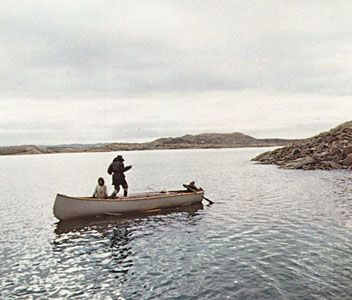
The islands support a specialized tundra ecosystem, home to wildlife such as musk oxen, caribou, polar bears, and Arctic foxes.78
How does the tundra ecosystem survive in such a cold climate?
The tundra ecosystem survives in extreme cold through specialized biological and physical adaptations that allow organisms to thrive during a very short growing season.910
Plant Adaptations
Plants in the tundra are opportunistic and have evolved to complete their life cycles rapidly. Most are perennials that flower shortly after snowmelt, often utilizing hairy stalks to retain heat. By growing low to the ground, they benefit from warmer air layers near the soil surface. Furthermore, many plants rely on snow cover for insulation against extreme winter cold and drying winds.109
Animal Adaptations
Animals have developed strategies to manage energy expenditure and survive harsh winters:
- Physical Traits: Large herbivores like musk oxen and caribou possess thick coats and large body sizes, which help retain heat.11
- Behavioral Shifts: Small mammals like lemmings remain active all winter, constructing nests beneath the insulating layer of snow. Many species also utilize seasonal camouflage, growing white coats in winter to hide from predators or prey.911
- Migration: Some predators, such as snowy owls, migrate to forested regions when local food sources become scarce.11
Environmental Factors
The presence of permafrost and the freeze-thaw cycle define the landscape, limiting biological activity to a thin “active layer” of soil during the summer thaw. While these conditions create a simple, fragile ecosystem, they also drive unique nutrient cycling, such as the enrichment of soil by animal waste.1213911
What are the primary differences between the Inuit and First Nations cultures?
In Canada, the Inuit and First Nations are distinct Indigenous peoples with different histories, cultural adaptations, and legal statuses.
Cultural and Environmental Distinctions
The primary distinction lies in their traditional environmental adaptations. First Nations cultures are traditionally tied to the forest and subarctic regions, whereas Inuit cultures are historically adapted to the coastal and Arctic tundra environments, independent of the forest. Biologically and linguistically, the Inuit are also distinct from other Indigenous American groups; for instance, the Eskimo-Aleut languages arose separately from other North American Indigenous languages.1415
Legal and Political Status
Their relationships with the Canadian government differ significantly:
- First Nations: Many are defined as “status Indians” under the Indian Act of 1876. Through various treaties, more than 600 bands occupy over 2,250 reserves.16
- Inuit: The Inuit do not have reserves and are not governed by the same treaty system. Instead, they have pursued self-determination through modern governance arrangements, most notably the creation of the territory of Nunavut in 1999, which provides an advanced form of self-government for a largely Inuit population.1615
Sources
- Innuitian Mountains — Encyclopædia Britannica
- Nunavut - Plant and animal life — Encyclopædia Britannica
- Inuvik — Encyclopædia Britannica
- Franklinian Geosyncline — Encyclopædia Britannica
- Arctic Archipelago — Encyclopædia Britannica
- Canada - The Arctic Archipelago — Encyclopædia Britannica
- Northwest Territories - Land — Encyclopædia Britannica
- Arctic - Animals of the land and fresh water — Encyclopædia Britannica
- Polar ecosystem - Development and structure of populations and communities — Encyclopædia Britannica
- Tundra - Soils — Encyclopædia Britannica
- Tundra - Arctic mammals — Encyclopædia Britannica
- Tundra - Plant life — Encyclopædia Britannica
- Tundra — Encyclopædia Britannica
- Canada - Indigenous peoples — Encyclopædia Britannica
- Arctic - Identification of Eastern and Western Arctic cultures — Encyclopædia Britannica
- Inuit — Encyclopædia Britannica
- Inuit: Top Questions — Encyclopædia Britannica
- Nunavut - Population composition — Encyclopædia Britannica
- Nunavut - Cultural life — Encyclopædia Britannica
- Eskimo-Aleut languages - Vocabulary — Encyclopædia Britannica
- Eskimo-Aleut languages - Consonants — Encyclopædia Britannica
- Arctic - Canada and northern Alaska — Encyclopædia Britannica
Published on · 3 min read