Izalco Volcano
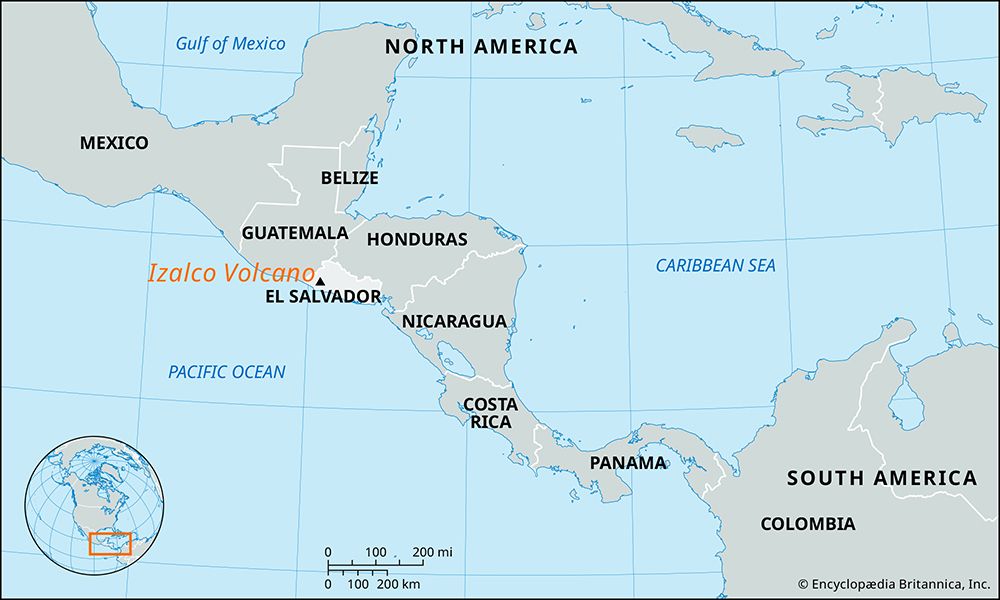
Izalco Volcano is a prominent volcano located in western El Salvador on the southern slope of the Santa Ana volcano. Known as the most active volcano in…
What is Izalco Volcano?
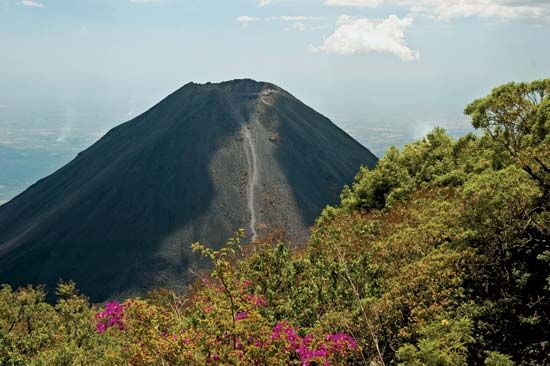
Izalco Volcano is a prominent volcano located in western El Salvador on the southern slope of the Santa Ana volcano. Known as the most active volcano in Central America, it has erupted more than 50 times since 1770.1
The volcano features a black, symmetrical cone that is devoid of vegetation and reaches a height of 6,004 feet (1,830 meters). Its near-constant activity during the 19th century earned it the nickname “Lighthouse of the Pacific,” as sailors used the glow from its summit to navigate. The volcano is named after the local Izalco people, and the town of Izalco is situated at its southwestern base.1
What is a cinder cone volcano?
A cinder cone is a conical hill formed by the accumulation of volcanic debris, known as cinders or pyroclastic rock fragments, around a volcanic vent. These structures typically feature a bowl-shaped crater at the summit and develop from explosive eruptions of mafic or intermediate lavas.3
Key characteristics include:
- Slope: The exterior of the cone often maintains an angle of approximately 30°, which is the angle of repose for loose volcanic material.3
- Formation: They are frequently found along the flanks of larger shield volcanoes and can range in height from a few tens of feet to several hundred meters, such as the famous Paricutín in Mexico.3
- Durability: Despite being composed of loose material, these cones are often enduring landscape features because rainwater permeates the porous cinders rather than causing surface erosion.3
- Lava Activity: Lava flows may occasionally breach the cone or emerge from beneath it through tunnels.3
How do volcanoes affect the surrounding environment?
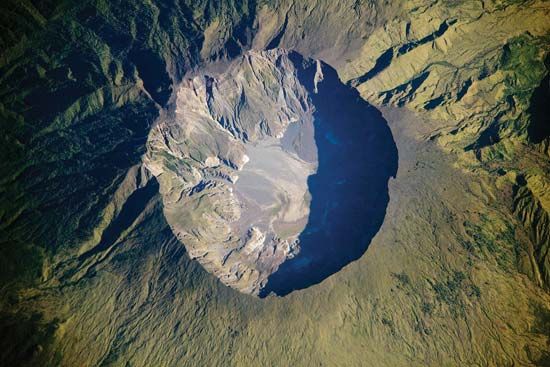
Volcanoes exert profound and complex influences on the surrounding environment, acting as both destructive forces and essential contributors to Earth’s long-term evolution.56
Destructive Impacts
Eruptions can cause immediate, catastrophic damage to local ecosystems and human populations. Hazards include:
- Physical Destruction: Lava flows can bury land, while pyroclastic flows—mixtures of hot gas and particles—incinerate everything in their path.56
- Secondary Hazards: Ash accumulation can collapse roofs and destroy crops, potentially leading to famine. Additionally, ash melting on snowfields or glaciers can trigger devastating mudflows.76
- Climate Perturbations: Massive injections of sulfur dioxide and ash into the stratosphere can create volcanic winters, cooling global temperatures and disrupting weather patterns for years.58
Beneficial and Long-term Effects
Despite their destructive nature, volcanoes are vital to the planet’s health:
- Soil Fertility: Over time, weathered volcanic ash creates nutrient-rich, loamy soils that support dense populations and productive agriculture.57
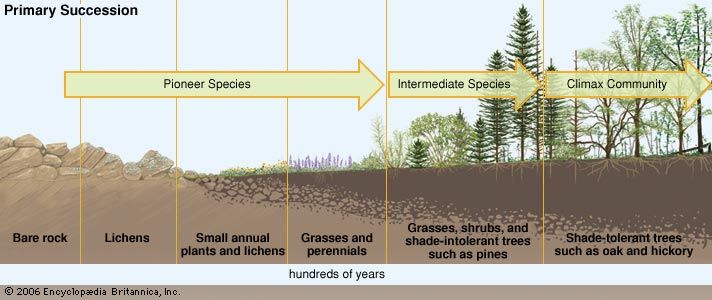
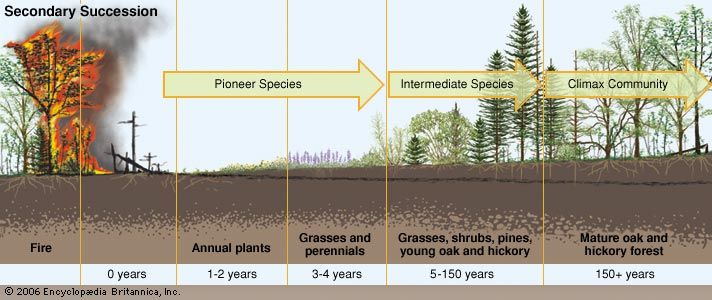
- Ecological Succession: Volcanic activity creates new land, such as islands, which are colonized through primary succession. Areas devastated by eruptions can also recover through secondary succession.9
- Global Systems: Volcanism is fundamental to the recycling of Earth’s atmosphere and hydrosphere over geologic time, while also providing valuable mineral deposits and geothermal energy.56
What are the different types of volcanic eruptions?
Volcanic eruptions are generally categorized as either effusive or explosive, depending on the magma’s viscosity and gas content. They are commonly classified into six major types, listed here in order of increasing explosiveness:10
- Icelandic: Characterized by effusions of molten basaltic lava flowing from long, parallel fissures, often forming lava plateaus.10
- Hawaiian: Similar to the Icelandic type, but fluid lava flows from a central summit and radial fissures, building large shield volcanoes.10
- Strombolian: Involves moderate, cyclical bursts of expanding gases that eject clots of incandescent lava.10
- Vulcanian: Features moderate explosions of gas-laden ash, creating dark, turbulent, and rapidly ascending eruption clouds.10
- Pelean: Associated with explosive outbursts that generate highly destructive pyroclastic flows of hot fragments and gas.10
- Plinian: The most violent type, characterized by continuous, intense jetting blasts that can send eruption clouds into the stratosphere.10
The degree of explosiveness is determined by the amount of dissolved gas, magma viscosity, the rate of decompression, and the presence of crystals that act as nucleation sites for gas bubbles.10
Sources
- Izalco Volcano — Encyclopædia Britannica
- Izalco — Merriam-Webster
- cinder cone — Encyclopædia Britannica
- cinder cone — Merriam-Webster
- volcano - Long-term environmental effects — Encyclopædia Britannica
- volcanic winter — Encyclopædia Britannica
- What Is the Difference Between Primary and Secondary Ecological Succession? — Encyclopædia Britannica
- volcano - Ash falls — Encyclopædia Britannica
- volcano — Encyclopædia Britannica
- volcano - Six types of eruptions — Encyclopædia Britannica
Published on · 3 min read