Itbāy
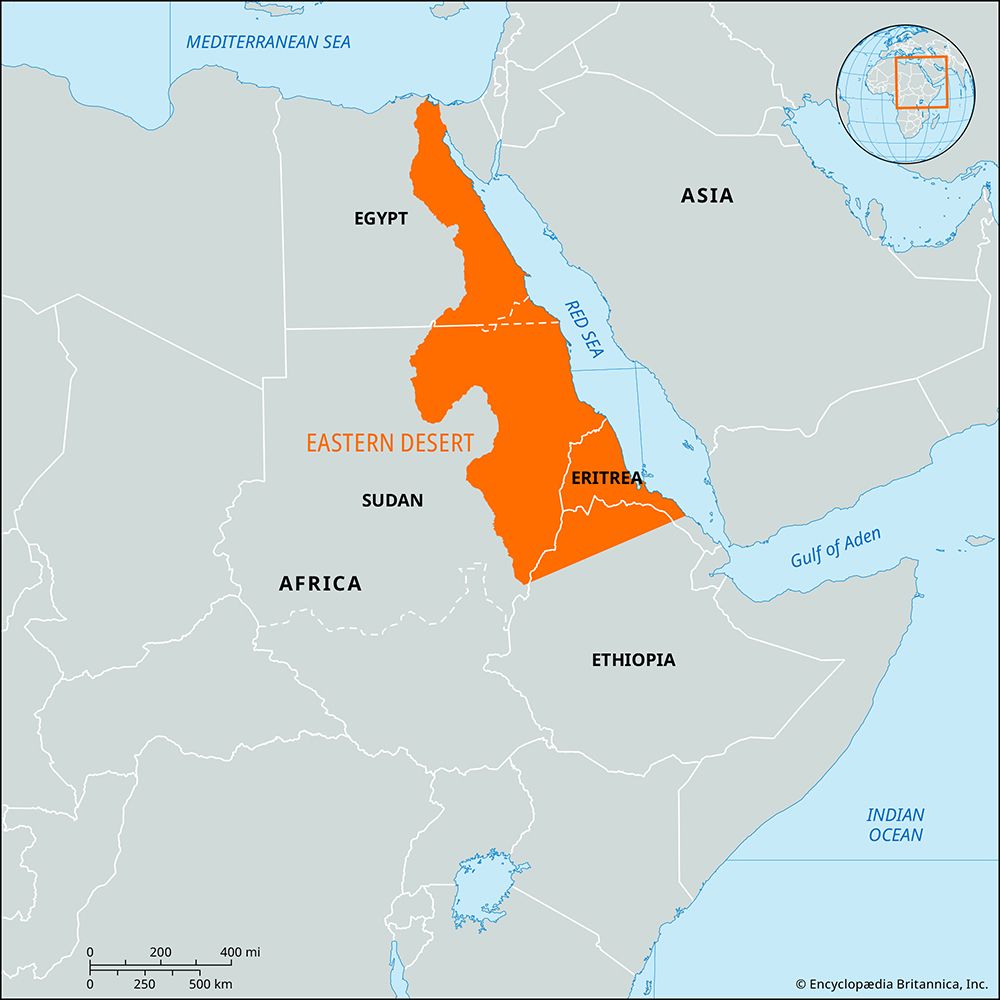
Itbāy is a mountainous region located in southeastern Egypt and the northeastern part of Sudan. It runs parallel to the Red Sea, serving as a geographical…
What is Itbāy?
Itbāy is a mountainous region located in southeastern Egypt and the northeastern part of Sudan. It runs parallel to the Red Sea, serving as a geographical barrier that separates the coastal lowlands from the Nile River valley.1
The region is characterized by north-south trending mountain chains known as the Red Sea Hills. These mountains are part of the broader Eastern Desert, an arid landscape that features volcanic mountain chains rising to heights of 6,000–6,500 feet (1,830–1,980 metres) in the south.12
What are the Red Sea Hills?
The Red Sea Hills are a narrow, rugged range of volcanic mountain chains that run in a north-south direction. They parallel the Red Sea coast, extending through southeastern Egypt and into northeastern Sudan.314
Geographically, these hills serve as a distinct feature of the Eastern Desert, rising abruptly from the rolling sandy highlands that lie east of the Nile River valley of the Nile River valley. The range reaches a maximum elevation of 7,175 feet (2,187 metres) at Mount Shāʿib al-Banāt. The region acts as a natural barrier, separating the inland desert from the coastal lowlands where most of the area’s sedentary population resides in small fishing, mining, or petroleum-extracting communities.41
How do wadis shape the landscape of the Eastern Desert?
In the Eastern Desert, wadis—the dry beds of seasonal streams—play a fundamental role in shaping the landscape through erosion and drainage. Because the region receives only occasional rainfall, these channels remain dry for most of the year, but they become active during heavy rainstorms in the Red Sea Hills, where they carry powerful, destructive torrents.78
The landscape is extensively dissected by these wadis, which serve as the primary drainage system for the area. Most of these valleys drain westward toward the Nile River valley, while shorter, steeper valleys on the eastern flank of the Red Sea Hills drain directly toward the Red Sea. Through this intermittent action of running water, wadis carve deep, eroded valleys into the terrain, acting as a more effective force in shaping the desert’s physical features than wind erosion.784
What kind of wildlife lives in the Eastern Desert?
The Eastern Desert supports a variety of wildlife adapted to its arid environment. While the region is relatively isolated, its fauna includes several species of mammals, birds, and reptiles that have evolved to survive with limited water and extreme temperatures.1213
Mammals
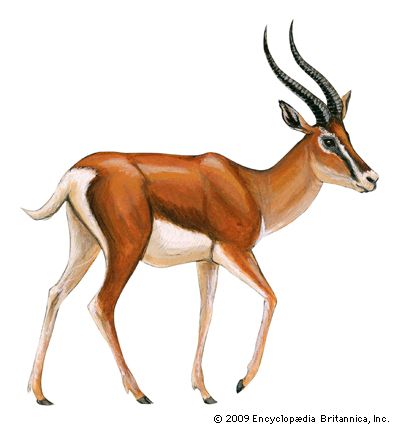
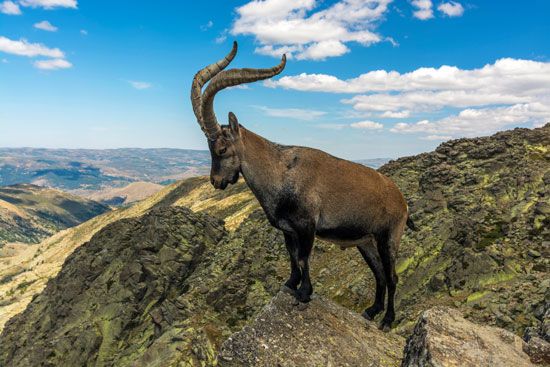
Several desert-dwelling mammals inhabit the area, including the Dorcas gazelle and the Nubian ibex, a cliff-dwelling wild goat. Carnivorous mammals found in the region include the Egyptian jackal, the fennec (a small desert fox), the Caffre cat, and the ichneumon, also known as the Egyptian mongoose. Additionally, the desert is home to numerous rodents, such as the jerboa and the Egyptian hare.12
Birds and Reptiles
The Eastern Desert is rich in birdlife, serving as a habitat for both resident and migratory species. Notable birds of prey include the kestrel, the lanner falcon, the golden eagle, and the lammergeier. Reptiles are also common, with various species of lizards—including the large monitor lizard—and poisonous snakes, such as the viper, frequently found among the rocks and sand.12
Sources
- Itbāy — Encyclopædia Britannica
- Al-Baḥr al-Aḥmar — Encyclopædia Britannica
- Red Sea Hills — Merriam-Webster
- Eastern Desert — Encyclopædia Britannica
- Africa - Formation of the Red Sea — Encyclopædia Britannica
- Red Sea - Climate — Encyclopædia Britannica
- Saudi Arabia - Drainage and soils — Encyclopædia Britannica
- Arabian Desert - Physiography — Encyclopædia Britannica
- Arabian Desert - Soils — Encyclopædia Britannica
- Wadai — Encyclopædia Britannica
- Egypt - Drainage — Encyclopædia Britannica
- Arabian Desert - Animal life — Encyclopædia Britannica
- Egypt - Plant and animal life — Encyclopædia Britannica
- Sahara - Animal life — Encyclopædia Britannica
- Israel - Plant and animal life — Encyclopædia Britannica
- Jordan - Plant and animal life — Encyclopædia Britannica
- Desert - Population and community development and structure — Encyclopædia Britannica
Published on · 2 min read