Iris
Iris plants reproduce through both sexual and asexual means. Sexual reproduction occurs via seeds, which is essential for developing new hybrids. In this…
How do iris plants reproduce, and what conditions are optimal for their growth?
Iris plants reproduce through both sexual and asexual means. Sexual reproduction occurs via seeds, which is essential for developing new hybrids. In this process, insects act as pollinators, transferring pollen between the showy flowers.1
Asexual, or vegetative reproduction, is highly efficient in the iris family. Many iris species utilize rhizomes—fleshy, horizontal underground stems—to spread and multiply. Other species, particularly those native to southwestern Europe, produce bulbs, which propagate through the formation of bulblets between leaf bases.12
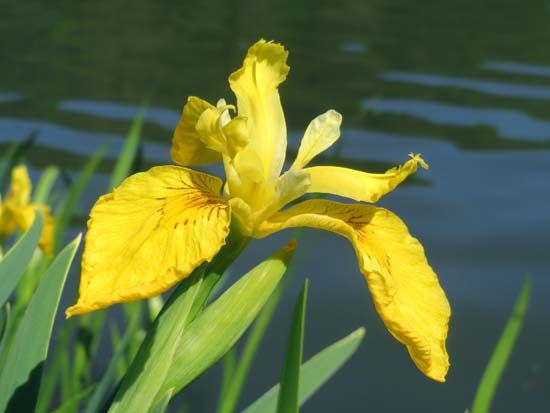
Regarding growth conditions, irises are diverse; while many thrive in temperate, subtropical, or tropical regions, specific needs vary by species. For instance, the yellow flag and blue flag are adapted to swampy, water-rich habitats. Bulbous irises are often managed under controlled temperatures to induce flowering during cooler months. Generally, these plants require well-drained soil for rhizomatous types, though their adaptability allows some to withstand rigorous subarctic substrates.1
How many species of iris plants are there, and where are they commonly found?
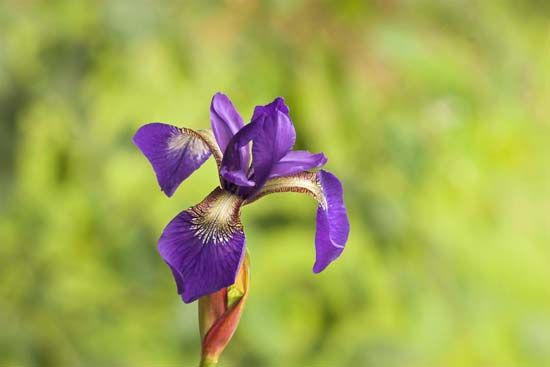
The genus Iris comprises approximately 300 species of flowering plants.14
These plants are primarily found in the north temperate zone, with a notable concentration of diverse and handsome species native to the Mediterranean and central Asian regions. While their distribution is centered in these temperate areas, different species have adapted to a variety of environments:4
- Swampy Habitats: Species such as the yellow flag (I. pseudacorus) and the blue flag (I. versicolor) are native to wetlands in Eurasia, North Africa, and North America.14
- Dry and Rocky Areas: Certain dwarf bearded irises, such as I. pumila, are native to dry, rocky locations in southern Europe.4
- Sandy Environments: Bulbous species like the Spanish iris (I. xiphium) are found in damp, sandy places in the mountains of Spain.4
The genus is part of the larger Iridaceae family, which contains about 2,200 species across 66 genera and is distributed nearly worldwide, though it is most abundant and diversified in Africa.1
What is the significance of the iris in various cultures and mythologies around the world?
The iris holds significant cultural and symbolic weight across various traditions, often bridging the gap between the natural world and the divine.
Mythological Significance
In Greek mythology, Iris was the personification of the rainbow and served as a messenger for the gods. As the daughter of Thaumas and the ocean nymph Electra, she was often depicted with wings, carrying a herald’s staff and a vase. Her duties included drawing water from the River Styx to hold gods to their solemn oaths; it was believed that any deity who lied after swearing by these waters would be rendered unconscious for a year. The name itself, derived from the Greek word for “rainbow,” reflects this celestial connection.567
Artistic and Heraldic Symbolism
The iris is famously associated with the fleur-de-lis, a stylized floral design used extensively in heraldry and as a symbol of French royalty. While the term literally translates to “lily flower,” it is widely recognized as a conventionalized representation of the iris.489
In Japan, the iris is a celebrated subject in floral decoration and classical literature. A notable example is the 18th-century masterpiece Irises by Ogata Kōrin, which draws inspiration from the Tales of Ise. By focusing on the rhythmic repetition of the flowers, the work elevates the plant to a symbol of poetic inspiration and natural beauty.10
What are the different parts of an iris flower, and what functions do they serve?
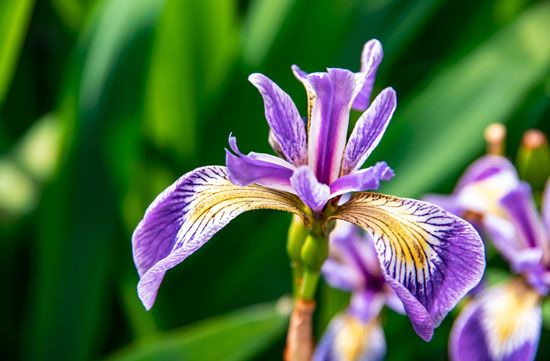
The iris flower is characterized by a distinct structure designed to facilitate pollination by insects. The floral segments are arranged in two main groups, often totaling six petal-like parts located above the ovary.111
Key Floral Parts
- Standards: These are the three inner, more erect floral segments.1
- Falls: These are the three outer floral segments, which typically droop downward. In some species, these segments feature a “beard,” a fuzzy or hairy growth that serves as a landing guide for pollinators.1
- Stigma Branches: Irises possess three broad, petal-like branches that are receptive to pollen. These branches are positioned to hide the anthers, which are the pollen-producing structures.111
- Ovary and Pistil: The flower features an inferior ovary—meaning it is located below the other floral parts—composed of three carpels unified into a single pistil. The ovary contains ovules that develop into seeds, eventually maturing into a dry capsule fruit that splits to release the seeds.111
These structures work together to attract pollinators, such as bees, which are guided by the flower’s showy appearance to land on the falls and navigate toward the reproductive organs.114
Sources
- Iridaceae — Encyclopædia Britannica
- horticulture - Vegetative structures — Encyclopædia Britannica
- plant reproductive system - Reproduction by special asexual structures — Encyclopædia Britannica
- iris — Encyclopædia Britannica
- Iris — Encyclopædia Britannica
- fleur-de-lis — Merriam-Webster
- iris — Merriam-Webster
- Flower Etymologies For Your Spring Garden | Iris — Merriam-Webster
- flower-de-luce — Merriam-Webster
- Irises — Encyclopædia Britannica
- orchid - Floral structure — Encyclopædia Britannica
- beardless iris — Merriam-Webster
- pollination - Structural — Encyclopædia Britannica
- Asparagales - Pollination — Encyclopædia Britannica
Published on · 4 min read