Irish Setter
The Irish Setter is a sporting dog breed from Ireland, celebrated for its elegant build, graceful movement, and signature mahogany-colored coat. Originally…

What is an Irish Setter?
The Irish Setter is a sporting dog breed from Ireland, celebrated for its elegant build, graceful movement, and signature mahogany-colored coat. Originally developed in the 18th century as a hunting companion, the breed was trained to locate birds and “set”—or point—at the game, allowing hunters to capture prey with nets.1
Key characteristics include:
- Physicality: Standing 25–27 inches tall and weighing 60–70 pounds, these dogs are athletic and active, requiring significant daily exercise.1
- Temperament: They are known for being gregarious, intelligent, and fun-loving. While they are loyal and biddable, their exuberant nature makes them better suited for older children than toddlers.1
- Care: Their coat requires regular grooming, and they excel in various dog sports like agility and obedience.1
Though the breed faced challenges due to overbreeding in the mid-20th century, responsible breeding programs have since restored its reputation as a capable and beautiful companion.1

What does an Irish Setter look like?
The Irish Setter is a sporting dog known for its elegant build and graceful gait. It is a large, athletic breed, typically standing 25–27 inches tall at the withers and weighing between 60 and 70 pounds.1
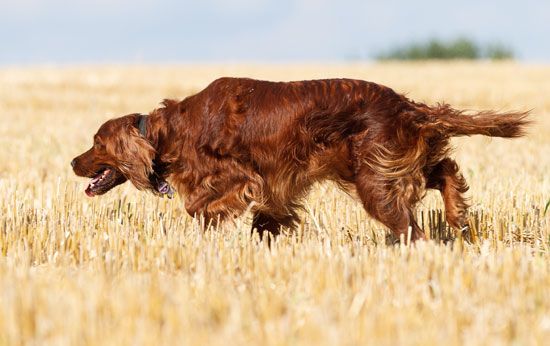
The most striking feature of the Irish Setter is its bright, mahogany or chestnut-brown coat. The fur is straight and flat, characterized by distinct feathering—longer, fringe-like hair—found on the ears, legs, chest, belly, and tail.1
While the breed was originally red and white, the solid mahogany or chestnut color is the modern preference. This appearance is complemented by an active, energetic posture that reflects the breed’s historical development as a hunting companion capable of covering large fields with speed and agility.1
What is the typical personality of an Irish Setter?
The Irish Setter is widely recognized for its gregarious and fun-loving personality. These dogs are typically friendly, treating strangers like long-lost friends, and generally get along well with other animals. Because of their welcoming nature, they are not considered effective protection dogs and are not typically prone to excessive barking.1
In a family setting, they are playful companions for older children, though their high-energy, exuberant nature can be overwhelming for toddlers. They are also known to be loyal partners for active adults. While the breed is intelligent and biddable—meaning they are willing to learn and follow commands—they can be easily distracted during training.1
It is important to note that these traits are general characteristics of the breed. Because the Irish Setter is a high-energy, athletic dog, it requires significant daily exercise. If they do not receive enough physical activity, they can become frustrated and mischievous.1
Where did the Irish Setter breed originally come from?
The Irish Setter originated in Ireland during the early 18th century. The breed was developed as a hunting dog, likely through a combination of English setters, Gordon setters, spaniels, and pointers.21
Historically, these dogs were trained to locate birds using their keen sense of smell and then “set”—or freeze—in position to indicate the game’s location, allowing hunters to capture the prey with nets before the widespread use of firearms. While early versions of the breed were often red and white, the solid mahogany or chestnut-colored coat became the modern preference.2
Sources
- Irish Setter — Encyclopædia Britannica
- Irish setter — Merriam-Webster
- dog - The breeds — Encyclopædia Britannica
Published on · 2 min read