Isthmus of Corinth
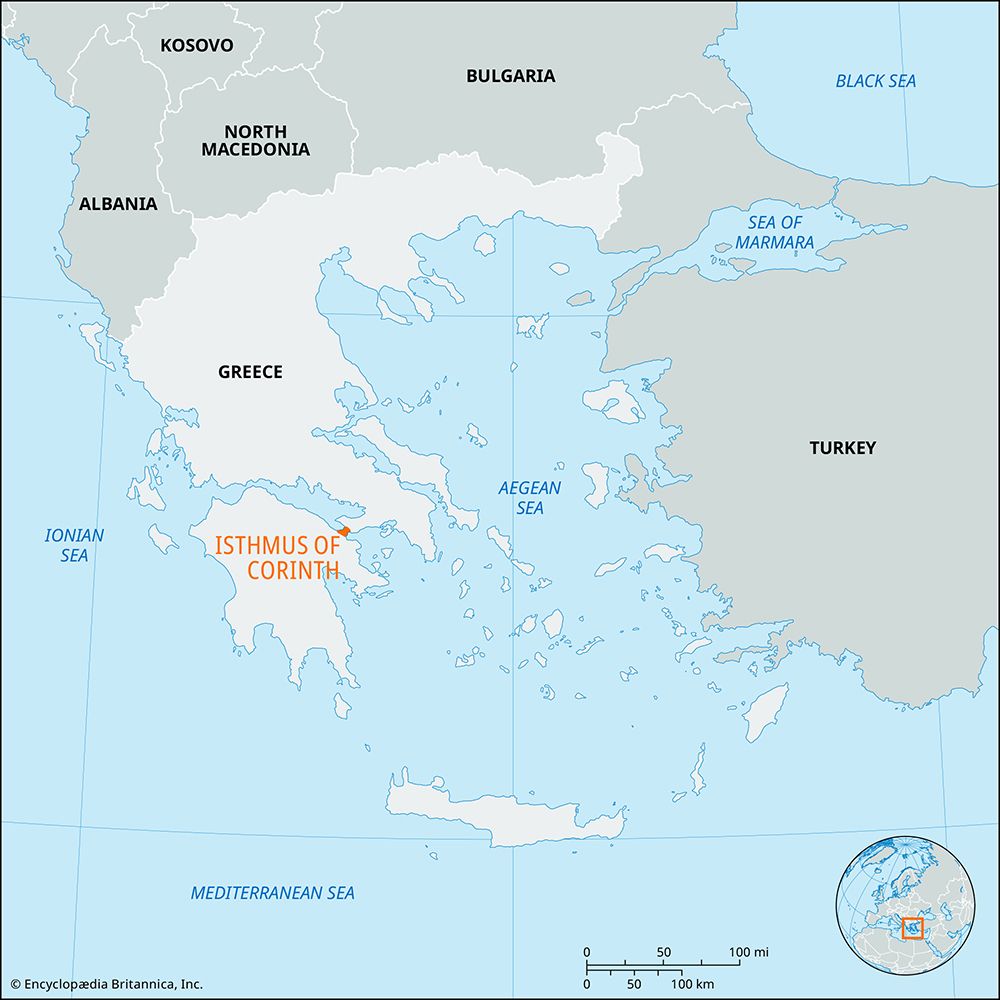
The area surrounding the Isthmus of Corinth is rich in historical and archaeological significance, serving as a vital strategic link between the Peloponnese…
What archaeological sites or historical landmarks can be found in the area of the Isthmus of Corinth?
The area surrounding the Isthmus of Corinth is rich in historical and archaeological significance, serving as a vital strategic link between the Peloponnese and mainland Greece.12
Key Archaeological and Historical Sites
- Isthmian Sanctuary: Located to the south of the isthmus, this site was the historic home of the biennial Isthmian Games1.
- Ancient Corinth: Situated at the base of the Acrocorinthus, this ancient city features extensive ruins, including the Temple of Apollo (c. 550 BCE), a large agora, a theater, public baths, and a gymnasium.2
- Acrocorinthus: A massive, Gibraltar-like citadel rising 1,886 feet above sea level, which commanded the land route into the Peloponnese and served as a critical strategic stronghold throughout antiquity.2
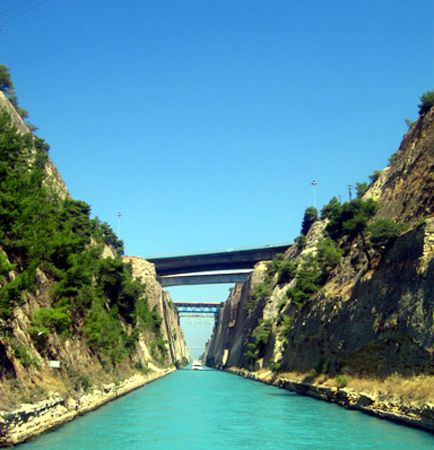
- Corinth Canal: While modern in its current form (opened 1893), the canal follows a route where ships were historically dragged overland. It also marks the site where the Roman emperor Nero attempted to begin a canal in 67 CE.1
How did the ancient Greeks utilize the Isthmus of Corinth for military purposes?
The ancient Greeks utilized the Isthmus of Corinth as a vital strategic asset due to its unique geography, which served as the primary land gateway between the Peloponnese and mainland Greece.13
Strategic Military and Logistical Utility
- Control of Land Routes: The city of Corinth maintained control over the isthmus, allowing it to regulate all land traffic moving between Attica and the Peloponnese. This control made the region a frequent focal point in Greek political and military conflicts.3
- The Acrocorinthus: The citadel of the Acrocorinthus served as a critical military stronghold. Rising 1,886 feet above sea level, it commanded the land route into the Peloponnese, often acting as a pawn in the power struggles between major city-states. Its strategic value was so significant that Philip of Macedon garrisoned the citadel in 338 BCE to secure his influence over the region.3
- Naval Logistics: The isthmus allowed for the transit of ships and cargo between the Saronic Gulf and the Gulf of Corinth. By hauling vessels overland—a process facilitated by a stone roadway built by the tyrant Periander—the Greeks avoided the dangerous and lengthy voyage around the southern tip of the Peloponnese.3
How has the Isthmus of Corinth influenced trade and transportation throughout history?
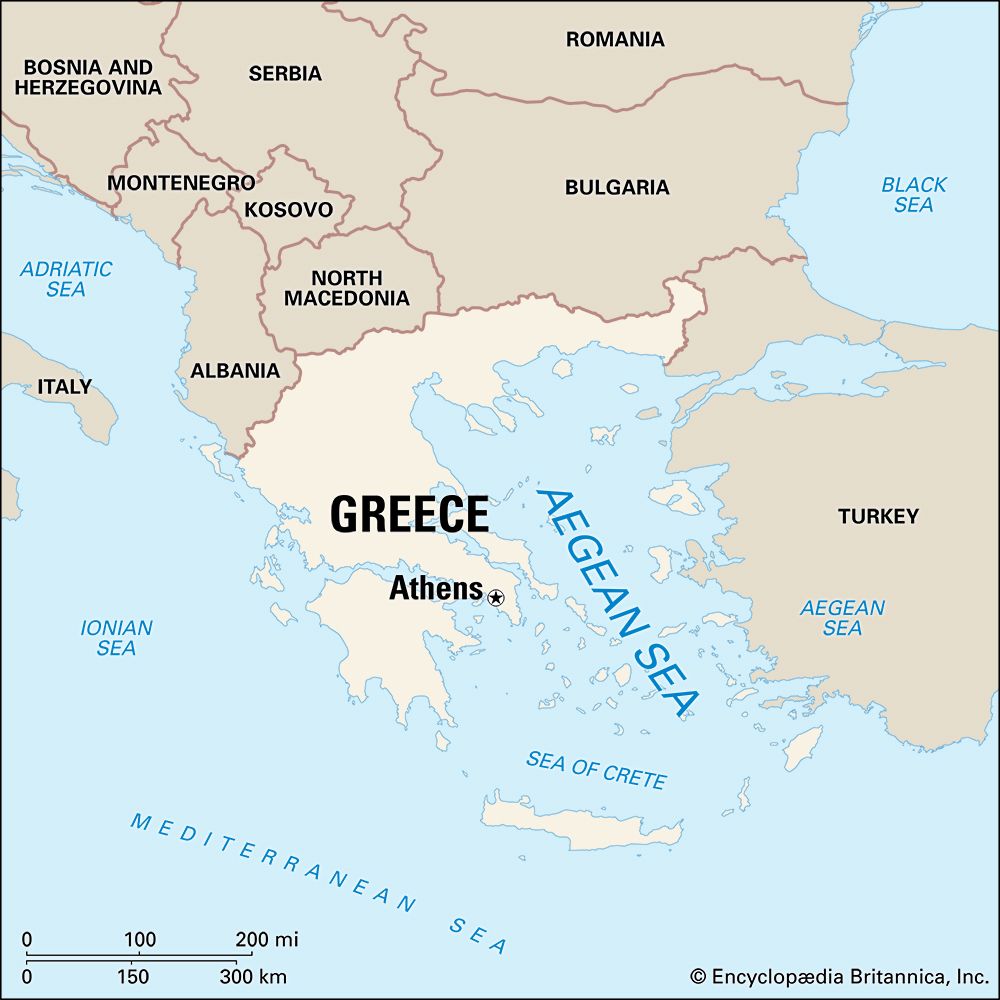
The Isthmus of Corinth has served as a critical hub for trade and transportation throughout history due to its strategic position connecting the Peloponnese to mainland Greece and separating the Saronic Gulf from the Gulf of Corinth.12
Ancient Trade and Transit
In antiquity, the city-state of Corinth derived immense wealth from its control of the isthmus, which regulated both land traffic and the movement of goods between the Aegean and Ionian seas. To avoid the dangerous voyage around the southern tip of the Peloponnese, the tyrant Periander constructed a stone roadway, known as the diolkos, which allowed ships and cargoes to be hauled overland on wheeled cradles. This system facilitated maritime trade for centuries.23
Modern Developments
The vision of a direct waterway was pursued by the Roman emperor Nero in 67 CE, but it was not until 1893 that the Corinth Canal was completed. This 3.9-mile canal significantly transformed regional logistics by shortening the journey between the Adriatic Sea and Athens’ port, Piraeus, by more than 200 miles. Today, the area remains a vital communications hub for the region.132
What is an isthmus, and how does the Isthmus of Corinth fit this definition?
An isthmus is defined as a narrow strip of land that connects two larger land areas that would otherwise be separated by bodies of water. These geographical features are significant not only for human transit but also for the migration of plants and animals between landmasses.1
The Isthmus of Corinth perfectly fits this definition by serving as the vital land bridge that connects the Peloponnese to the rest of the Greek peninsula. By doing so, it separates the Saronic Gulf of the Aegean Sea from the Gulf of Corinth, which is an inlet of the Ionian Sea.51
Much like other famous isthmuses, such as the Isthmus of Panama, the Isthmus of Corinth has been modified by human engineering—specifically the Corinth Canal—to facilitate maritime trade and shorten travel distances between major ports.51
Sources
- Isthmus of Corinth — Encyclopædia Britannica
- Corinth — Encyclopædia Britannica
- Corinth Canal — Encyclopædia Britannica
- ancient Greek civilization - Athenian support of Ionia — Encyclopædia Britannica
- isthmus — Encyclopædia Britannica
Published on · 3 min read