Adriatic Sea
The Adriatic Sea has served as a vital artery for trade and cultural exchange throughout history, acting as a bridge between the Italian and Balkan…
What historical significance does the Adriatic Sea have in terms of trade and cultural exchange?
The Adriatic Sea has served as a vital artery for trade and cultural exchange throughout history, acting as a bridge between the Italian and Balkan peninsulas. Its historical significance is defined by its role in maritime power, economic integration, and the movement of civilizations.1
Trade and Maritime Power
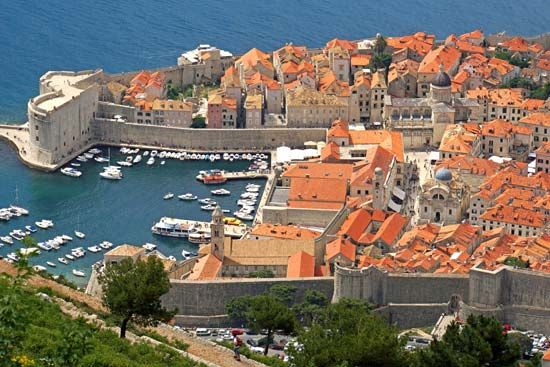
During the Middle Ages, the Adriatic became a critical hub for commerce, largely due to the rise of Venice as a dominant maritime power. The Venetian Republic utilized the sea to establish an extensive network of trade routes, using its overseas territories in Dalmatia and the Aegean as staging areas for merchant galleys. These fleets facilitated the exchange of goods such as grain, salt, wine, and oil, connecting the region to markets as far as Constantinople, London, and Tunis. The competition for control over these lucrative routes led to intense naval rivalries, most notably with Genoa, which shaped the political landscape of the Mediterranean.234
Cultural Exchange and Romanization
Beyond commerce, the Adriatic facilitated the spread of culture and political influence. Under the Roman Empire, the sea helped unify a vast region through trade and the standardization of law and language. The movement of people—including Italic tribes, Illyrians, and Greek colonists—across and around the Adriatic contributed to the “Romanization” of the provinces, where local institutions were integrated into a broader Hellenistic-Roman framework. This interconnectedness allowed for the transmission of ideas, religious practices, and technical skills, leaving a lasting legacy on the civilizations of the region.56
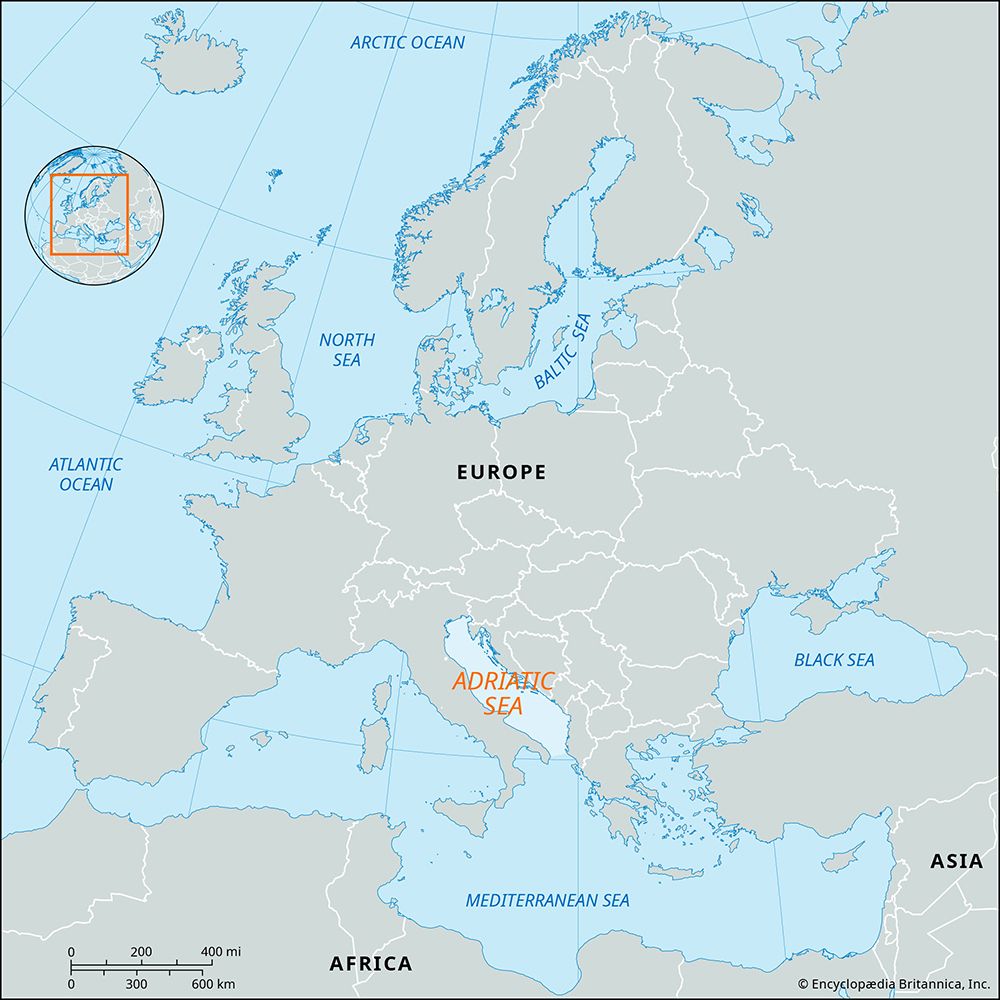
Where is the Adriatic Sea located and what countries border it?
The Adriatic Sea is an arm of the Mediterranean Sea located between the Italian Peninsula to the west and the Balkan Peninsula to the east.5
The countries that border the Adriatic Sea are:
- Italy: Occupies the entire western coastline.5
- Slovenia: Borders the northernmost section of the sea.51
- Croatia: Features a long, intricate eastern coastline filled with islands.58
- Bosnia and Herzegovina: Possesses a small coastal corridor that reaches the Adriatic.8
- Montenegro: Borders the southern portion of the eastern coast.8
- Albania: Located along the southeastern reach of the sea, near the Strait of Otranto, which connects the Adriatic to the Ionian Sea.5
How has pollution affected the Adriatic Sea, and what conservation efforts are in place?
The Adriatic Sea faces significant environmental challenges primarily driven by cultural eutrophication and plastic pollution.
Impact of Pollution
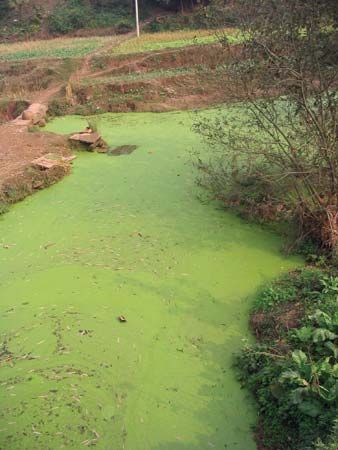
- Cultural Eutrophication: Human activities, including the discharge of sewage, detergents, and agricultural fertilizer runoff, introduce excess nitrogen and phosphorus into the ecosystem. This nutrient loading triggers excessive growth of algae and microscopic organisms, known as water blooms, which block light and deplete oxygen, leading to hypoxia in bottom waters and threatening marine life.5
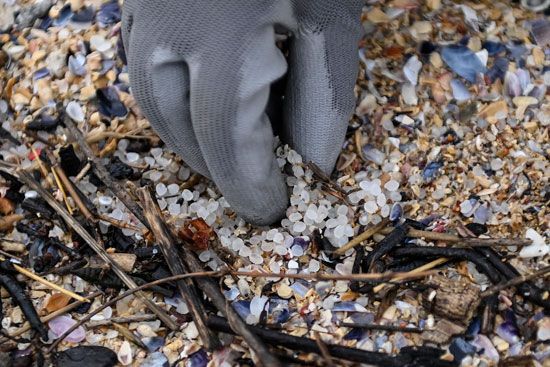
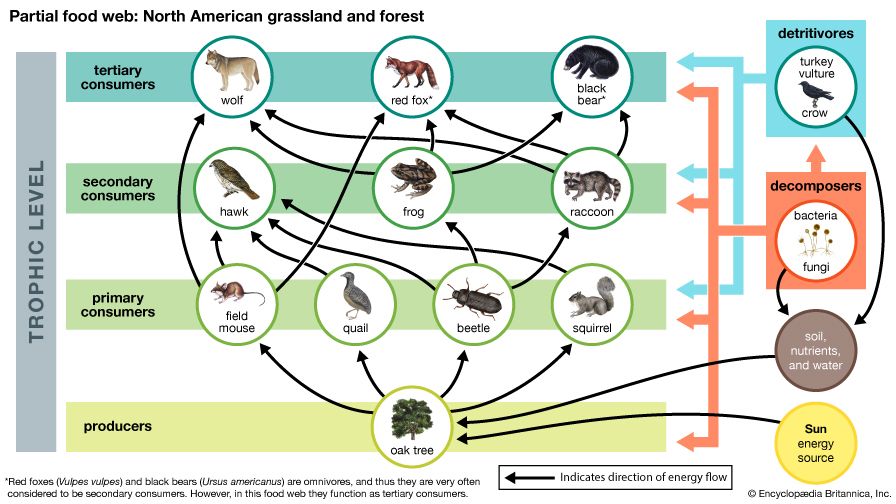
- Plastic Pollution: As a recipient of terrestrial waste, the Adriatic accumulates significant amounts of plastic debris. These materials, including microplastics, are ingested by marine species, causing mortality through starvation or physical blockage. Furthermore, plastics concentrate harmful chemicals that can bioaccumulate through the food web, posing risks to both wildlife and human populations.1011
Conservation Efforts
Addressing these issues requires a commitment to improved environmental management. Curbing cultural eutrophication relies on pollution control measures, such as upgrading municipal wastewater treatment and refining agricultural practices to reduce runoff. Regarding plastic waste, mitigation necessitates better waste management and proactive strategies to prevent plastics from entering the environment at the source. Scientific monitoring of the Adriatic is currently conducted by various Italian and Balkan institutes to better understand and manage these ecological pressures.51012
We could dive deeper into the specific technologies used in modern wastewater treatment to mitigate nutrient runoff.
How does the Adriatic Sea connect to the larger Mediterranean Sea, and what impact does this have on marine life and navigation?
The Adriatic Sea connects to the larger Mediterranean Sea via the Strait of Otranto, a passage approximately 40 miles wide that links the Adriatic to the Ionian Sea.514
Impact on Marine Life
The connection to the Mediterranean influences the Adriatic’s biological character, though the sea is generally considered deficient in life due to low nutrient content. The exchange of water through the strait helps regulate conditions, but the northern Adriatic experiences significant winter cooling and lowered salinity, which further impoverishes the typical Mediterranean marine life found there. Conversely, the middle and southern regions of the Adriatic support more distinct and varied forms of life as they interact with the broader Mediterranean ecosystem.5
Impact on Navigation
The Strait of Otranto has historically served as a vital maritime gateway. Navigation within the Adriatic is heavily influenced by the sea’s unique tidal patterns, which sweep in from the south and are linked to those of the Ionian Sea. Furthermore, surface currents are primarily driven by prevailing winds, such as the bora and the sirocco, which dictate navigational conditions for vessels traveling between the Adriatic and the Mediterranean.5
Sources
- Gulf of Venice — Encyclopædia Britannica
- Venice - Struggle for naval supremacy — Encyclopædia Britannica
- history of Europe - Romans — Encyclopædia Britannica
- Italy - Venice in the 14th century — Encyclopædia Britannica
- Adriatic Sea — Encyclopædia Britannica
- ancient Rome - Economic life — Encyclopædia Britannica
- Western painting - Western Mediterranean — Encyclopædia Britannica
- Croatia - Land — Encyclopædia Britannica
- Serbia - Land — Encyclopædia Britannica
- hydrosphere - Eutrophication — Encyclopædia Britannica
- eutrophication — Encyclopædia Britannica
- plastic pollution - Plastic pollution in oceans and on land — Encyclopædia Britannica
- plastic pollution — Encyclopædia Britannica
- Mediterranean Sea - Temperature and water chemistry — Encyclopædia Britannica
- Otranto — Encyclopædia Britannica
Published on · 4 min read