Leucothoë
The term Leucothoë refers to two distinct subjects in mythology and botany. It is important to distinguish between the botanical genus and the mythological…
What is Leucothoë?
The term Leucothoë refers to two distinct subjects in mythology and botany. It is important to distinguish between the botanical genus and the mythological figure often spelled Leucothea.12
Mythological Figures
In Greek mythology, Leucothea (the “White Goddess”) is a sea deity who famously rescued Odysseus in Homer’s Odyssey. She is traditionally identified as Ino, a mortal who, after being driven mad by Hera, leaped into the sea with her son Melicertes and was transformed into a marine goddess. Separately, the name Leucothoë appears in classical legend as a Persian princess whom Apollo transformed into a sweet-scented shrub.13
Botanical Genus
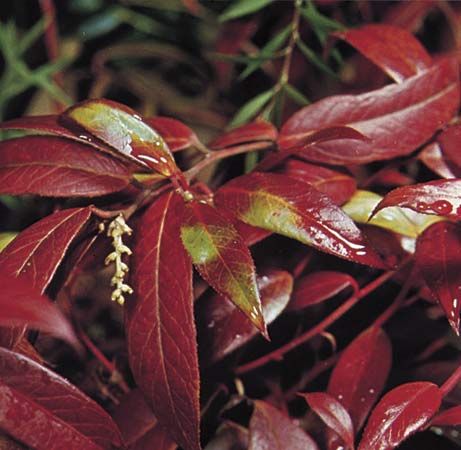
In botany, Leucothoë is a genus of approximately eight species of shrubs within the heath family (Ericaceae). Native to North America and eastern Asia, these plants are often cultivated as ornamentals for their evergreen foliage and clusters of white or pinkish, urn-shaped flowers. Note that these shrubs contain poisonous substances.23
Who was Ino before she became the goddess Leucothea?
Before her transformation into the sea goddess Leucothea, Ino was a mortal princess, the daughter of Cadmus, the legendary founder of Thebes. She became the second wife of Athamas, king of the Boeotian city of Orchomenus.41
Ino’s life took a tragic turn after she nursed the infant god Dionysus. This act incurred the wrath of the goddess Hera, who, known for her vindictive nature toward those associated with Zeus, drove Ino and her husband into a state of madness. In the ensuing chaos, Athamas killed their son Learchus. To escape the madness and her husband’s violence, Ino leaped into the sea with her remaining son, Melicertes. Following this event, both were transformed into marine deities—Ino as Leucothea and Melicertes as Palaemon.415
What other plants are in the heath family?
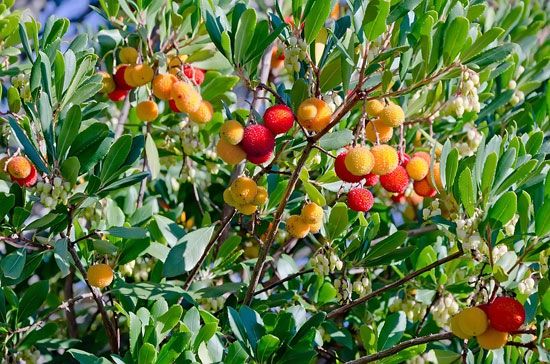
The heath family (Ericaceae) is a diverse group comprising approximately 126 genera and 4,000 species of flowering plants, primarily consisting of shrubs and small trees. These plants are widely distributed across the globe, often thriving in acidic, nutrient-poor soils.67
Many members of this family are economically significant, valued either as garden ornamentals or for their edible fruits. Notable plants within the family include:87
- Ornamentals: Rhododendrons and azaleas, mountain laurel, doghobble, fetterbush, manzanita, and heather6.8
- Food Crops: Blueberries, cranberries, huckleberries, bilberries, and lingonberries.8
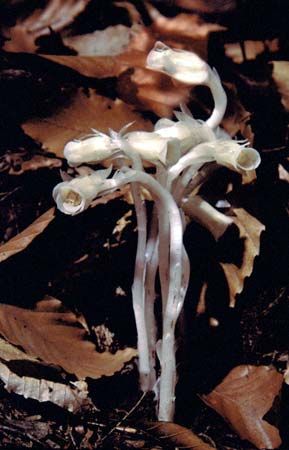
- Other Notable Genera: The genus Erica (true heaths), Arbutus, Gaultheria (including wintergreen), and the parasitic Indian pipe (Monotropa).987
These plants exhibit various ecological adaptations, such as xeromorphic leaves for water conservation and symbiotic relationships with fungi to assist in nutrient uptake.7
How did the Isthmian Games honor Melicertes?
According to Greek mythology, the Isthmian Games were instituted by Sisyphus specifically to honor Melicertes.
After Melicertes and his mother, Ino, leaped into the sea to escape madness, the boy’s body was carried by a dolphin to the Isthmus of Corinth and deposited under a pine tree. Sisyphus, who was Melicertes’ uncle, discovered the body, brought it to Corinth, and established the games and funeral sacrifices in his honor. While the festival later became associated with the sea god Poseidon, the foundational myth centers on the commemoration of Melicertes, who was transformed into the marine deity Palaemon.101
Sources
- Leucothea — Encyclopædia Britannica
- Leucothoë — Encyclopædia Britannica
- leucothoe — Merriam-Webster
- Athamas — Encyclopædia Britannica
- Hera — Encyclopædia Britannica
- Ericaceae — Encyclopædia Britannica
- heath — Encyclopædia Britannica
- list of economically important members of the family Ericaceae — Encyclopædia Britannica
- Ericales - Ericaceae — Encyclopædia Britannica
- Isthmian Games — Encyclopædia Britannica
- Olympic Games - Origins — Encyclopædia Britannica
- Greek religion - Festivals — Encyclopædia Britannica
Published on · 2 min read