Isthmus of Panama
The Isthmus of Panama, a narrow land bridge connecting North and South America, has historically served as a vital transit point for trade and migration.…
What are some of the major cities located on the Isthmus of Panama?
The Isthmus of Panama, a narrow land bridge connecting North and South America, has historically served as a vital transit point for trade and migration. Several significant cities and towns are located along this region, many of which developed due to their strategic proximity to the Panama Canal or historical trade routes.12
Key cities and towns on the isthmus include:
- Panama City: The capital and largest urban center of the Republic of Panama, located on the Pacific coast near the canal’s terminus.23
- Colón: Situated on the Caribbean coast, this city serves as the northern terminal of the Panama Canal and experienced significant growth during the 19th-century gold rushes and canal construction.12
- Portobelo: A historic market town on the Caribbean coast that flourished during the colonial era as a primary port for shipping bullion to Spain.12
- Balboa: Located adjacent to Panama City, this area serves as a major port facility for the capital.2
- Ancón: A district within the metropolitan area of Panama City that hosts important research institutions, such as the Smithsonian Tropical Research Institute.2
What unique biodiversity can be found in the region of the Isthmus of Panama?
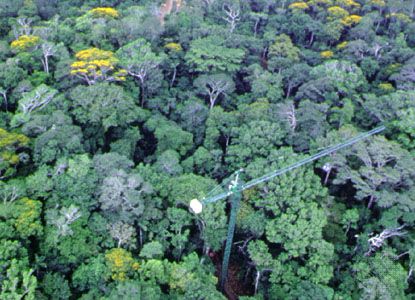
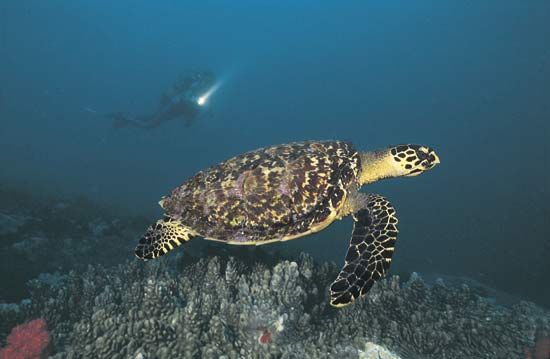
The Isthmus of Panama possesses exceptional biodiversity due to its historical role as a land bridge connecting North and South America. This unique geography facilitated a rich intermixture of species, resulting in a landscape that hosts a diverse array of habitats, including tropical rainforests, savannas, cool montane forests, tidal mangroves, and coral reefs.451
The region’s fauna reflects this ancient interchange, featuring South American species such as sloths, anteaters, and armadillos alongside North American arrivals like jaguars, tapirs, and deer. Additionally, the isthmus is a critical habitat for numerous bird species and giant sea turtles that nest on its beaches.4
Scientific research into this biodiversity is extensive, notably through the Smithsonian Tropical Research Institute, which utilizes canopy cranes to study the distinct ecosystems of the Caribbean rainforests and Pacific deciduous forests. Significant portions of this biological wealth are protected within national parks, such as the Darién region and La Amistad, which are recognized for their ecological importance.64
What role did the Isthmus of Panama play in the migration of species between North and South America?
The Isthmus of Panama served as a critical land bridge that fundamentally altered the evolutionary history of the Americas. For most of the Paleogene and Neogene periods, the isthmus was submerged, allowing the faunas of North and South America to evolve in isolation. South America developed a unique array of marsupial mammals, while North America was dominated by placental mammals.66
Approximately 3 million years ago, volcanic activity elevated the isthmus, reconnecting the two continents. This event triggered the Great American Biotic Interchange, where land animals could finally cross between the landmasses. North American placental mammals and carnivores migrated south, proving highly competitive and contributing to the extinction of several indigenous South American mammal orders. Conversely, some South American species, such as the armadillo and opossum, successfully migrated north. Interestingly, some northern migrants, including the llama and tapir, eventually vanished from their northern origins, surviving only in their new southern habitats.6
What is an isthmus, and why is the Isthmus of Panama particularly significant?
An isthmus is a narrow strip of land that connects two larger land areas that are otherwise separated by bodies of water. These geographic features are significant because they serve as vital corridors for the migration of plants and animals between landmasses.910
The Isthmus of Panama is particularly significant for several reasons:
- Intercontinental Link: It connects North and South America, serving as a historic passageway for human and animal migration since prehistoric times.111
- Oceanic Barrier: By separating the Caribbean Sea (Atlantic Ocean) from the Gulf of Panama (Pacific Ocean), its emergence approximately 6 million years ago fundamentally altered global ocean circulation and climate patterns, contributing to the cooling of high-latitude waters and the growth of polar ice caps.112
- Strategic Hub: Its narrow width has made it a focal point for global trade and transportation, most notably through the construction of the Panama Canal, which facilitates international shipping.91
Sources
- Isthmus of Panama — Encyclopædia Britannica
- Panama City — Encyclopædia Britannica
- Panama: Country Facts — Encyclopædia Britannica
- Panama - Plant and animal life — Encyclopædia Britannica
- Smithsonian Tropical Research Institute — Encyclopædia Britannica
- land bridge — Encyclopædia Britannica
- Panama - Climate of Panama — Encyclopædia Britannica
- plate tectonics - Evolution — Encyclopædia Britannica
- isthmus — Encyclopædia Britannica
- isthmus — Merriam-Webster
- plate tectonics - Climate — Encyclopædia Britannica
- Panama - Transportation and telecommunications — Encyclopædia Britannica
Published on · 3 min read