Killifish
Killifish, particularly certain species such as Nothobranchius kadleci and N. furzeri, are significant in scientific research due to their unique life…
What role do killifish play in scientific research, particularly in aging studies?
Killifish, particularly certain species such as Nothobranchius kadleci and N. furzeri, are significant in scientific research due to their unique life cycles. These “annual fishes” inhabit seasonal ponds in East Africa and possess the shortest generation time of any known vertebrate, reaching sexual maturity in as little as 17 to 18 days.1
Because their entire life cycle—from birth to mating and death—typically occurs within one year, they serve as valuable models for studying the biological processes of aging. Their rapid development and short lifespan allow researchers to observe aging-related changes and interventions within a compressed timeframe that is difficult to achieve with other vertebrate models.1
While the provided search results highlight their biological significance and role in mosquito control, they do not detail specific experimental protocols used in aging studies.
Where are killifish typically found in the wild?
Killifish are found globally, with a particularly high concentration of species in the tropics of Africa and the New World. They are highly adaptable and inhabit a diverse range of environments, including freshwater, brackish water, and saltwater habitats, as well as specific desert hot springs.1
Specific regional distributions include:
- East Africa: Home to annual species like Nothobranchius kadleci and N. furzeri, which inhabit seasonal, rain-filled pools.1
- North America: Certain species, known as pupfishes, are found in California coastal waters and along the perimeters of western salt lakes.1
These fish are notable for their ability to survive in ephemeral environments; some species bury their eggs in the mud of seasonal pools, where they remain dormant until the water returns.1
What are some common species of killifish, and how do they differ?
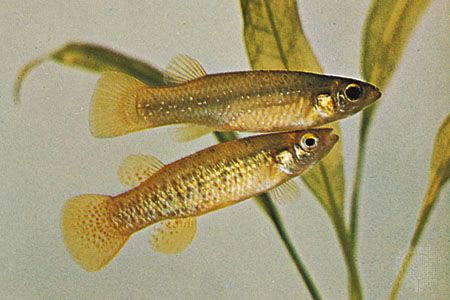
Killifish comprise several hundred species within the family Cyprinodontidae, characterized by their elongated bodies and global distribution in tropical and temperate waters. While they share common traits—such as being surface feeders and egg-layers—they exhibit significant diversity in their life cycles and habitats.1
Key Categories and Species
- Annual Fishes: These species, such as Nothobranchius kadleci and N. furzeri from East Africa, inhabit seasonal, rain-filled pools. They are defined by their extremely compressed life cycles, often living less than one year. They bury their eggs in the mud, where the embryos remain dormant until the next rainy season refills the pond.1
- Pupfishes: Found in North America, particularly in California coastal waters and western salt lakes, these killifish (genus Cyprinodon) are well-adapted to harsh environments, including desert hot springs. Some species, like the Tecopa pupfish, have faced extinction due to their highly localized habitats.13
- Aquarium Species: Many killifish are popular in the hobbyist trade due to their vibrant coloration. Common genera kept in home aquariums include Aphyosemion (often called lyretails), Epiplatys, and Rivulus.1
Primary Differences
The most notable differences among killifish involve their environmental adaptability and reproductive strategies. While some species thrive in stable, permanent bodies of water, annual species have evolved specialized physiological mechanisms to survive the complete drying of their habitat. Unlike the related live-bearing topminnows, all killifish are egg-layers, though the specific conditions required for their eggs to hatch vary significantly between annual and non-annual varieties.1
What makes killifish popular among aquarium enthusiasts?
Killifish are highly popular among aquarium enthusiasts primarily due to their striking and attractive coloration. Their appeal is further enhanced by the diversity of available species, with several genera frequently kept in home aquariums, including Aphyosemion (often referred to as lyretails), Epiplatys, and Rivulus.1
Beyond their aesthetic value, killifish are often sought after by hobbyists interested in the unique life cycles of “annual fishes.” These species, which naturally inhabit seasonal, rain-filled pools, have evolved fascinating reproductive strategies, such as burying their eggs in substrate to survive periods of drought. This behavior, combined with their relatively small size—most grow to a maximum of about 15 cm (6 inches)—makes them well-suited for various aquarium setups.1
In addition to their role as ornamental fish, killifish are valued for their practical utility in other contexts, such as serving as bait for anglers and acting as a natural form of mosquito control by consuming insect larvae.12
Sources
- killifish — Encyclopædia Britannica
- killifish — Merriam-Webster
- ostariophysan - Annotated classification — Encyclopædia Britannica
- pupfish — Merriam-Webster
Published on · 3 min read