Jaldapara National Park
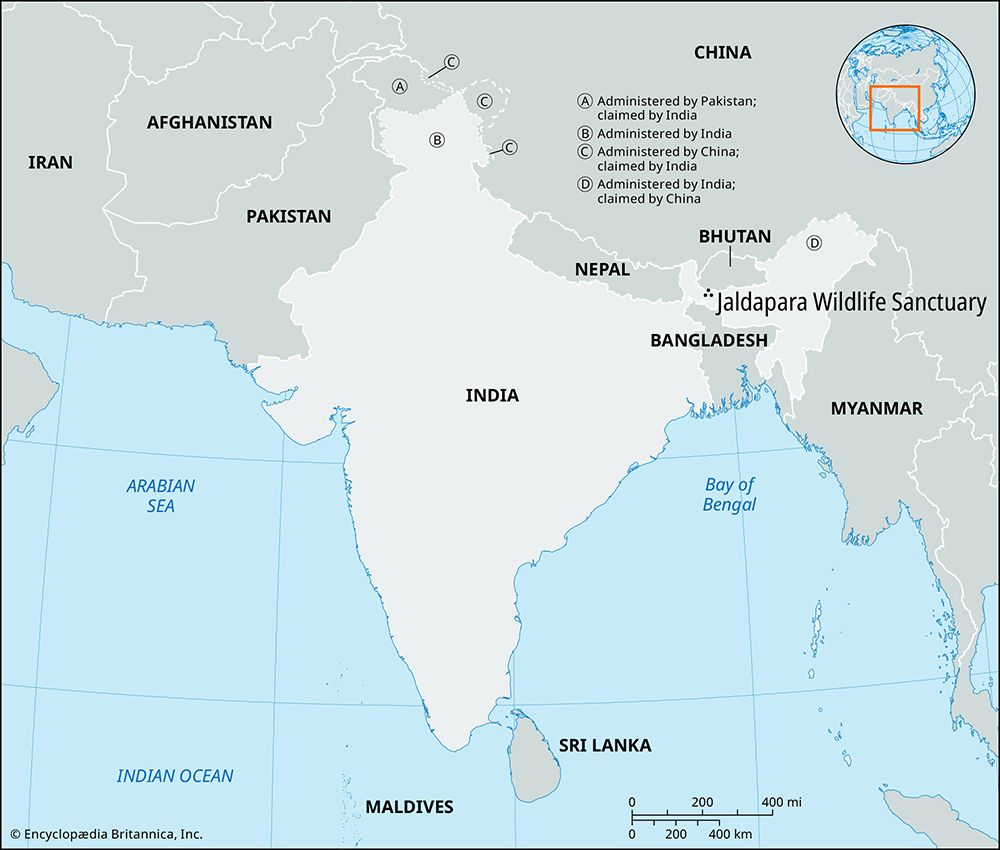
Jaldapara National Park is a protected wildlife preserve located in the state of West Bengal, India. Originally established as a wildlife sanctuary in 1941…
What is Jaldapara National Park?
Jaldapara National Park is a protected wildlife preserve located in the state of West Bengal, India. Originally established as a wildlife sanctuary in 1941 to protect the one-horned rhinoceros, it was officially designated a national park in 2012.1
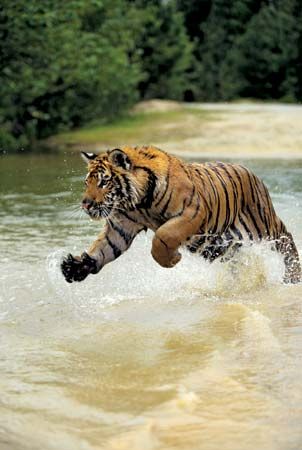
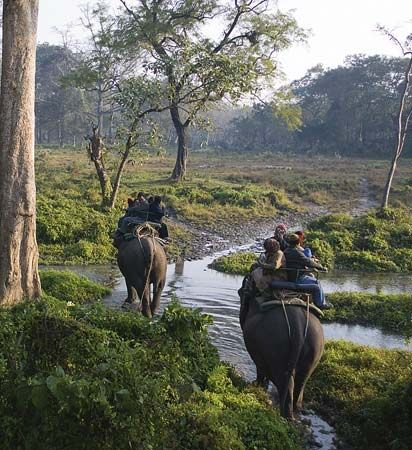
Spanning 84 square miles (217 square km) near the Bhutan border, the park features forested flatlands and is home to the second-largest population of one-horned rhinoceroses in India. The diverse ecosystem supports various species, including elephants, leopards, swamp deer, and Bengal tigers, as well as the critically endangered Bengal florican. The landscape is characterized by teak forests and tall elephant grass, intersected by the Torsa River.1
What makes the Indian one-horned rhinoceros unique?
The Indian rhinoceros (Rhinoceros unicornis), also known as the greater one-horned rhinoceros, is a remarkable species distinguished by several unique physical and behavioral traits:
- Physical Appearance: It is the largest of the three Asian rhinoceros species, standing about 2 meters (7 feet) high at the shoulder and weighing between 1,800 and 2,700 kg (4,000 and 6,000 pounds). Its skin is characterized by deep, grayish-brown folds that create a platelike appearance, particularly around the shoulders and thighs, and it features distinct tubercles (knobby bumps) on its skin.23
- Defensive Behavior: Unlike African rhinoceroses, which use their horns to fight, the Indian rhinoceros uses its razor-sharp lower outer incisor teeth—or tusks—to defend itself and compete for mates. These tusks can grow up to 13 cm (5 inches) long in dominant males and are capable of inflicting lethal wounds.32
- Ecological Role: These rhinos are vital to their environment. They act as important seed dispersers by depositing nutrient-rich dung, which supports the growth of over 25 plant species and helps shade-intolerant trees colonize open areas.2
- Habitat: They are primarily grazers that thrive in the world’s tallest grasslands, where they can navigate grasses reaching up to 7 meters (23 feet) in height.2
How does the Torsa River shape the park’s ecosystem?
The Torsa River and its tributaries play a fundamental role in shaping the landscape of Jaldapara National Park. By dissecting the park’s forested flatlands, the river system helps define the park’s physical geography and supports its diverse ecosystem.1
While specific details on the river’s geomorphological impact within the park are limited, the Torsa is recognized as a significant contributor to the heavy water discharge in the Bengal Plain. This hydrological activity is essential for maintaining the park’s lush environment, which consists primarily of teak forests and tall grasses, such as elephant grass, that provide critical habitat for the park’s wildlife, including the one-horned rhinoceros and elephants.61
What are the differences between a wildlife sanctuary and a national park?
A national park is an area designated by a national government to preserve the natural environment, often for public recreation, scientific study, or historical interest. These areas are maintained to keep landscapes, plants, and animals in their natural state.910
In the context of India, both national parks and wildlife sanctuaries are established under the Wildlife (Protection) Act, 1972, as part of a broader framework of protected areas. While the provided information confirms that both serve as government-mandated conservation measures to protect biodiversity, it does not detail the specific legal or administrative distinctions between the two designations in the Indian system. Generally, national parks are often characterized by stricter regulations and a focus on the preservation of the entire ecosystem, whereas wildlife sanctuaries may allow for certain human activities depending on specific management objectives.11
Sources
- Jaldapara National Park — Encyclopædia Britannica
- Indian rhinoceros — Merriam-Webster
- rhinoceros — Encyclopædia Britannica
- perissodactyl - Rhinoceroses — Encyclopædia Britannica
- Indian rhinoceros — Encyclopædia Britannica
- Barak River — Encyclopædia Britannica
- Sundarbans — Encyclopædia Britannica
- Brahmaputra River - Hydrology — Encyclopædia Britannica
- national park — Encyclopædia Britannica
- national park: Top Questions — Encyclopædia Britannica
- national park — Merriam-Webster
- Environment and sustainable development in India - Wildlife — Encyclopædia Britannica
Published on · 3 min read