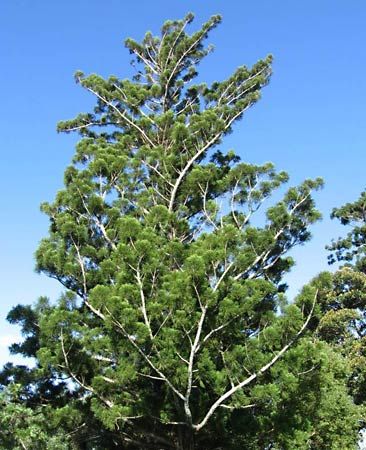
Japanese Torreya
The Japanese torreya (Torreya nucifera) is an evergreen tree native to the southern islands of Japan. While it is recognized as an ornamental species within…
Has the Japanese torreya been introduced to other parts of the world, and if so, how has it fared?
The Japanese torreya (Torreya nucifera) is an evergreen tree native to the southern islands of Japan. While it is recognized as an ornamental species within the yew family, the provided information does not document its introduction to other parts of the world or its performance in non-native environments.12
The genus Torreya itself is distributed across localized areas of the United States, China, and Japan, with the Japanese torreya specifically noted for its use in furniture, cabinetry, and as a food source in its native region.12
How does the Japanese torreya compare to other species in the Torreya genus?
The Torreya genus consists of approximately six species of evergreen trees and shrubs within the yew family (Taxaceae), distributed across localized regions of the United States, China, and Japan.12
Comparison of Torreya nucifera to the Genus
The Japanese torreya (Torreya nucifera) is distinguished from its relatives by several key characteristics:
- Hardiness: It is considered the hardiest species within the genus.3
- Physical Form: While it can reach heights of 10 to 25 metres (35 to 80 feet), it often assumes a shrubby form in less temperate climates. Its branches typically form a compact ovoid or pyramidal head.3
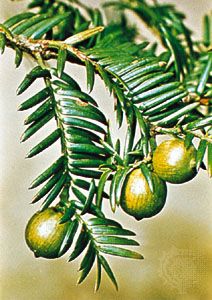
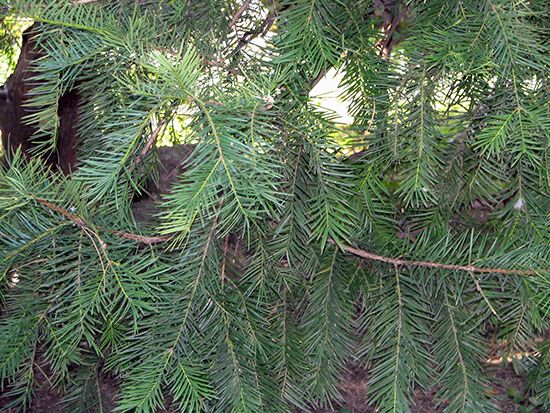
- Leaves: Like other members of the genus, it possesses persistent, linear, bristle-pointed leaves arranged in two ranks. These leaves are rigid and spiny-pointed, and they emit a pungent, disagreeable odor when bruised—a trait common to the genus.13
- Utility: The Japanese torreya is notable for its edible seeds, which contain an oil used in cooking, and its durable, yellowish wood, which is valued for cabinetry, furniture, and carving.3
Relationship to Other Species
The genus Torreya is closely related to the genus Taxus (yews), though Torreya species are generally characterized by leaves that are harder and more rigid. Among the six species in the Torreya genus, the Japanese torreya, the California nutmeg, and the stinking yew are the most commonly known ornamentals. The remaining three species are native to China and have such localized distributions that they are rarely found in cultivation.21
Are there any conservation concerns or threats to the Japanese torreya in its native habitat?
The provided information does not contain details regarding specific conservation concerns or environmental threats to the Japanese torreya (Torreya nucifera) in its native habitat. While the tree is valued for its durable wood and edible seeds, the current knowledge base does not document its status in terms of endangerment or ecological vulnerability.1
How is the Japanese torreya used in traditional Japanese culture and medicine?
In traditional Japanese culture, the Japanese torreya (Torreya nucifera) is primarily valued for its practical and culinary applications rather than medicinal use. The tree is a significant source of edible seeds, which are consumed as food and processed to extract an oil used in cooking.12
Beyond its culinary role, the Japanese torreya is highly prized for its timber. The wood is characterized by its durability and yellowish hue, making it a preferred material for cabinetry, furniture, wood carving, and various articles of turnery. While the species is recognized as an ornamental tree within the yew family, the available information does not document specific traditional medicinal practices associated with the plant.17
Sources
- Japanese torreya — Encyclopædia Britannica
- Torreya — Encyclopædia Britannica
- Taxaceae — Encyclopædia Britannica
- Taxaceae — Merriam-Webster
- Torreya — Merriam-Webster
- conifer - Annotated classification — Encyclopædia Britannica
- Japanese nutmeg — Merriam-Webster
Published on · 3 min read