John Day Fossil Beds National Monument
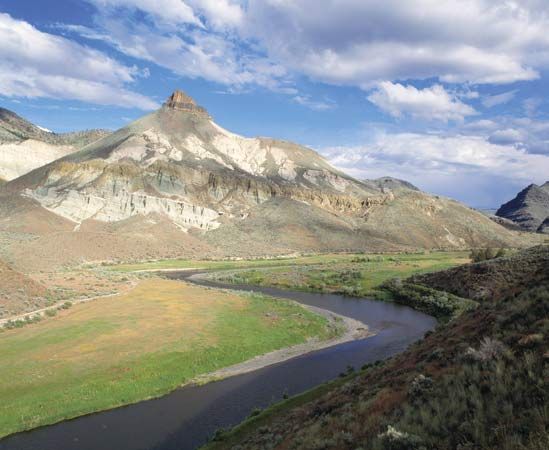
John Day Fossil Beds National Monument is a protected area located in north-central Oregon, U.S., situated within the John Day River valley. Established in…
What is the John Day Fossil Beds National Monument, and where is it located in Oregon?
John Day Fossil Beds National Monument is a protected area located in north-central Oregon, U.S., situated within the John Day River valley. Established in 1975, the monument spans 22 square miles and is renowned for its extensive fossil record, which documents approximately 40 million years of life during the Cenozoic Era.12
The monument consists of three distinct units:
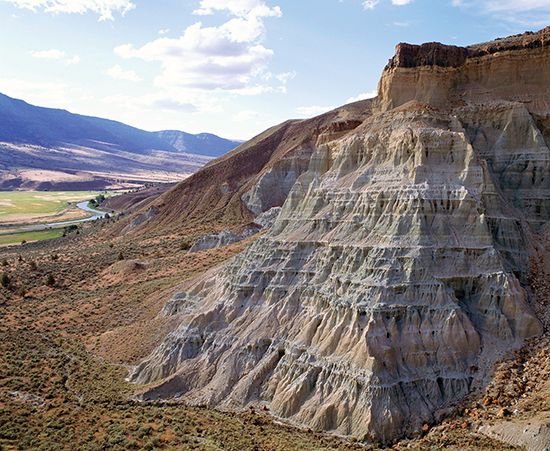
- Painted Hills Unit: Known for its eroded hills, located near Mitchell.1
- Clarno Unit: Features high palisades and is located near Fossil.1
- Sheep Rock Unit: Comprised of weathered bluffs near Dayville, this unit houses the visitor center and exhibits of mammal and leaf fossils.1
The fossils are preserved within four primary sedimentary rock formations, ranging from the ancient, tropical-forest-era Clarno Formation to the more recent, grassland-associated Rattlesnake Formation. These sites offer a unique window into the evolution of prehistoric plants and animals, including early horses, camels, and rhinoceroses.1
Who was John Day, and why was the monument named after him?
John Day was a 19th-century Virginian scout who participated in the Astor overland expedition of 1811. He is remembered as a heroic figure from that journey, and his name was subsequently given to the John Day River in Oregon.
The John Day Fossil Beds National Monument was named after the river, as the monument is situated along its valley. The name serves as a geographical identifier for the region, which also includes a city named John Day that shares the same namesake.3
What types of fossils have been discovered in the John Day Fossil Beds, and from which time periods do they originate?
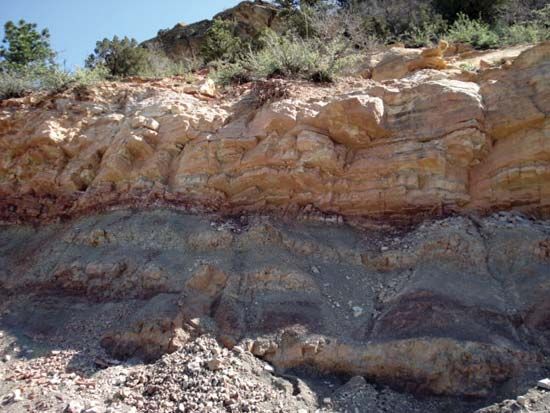
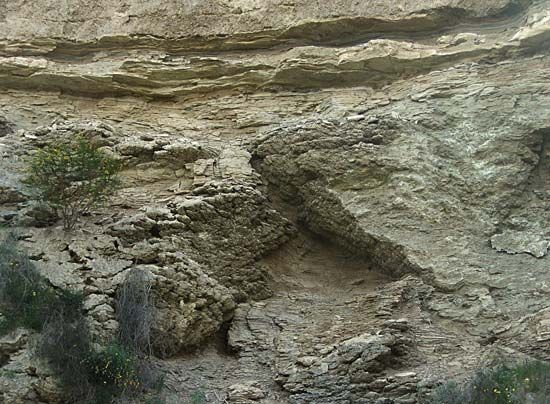
The John Day Fossil Beds National Monument preserves a remarkable fossil record spanning approximately 40 million years of the Cenozoic Era. These fossils are found within four distinct sedimentary rock strata, each reflecting different prehistoric environments:
- Clarno Formation (37 to 54 million years old): Contains remains of plants and animals that inhabited ancient tropical and subtropical forests.1
- John Day Formation (20 to 39 million years old): Documents a period of deciduous forests, featuring fossils of swine, horses, dogs, camels, and rhinoceroses.1
- Mascall Formation (12 to 15 million years old): Represents a landscape of savannas and mixed hardwood forests, home to deer, camels, horses, dogs, and bears.1
- Rattlesnake Formation (6 to 8 million years old): Reflects a grassland setting, containing the remains of horses, camels, pronghorn, bears, and rhinoceroses.1
The visitor center at the Sheep Rock Unit provides extensive exhibits showcasing these diverse mammal and leaf fossils, offering a detailed look at how life evolved alongside changing ecosystems in the region.1
How do scientists date the fossils found in the John Day Fossil Beds?
Scientists determine the age of fossils in the John Day Fossil Beds National Monument primarily through radioisotopic dating, a method that measures the decay of radioactive isotopes within geologic materials.5
Because the fossil-bearing strata at the monument are composed of sedimentary rocks, researchers rely on the presence of interbedded volcanic materials to establish precise ages. A key technique used is potassium-argon dating, which tracks the decay of radioactive potassium-40 into argon-40. Since the rate of radioactive decay is constant and unaffected by external factors like heat or pressure, measuring the ratio of parent to daughter isotopes allows scientists to calculate the time elapsed since the volcanic rock formed.6578
In addition to isotopic methods, geologists integrate magnetostratigraphy—which tracks reversals in the Earth’s magnetic field—and biostratigraphy to create a high-resolution, internally consistent timeline for the region.5
Sources
- John Day Fossil Beds National Monument — Encyclopædia Britannica
- John Day Fossil Beds National Monument — Merriam-Webster
- John Day — Encyclopædia Britannica
- John Day — Merriam-Webster
- potassium-argon dating — Encyclopædia Britannica
- dating - Principles of isotopic dating — Encyclopædia Britannica
- geology - Isotopic geochemistry — Encyclopædia Britannica
- Tertiary Period - Correlation of Tertiary strata — Encyclopædia Britannica
Published on · 3 min read