Kaikōura Range
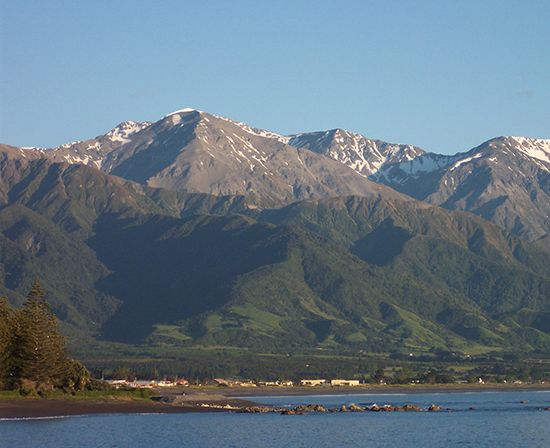
The Kaikōura Range consists of twin mountain chains that parallel the northeastern coast of New Zealand's South Island. While these mountains are noted for…
How do the Kaikōura Mountains influence the marine environment along the nearby coast?
The Kaikōura Range consists of twin mountain chains that parallel the northeastern coast of New Zealand’s South Island. While these mountains are noted for their steep southeast flanks and active faults, the provided information does not detail the specific mechanisms by which they influence the adjacent marine environment, other than noting the presence of a marine biological research station on the nearby Kaikōura Peninsula.1
How were the Kaikōura Mountains formed, and what is their geological significance?
The Kaikōura Range, consisting of the Inland and Seaward chains, was formed during the Kaikōura Orogeny, a major mountain-building episode that began at the end of the Oligocene Epoch approximately 23 million years ago.12
Geological Significance
The formation of these mountains is deeply tied to the complex tectonic activity of New Zealand, which sits within the Ring of Fire, a region characterized by frequent earthquakes and volcanic activity.2
- Tectonic Collision: The ranges are a product of the collision between the Indian-Australian Plate and the Pacific Plate. This interaction creates intense seismic pressure along faults that divide the landscape into massive blocks.2
- Active Faulting: The Kaikōura Range is geologically significant for its steep southeast flanks, which are defined by active faults. These faults remain dynamic, contributing to the ongoing uplift and seismic character of the region.12
- Landscape Evolution: The interaction between continued tectonic movement and erosion defines the rugged topography of the area, which serves as a prominent example of the geological forces shaping the South Island.12
How do the Kaikōura Mountains compare to other mountain ranges in New Zealand in terms of size and geological features?
The Kaikōura Range and the Southern Alps represent two distinct but related features of New Zealand’s mountainous landscape, both shaped by the ongoing Kaikōura Orogeny that began approximately 23 million years ago.12
Comparison of Size and Features
- Scale: The Kaikōura Range consists of twin chains—the Inland and Seaward Kaikōuras—that parallel the northeastern coast of the South Island for about 60 miles (100 km). In contrast, the Southern Alps form a much more extensive 300-mile (480-km) chain of fold mountains that bisect the South Island.12
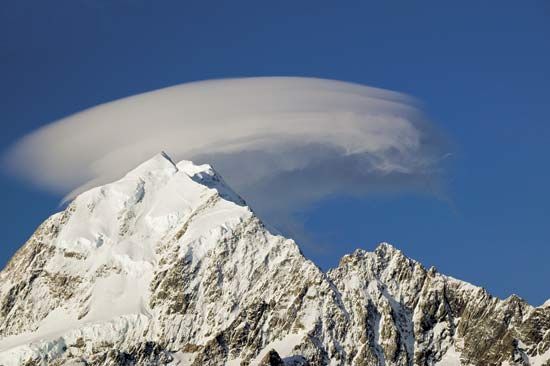
- Elevation: The Southern Alps contain New Zealand’s highest peaks, including Aoraki/Mount Cook at 12,316 feet (3,754 metres), with over 20 peaks exceeding 10,000 feet (3,000 metres). The Kaikōura Range is lower, with its highest point, Tapuaenuku, reaching 9,465 feet (2,885 metres).21
- Geological Character: While both ranges are defined by intense tectonic activity and faulting, the Southern Alps are characterized by an extensive glacier system—containing more than 360 glaciers—that is absent in the Kaikōura Range. The Kaikōura Range is specifically noted for its steep southeast flanks, which are defined by active faults that divide the landscape into massive blocks.12
What role did the Kaikōura Range play in Māori history and culture?
The Kaikōura Range holds significant cultural importance for the Māori people, most notably reflected in the origin of its name. The term Kaikōura translates to “to eat crayfish,” a name rooted in Māori mythology that highlights the region’s historical connection to its abundant marine resources.1
Beyond its name, the area has long been a site of human activity. Historical accounts from the late 18th century, such as those recorded by Captain James Cook in 1770, document the presence of Māori communities near the Kaikōura Peninsula. Cook observed groups of men in double canoes navigating the waters near the mountains, illustrating the deep-seated maritime culture and local presence of the Māori in this coastal region.1
While the mountains themselves are a defining geographical feature of the South Island, their cultural legacy remains inextricably linked to the sustenance and traditions provided by the surrounding land and sea.1
Sources
- Kaikōura Range — Encyclopædia Britannica
- New Zealand - Relief of New Zealand — Encyclopædia Britannica
Published on · 3 min read