Aoraki/Mount Cook
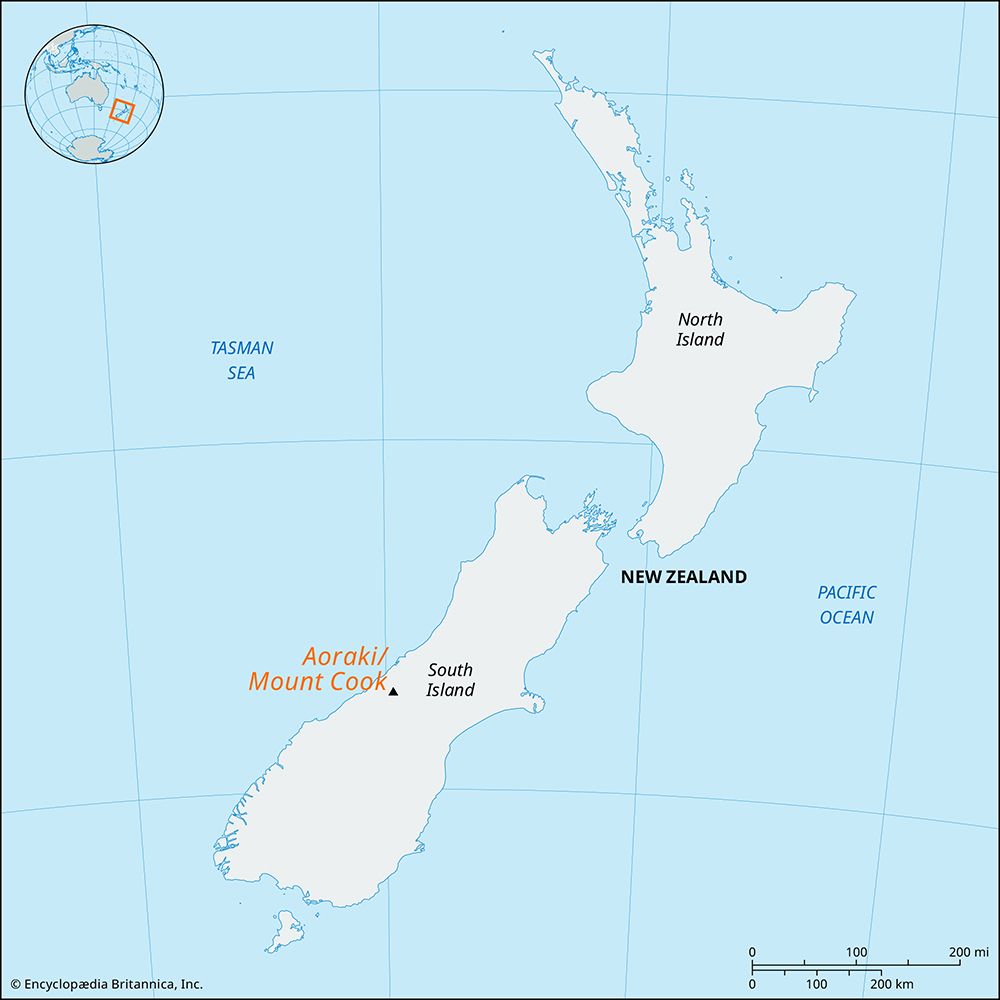
Aoraki/Mount Cook is the highest mountain in New Zealand, reaching an elevation of 12,316 feet (3,754 metres). Located in the Southern Alps on the South…
What is Aoraki/Mount Cook?
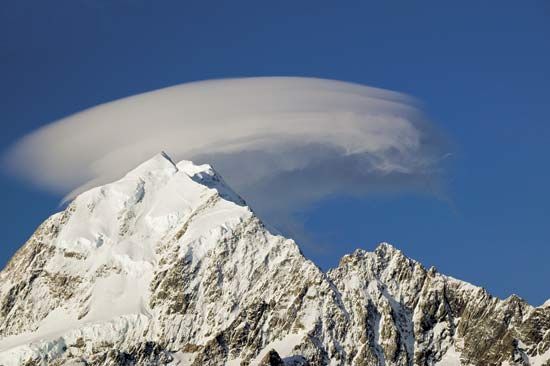
Aoraki/Mount Cook is the highest mountain in New Zealand, reaching an elevation of 12,316 feet (3,754 metres). Located in the Southern Alps on the South Island, the peak is permanently snow-clad and flanked by the Hooker and Tasman glaciers.12
The mountain is known as Aoraki—a Māori name meaning “cloud piercer”—and was later renamed for Captain James Cook. It serves as the central feature of Aoraki/Mount Cook National Park, a World Heritage site renowned for its glaciers, diverse alpine wildlife, and recreational opportunities like mountaineering and skiing. Although it was first climbed in 1894, the mountain’s height was slightly reduced by a landslide in 1991.13
What is the Maori legend behind the name Aoraki?
The provided search results indicate that the name Aoraki is a Māori term meaning “cloud piercer,” but they do not contain the specific mythological legend or narrative associated with the name.
Sorry, the Britannica knowledge base does not contain this information.
How do glaciers shape the landscape of the Southern Alps?
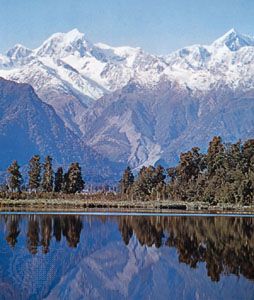
Glaciers have played a transformative role in shaping the rugged landscape of the Southern Alps. Through processes of erosion and deposition, they have carved the region into the dramatic alpine scenery seen today.6
Erosional Landforms
Glaciers reshape V-shaped river valleys into characteristic U-shaped valleys by scouring the bedrock along the base and lower sidewalls. In the high reaches of the mountains, glaciers form several distinct features:7
- Cirques: Amphitheatre-shaped hollows carved into the mountainside, often containing lakes known as tarns.7
- Arêtes and Horns: As cirques erode headward, they narrow the ridges between parallel valleys into sharp, knife-edge ridges called arêtes. When multiple cirques erode around a single peak, they create a jagged, pyramid-shaped mountain known as a horn.7
- Striations: Glaciers act as powerful tools of abrasion, dragging rock debris across bedrock to create scratches and gouges that reveal the direction of past ice movement.78
Depositional Landforms
As glaciers move, they transport rock debris, which is deposited as till when the ice melts. These accumulations form moraines, which can be found along the sides of glaciers (lateral moraines) or at the glacier’s snout (end or terminal moraines).2
What unique wildlife can be found in Aoraki/Mount Cook National Park?
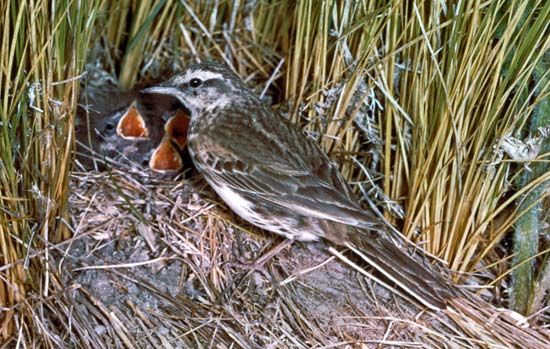
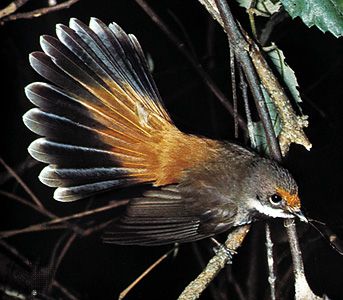
Aoraki/Mount Cook National Park is home to a variety of unique wildlife, particularly bird species that have adapted to the rugged alpine environment. Notable avian residents include the kea—a highly intelligent alpine parrot—as well as the rock wren, pipit, and fantail. Other birds such as the bush hawk, pigeon, and warbler are also found within the park’s diverse habitats.2
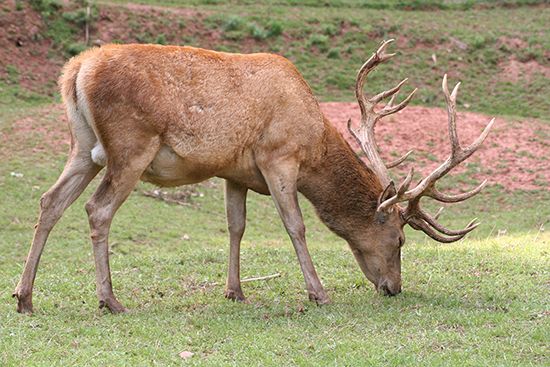
In addition to native species, the park hosts several introduced mammals that have become established in the region. These include the Himalayan tahr (a type of wild goat), chamois, red deer, and feral cats. Managing these introduced populations is a significant conservation challenge, as they can cause considerable damage to the native vegetation of the high-country bush.21112
Sources
- Aoraki/Mount Cook — Encyclopædia Britannica
- Aoraki/Mount Cook National Park — Encyclopædia Britannica
- Cook, Mount — Merriam-Webster
- Aoraki — Merriam-Webster
- Southern Alps/Kā Tiritiri o te Moana — Encyclopædia Britannica
- New Zealand - Relief of New Zealand — Encyclopædia Britannica
- glacial landform - Cirques , tarns, U-shaped valleys, arêtes, and horns — Encyclopædia Britannica
- glacial landform - Moraines — Encyclopædia Britannica
- glacial landform - Erosional landforms of valley glaciers — Encyclopædia Britannica
- glacial landform - Striations — Encyclopædia Britannica
- Alps - Plant and animal life — Encyclopædia Britannica
- Exploring 7 of Earth’s Great Mountain Ranges - Alps — Encyclopædia Britannica
- New Zealand - Plant and animal life — Encyclopædia Britannica
- Kiwi — Encyclopædia Britannica
- Westland Tai Poutini National Park — Encyclopædia Britannica
Published on · 2 min read