Kanchenjunga
Kanchenjunga is the world’s third-highest mountain, reaching an elevation of 28,169 feet (8,586 meters). It is located in the eastern Himalayas along the…
Where is Kanchenjunga located and what is its significance in Asia?
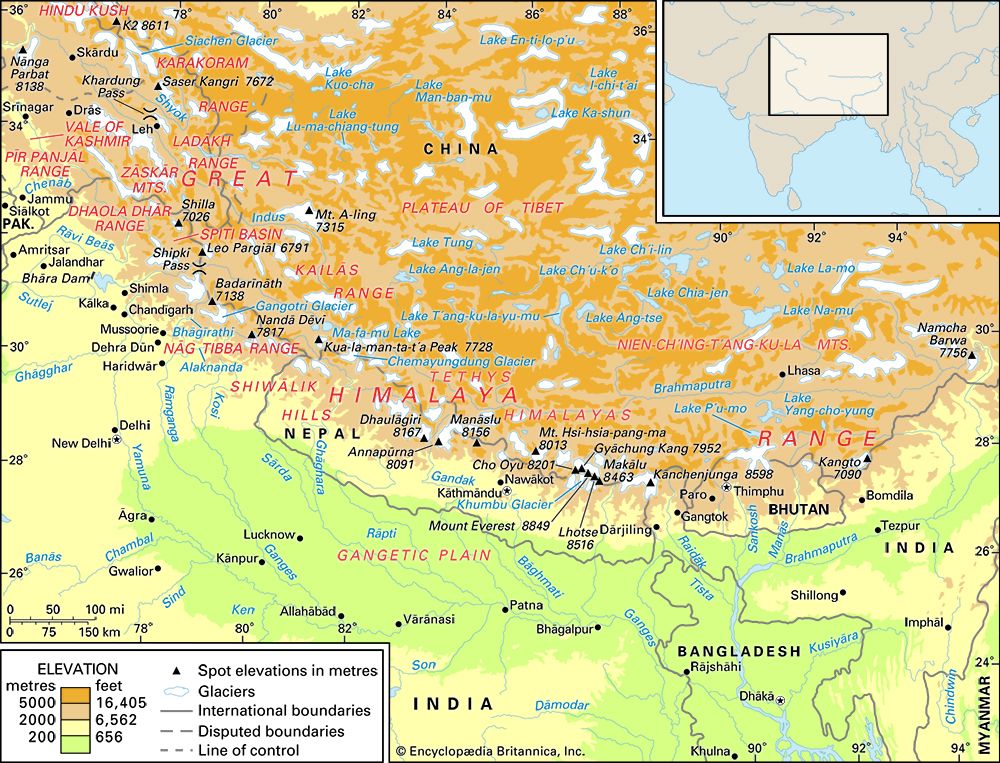
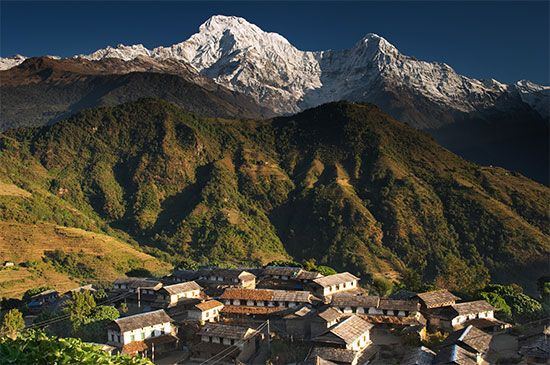
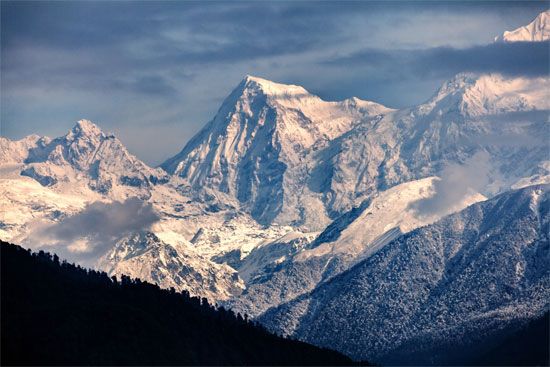
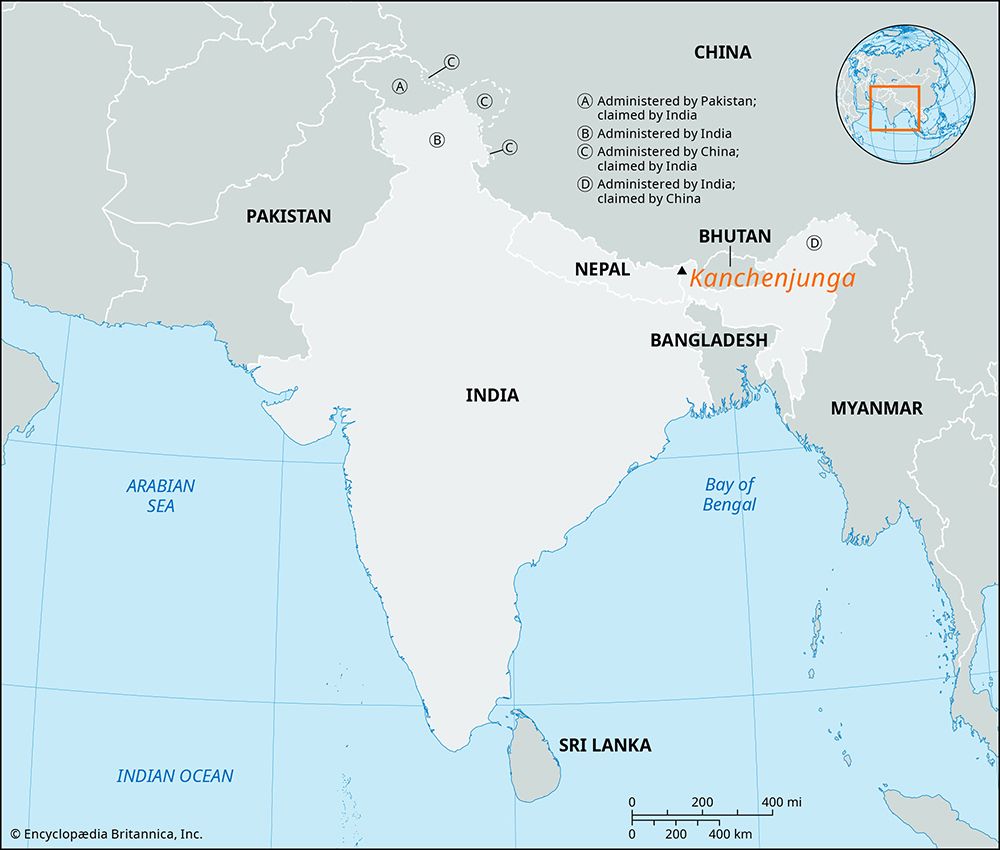
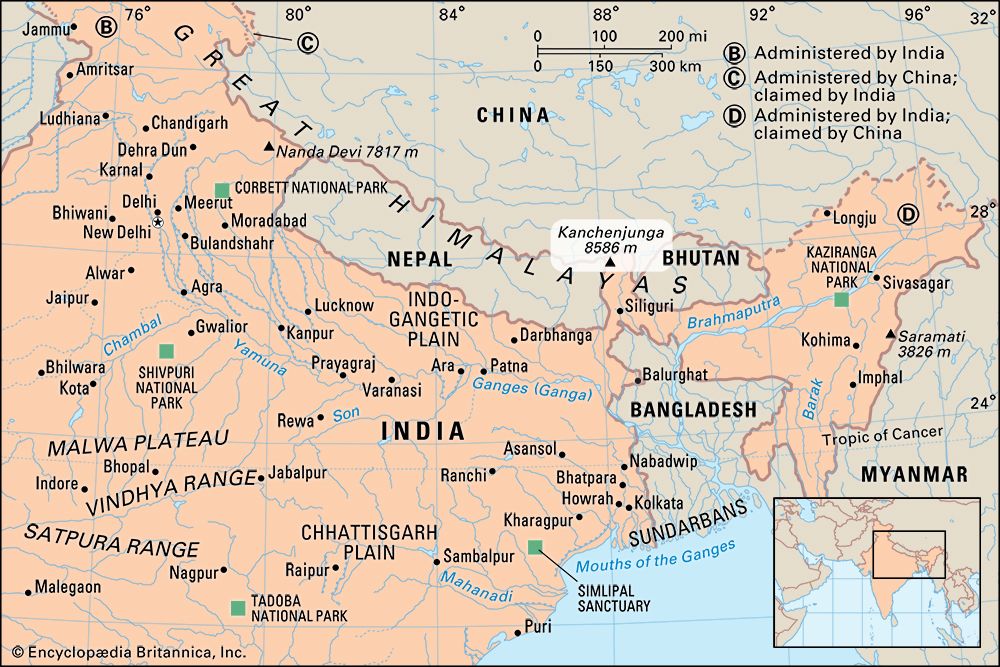
Kanchenjunga is the world’s third-highest mountain, reaching an elevation of 28,169 feet (8,586 meters). It is located in the eastern Himalayas along the border between the state of Sikkim in northeastern India and eastern Nepal.1
The mountain holds profound significance in Asia, particularly for local inhabitants, as its name—derived from Tibetan—is interpreted as the “Five Treasuries of the Great Snow.” It occupies a central place in local mythology and religious rituals. This cultural reverence is so deep that, during the first successful British ascent in 1955, the climbers stopped just yards from the actual summit to honor the religious beliefs and wishes of the Sikkimese people. Beyond its spiritual importance, the massif serves as a major geographical feature of the Great Himalaya Range, feeding four significant glaciers from its ridges.1
What are the major challenges faced by climbers attempting to scale Kanchenjunga?
Climbing Kanchenjunga presents significant challenges that have earned the mountain a reputation for unusual danger and difficulty. These obstacles include:
- Extreme Environmental Hazards: The massif is subject to heavy snowfall during the summer monsoon season, which increases the risk of avalanches. Historically, these conditions have led to fatal accidents, such as the 1905 expedition where four members perished.1
- Technical Complexity: The mountain’s structure, characterized by four main ridges and four major glaciers, requires navigating steep and demanding terrain. Early attempts to scale the mountain from the Zemu and Kanchenjunga glacier sides proved unsuccessful and dangerous, leading to a long hiatus in climbing attempts.1
- High-Altitude Risks: As one of the world’s highest peaks, Kanchenjunga exposes climbers to the severe physiological stresses of extreme altitude. While some mountaineers have successfully reached the summit without supplemental oxygen, doing so significantly increases the physical strain and risk of disaster.12
- Cultural Sensitivity: Climbers must also navigate the deep spiritual significance of the mountain, which is revered by local inhabitants. Respecting these religious beliefs has historically influenced route selection and summit approaches.1
Who were the first climbers to reach the summit of Kanchenjunga?
The first successful ascent of Kanchenjunga was achieved in 1955 by a British expedition led by Charles Evans.
Out of respect for the religious beliefs and wishes of the Sikkimese people, who consider the mountain sacred, the climbers intentionally stopped just a few yards short of the actual summit. This expedition was conducted under the auspices of the Royal Geographical Society and the Alpine Club of London, following years of exploration and failed attempts by other international teams.1
What is the origin of the name ‘Kanchenjunga’ and what does it mean?
The name Kanchenjunga is derived from four words of Tibetan origin, often rendered as Kang-chen-dzo-nga or Yang-chhen-dzö-nga. In Sikkim, this name is interpreted as the “Five Treasuries of the Great Snow.”
This name reflects the mountain’s significant role in the mythology and religious rituals of the local inhabitants, who have long revered the peak. The massif itself is composed of five distinct summits, which may contribute to its traditional designation as the “Five Treasuries.”
Sources
- Kanchenjunga — Encyclopædia Britannica
- Himalayas - Study and exploration — Encyclopædia Britannica
- Kanchenjunga — Merriam-Webster
Published on · 2 min read