Manāslu I
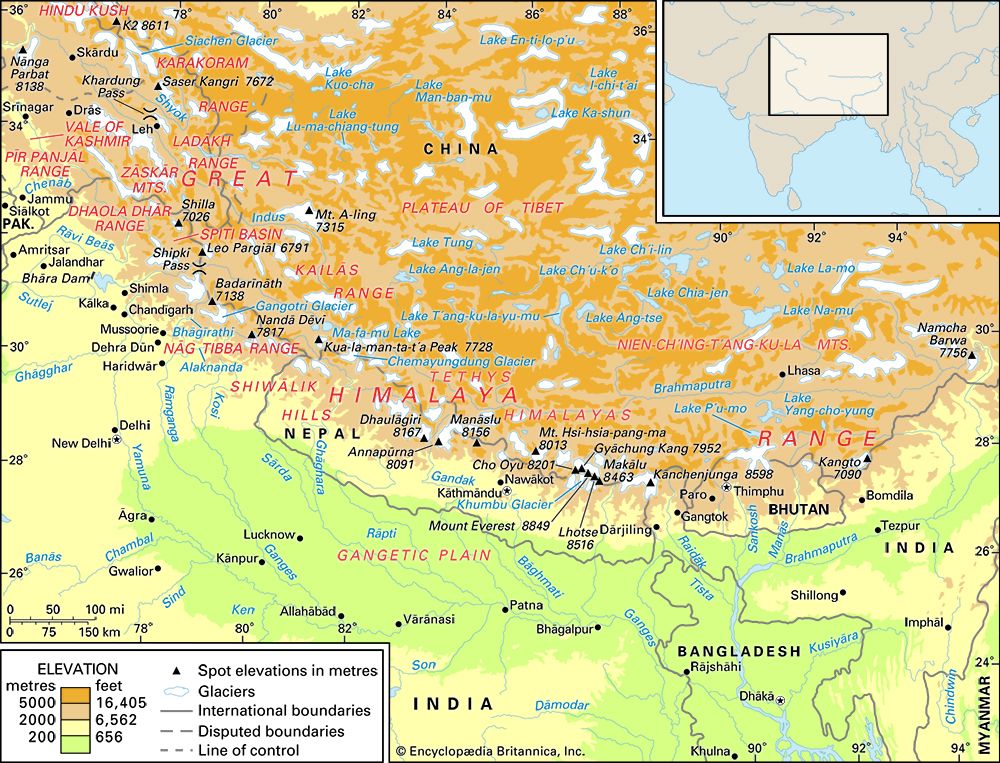
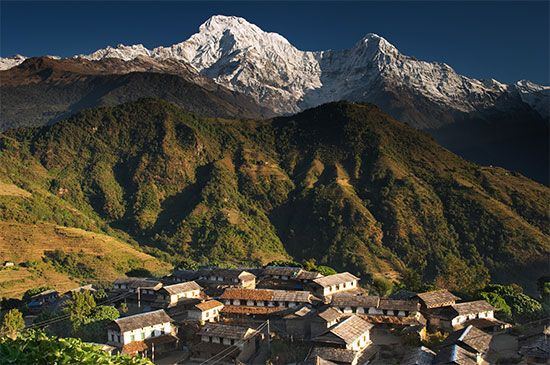
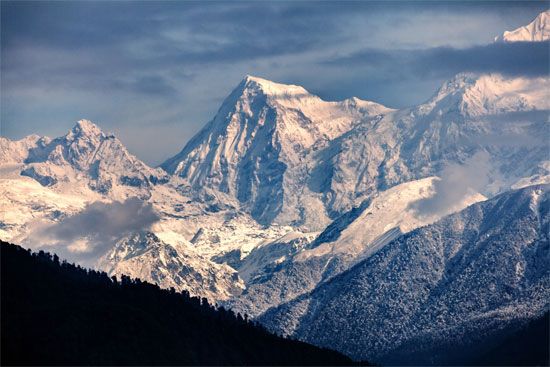
Manāslu I is one of the world’s highest mountains, reaching an elevation of 26,781 feet (8,163 meters). Located in the Himalayas of north Nepal, the peak…
What is Manāslu I?
Manāslu I is one of the world’s highest mountains, reaching an elevation of 26,781 feet (8,163 meters). Located in the Himalayas of north Nepal, the peak sits approximately 38 miles (61 km) north of the town of Gurkha.12
This massive, snow- and glacier-covered mountain is part of the Great Himalayas range. Its summit was first successfully reached in May 1956 by two separate Japanese expeditions, with successful ascents occurring on May 9 and May 11.13
What are some of the other highest peaks in the Great Himalaya Range?
The Great Himalayas contain many of the world’s tallest peaks, characterized by an average elevation exceeding 20,000 feet (6,100 meters). In addition to Manāslu I, notable high peaks within this range include:
- Mount Everest: The world’s highest mountain, reaching an elevation of 29,035 feet (8,850 meters).4
- Kanchenjunga: Located on the border of India (Sikkim state) and Nepal.14
- Lhotse: Situated near Mount Everest, with an elevation of 27,940 feet (8,516 meters).5
- Annapurna: A prominent massif located in the range.1
- Nanga Parbat: Located in the western section of the Great Himalayas.1
The Himalayas as a whole feature more than 110 peaks that rise to elevations of 24,000 feet (7,300 meters) or more above sea level.4
How do the Himalayas act as a climatic barrier between different regions?
The Himalayas function as a massive climatic divide, significantly influencing meteorological conditions across southern and central Asia by obstructing air circulation.7
Barrier to Cold Air
Due to their immense height, the Great Himalaya Range acts as a physical wall that prevents cold, continental air masses from the north from penetrating into India during the winter months.7
Monsoon Obstruction
The range also serves as a critical barrier to the southwesterly monsoon winds. As these moisture-laden winds move northward, they are forced to rise over the steep southern slopes of the mountains. This ascent causes the air to cool and condense, resulting in heavy precipitation—often in the form of rain or snow—on the Indian side of the range.7
By the time these air currents cross the mountains, they have lost most of their moisture, which creates arid conditions in Tibet and the northern highlands. Consequently, while southern regions like Darjeeling may receive over 100 inches of annual rainfall, areas north of the range, such as Leh, receive only a fraction of that amount.78
What makes climbing mountains over 8,000 meters particularly dangerous?
Climbing mountains that exceed 8,000 meters (approximately 26,250 feet) is exceptionally dangerous primarily due to the extreme environmental and physiological challenges encountered in what is known as the “death zone.”1011
Physiological Risks
At these altitudes, the barometric pressure is so low that the partial pressure of oxygen is insufficient to sustain human life for extended periods. This leads to hypoxia, which causes symptoms such as confusion, poor decision-making, and loss of muscle coordination. Two life-threatening medical conditions are also prevalent:121110
- High-altitude cerebral edema (HACE): The brain swells due to increased blood flow, which can lead to coma and death.10
- High-altitude pulmonary edema (HAPE): Fluid leaks into the lungs, essentially causing the climber to drown.10
Environmental Hazards
The climate at these heights is consistently hostile. Climbers face:
- Extreme Temperatures: Temperatures can plummet to as low as −76 °F (−60 °C), creating a severe risk of frostbite.13
- Violent Weather: Peaks are often buffeted by jet stream winds exceeding 100 miles per hour, and sudden storms can occur without warning.13
- Avalanche Risk: Seasonal monsoon patterns dictate narrow windows for safe climbing; outside these times, the risk of avalanche and unstable snow conditions increases significantly.1013
Sources
- Manāslu I — Encyclopædia Britannica
- Nepal - Relief — Encyclopædia Britannica
- Nepal Himalayas — Encyclopædia Britannica
- Great Himalayas — Encyclopædia Britannica
- Mount Everest - Geology and relief — Encyclopædia Britannica
- Exploring 7 of Earth’s Great Mountain Ranges - Himalayas — Encyclopædia Britannica
- Himalayas - Climate of the Himalayas — Encyclopædia Britannica
- Indian monsoon - Peak period — Encyclopædia Britannica
- Tibet - Climate of Tibet — Encyclopædia Britannica
- Mount Everest - The human challenge — Encyclopædia Britannica
- human respiratory system - High altitudes — Encyclopædia Britannica
- Mount Everest - Drainage and climate — Encyclopædia Britannica
- Tenzing Norgay: Top Questions — Encyclopædia Britannica
Published on · 3 min read